Exploring the Possibilities of Propellantless Space Travel
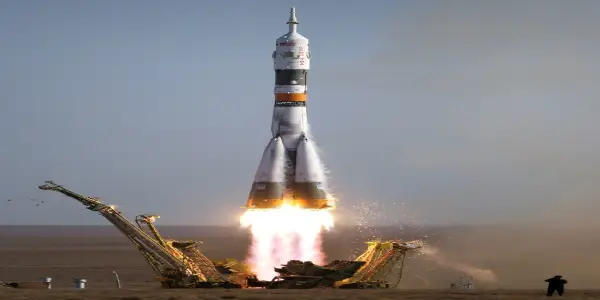
The limitations of traditional rocket propulsion have long hindered humanity's ability to explore beyond our Solar System. A recent review delves into innovative propulsion methods that could redefine space exploration.
In-depth analysis
New discoveries
Recent research highlights innovative propellantless propulsion methods that could transform space travel. Techniques such as gravity assists, solar sails, magnetic sails, and electric sails are being explored to reduce reliance on traditional fuel. These advancements may enable missions to distant destinations, expanding the possibilities of deep space exploration and addressing the challenges posed by conventional propulsion systems.
Mission updates
Current missions are increasingly integrating propellantless propulsion techniques. Notable projects include the ongoing development of solar sails and magnetic sails, which are being tested for their potential to enhance mission efficiency and reach.
Who is affected
The advancements in propulsion technology stand to benefit a wide range of stakeholders, including space agencies, researchers, and private companies involved in space exploration. Enhanced propulsion methods could open new avenues for scientific research and commercial opportunities in the aerospace sector.
Next steps
Future efforts will focus on refining these propellantless technologies and addressing their current limitations. Continued research and development are essential to integrate these methods into upcoming missions, ultimately reshaping humanity's approach to space exploration.
Did you know?
Why we should care
The challenge of rocket propulsion impacts not just space agencies, but also technology and sustainability on Earth. As fuel costs rise and environmental concerns grow, developing propellantless propulsion methods could lead to more efficient and eco-friendly technologies. These innovations might redefine travel logistics, satellite deployment, and even climate monitoring, making our everyday tech more sustainable while pushing the boundaries of human exploration.
The universe's unsolved mystery
Propellantless propulsion represents a tantalizing frontier in our understanding of physics and engineering. As we explore these advanced methods, fundamental questions arise: Could we harness unexplained cosmic forces? What are the implications of utilizing the vast energy of the universe? Each step toward solving these mysteries can reshape our technological landscape and redefine our place in the cosmos.
The person who looks at the stars
Meet Maya, a 12-year-old aspiring astronaut from a small town. Every night, she gazes at the night sky, captivated by the shimmering stars and distant planets. Inspired by the possibility of exploring beyond Earth, Maya's bedroom is filled with models of spacecraft and posters of cosmic wonders. The idea of propellantless propulsion excites her, as she dreams of a future where space travel is more accessible. For Maya, every breakthrough in space technology feels personal; it's a step closer to her dream of becoming an astronaut and discovering the secrets of the universe. Her passion reflects a generation eager to reach beyond the stars, fueled by the hope that tomorrow's innovations will unlock the mysteries of space.

Netgear Orbi 370 Review: An Accessible Wi-Fi 7...
The Dwarf III Smart Telescope: A Compact Marvel...
Australia's SpIRIT Nanosatellite Captures First...
Astronomers Discover Ancient White Dwarf Actively...
SpaceX Achieves Major Milestone with Launch of...
AI Reveals Over 800 New Cosmic Anomalies from...
Andromeda Galaxy's Impact on Its Satellite...

NASA Unveils New Images of Interstellar Comet...
Congress Questions NASA's Facility Closures Amid...
Artemis 2 Astronauts Safely Return After Historic...
Young Canadian Astronomer Identifies Two...
New Mexico Startup Unveils Ambitious Plan to...
Juno's Mission Status in Question Amid Government...

Jeff Bezos's AI Hardware Venture Takes Aim at...
New Study Reveals Theia and Earth May Have Shared...
This Week in Science: Insights on Comet 3I/ATLAS,...
Exploring the Best Online Resources for Stunning...

Lenovo's Legion Tab Gen 3 Sees Significant Black...
NASA's Ambitious Timeline for Human Exploration...
Meteorite Fragment May Have Impacted Houston Home
Astrophotographers Showcase Stunning New Images...
Hawaiian Students Honor Gemini North Telescope's...

Discovery of Betelgeuse's Companion Star Unveiled
Astronomers Identify Ancient Water in...
Assessing the Financial Impact of NASA's Apollo...

Childcare Crisis: Families Struggle as...

Reviving Adult Friendships: Strategies to Combat...
Potential Evidence of Dark Matter Emerges from...
Apple May Consider Transitioning to Starlink Amid...
NASA and Blue Origin Successfully Launch Dual...

General Relativity May Extend Habitability of...
Astronomers Discover Eerie 'Cosmic Bat' Nebula in...
Breakthrough in Milky Way Simulation Using AI...
SabreSat: An Innovative Air-Breathing Satellite...
Expansion of Earth’s Magnetic Field Weak Spot...
Charlotte: The Lunar 3D Printer Poised to...

MiHoYo Expands Ambitions with New MMO Project...
Mark Your Calendars: International Observe the...
Boeing's Upcoming Starliner Mission Set for April...
European Space Agency Unveils Stunning Radar...