Antarctic Sea Ice Reaches Third-Lowest Winter Maximum on Record
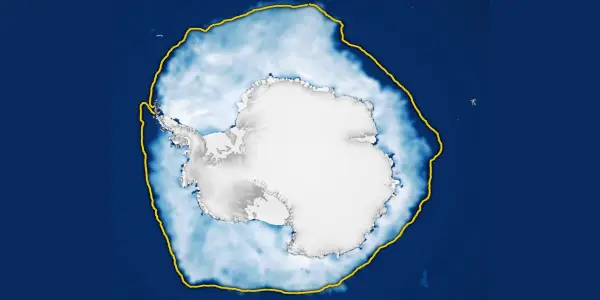
Antarctic sea ice has hit its third-lowest winter maximum in 45 years, raising alarms about its impact on climate, marine life, and global weather patterns.
In-depth analysis
Natural phenomena
The Antarctic sea ice has reached its winter maximum, yet its extent is alarmingly below historical averages. Currently, it stands as the third-lowest coverage recorded over the past 45 years, highlighting significant shifts in this critical natural phenomenon that plays a crucial role in Earth's climate system.
Impact on communities
The decline in Antarctic sea ice poses risks to local wildlife and ecosystems, impacting species such as penguins and seals that depend on stable ice for breeding and feeding. This disruption could have cascading effects on communities reliant on these marine resources.
Scientific updates
Recent data from NASA Earth Observatory indicates a concerning trend in Antarctic sea ice extent. With current levels at their third-lowest in 45 years, scientists are increasingly focused on understanding the implications for global climate dynamics and oceanic systems.
Future outlook
The ongoing decrease in Antarctic sea ice raises urgent questions about future climate stability. As scientists continue to monitor these changes, the potential for more extreme weather patterns and ecological disruptions remains a pressing concern for global environmental health.
Did you know?
Why this matters for our planet
The decline in Antarctic sea ice isn't just a distant issue; it directly impacts global weather patterns and marine ecosystems. With less ice to reflect sunlight, warming temperatures could lead to more extreme weather events and rising sea levels. This threatens coastal communities and disrupts everyday life, from agriculture to fisheries, affecting food supply and livelihoods worldwide.
Earth's undiscovered wonder
Did you know that Antarctic sea ice acts like a giant mirror, reflecting about 80% of sunlight? This reflection plays a crucial role in regulating the Earth's temperature and maintaining the planet's energy balance. Without it, we could see rapid temperature increases that would alter climates far beyond the polar regions.
The voice of Earth
Marcus, 34, from Chicago, grew up watching documentaries about polar bears and their icy habitats. As an adult, he felt a deep sense of loss when he learned about the declining Antarctic sea ice. Each winter, he organizes community events to educate others about climate change. Last year, he brought together local students to create art installations inspired by polar ecosystems, hoping to spark their passion for preservation. For Marcus, every artwork represents a plea to protect the fragile beauty of our planet.

Portable Libraries: A Lifeline When Internet...
NASA's Mars Sample Return Mission Faces...
Upcoming Venus Missions Set to Explore Earth's...

Google Enhances Weather Forecasting with...

HEO Robotics Expands Satellite Imaging...

FX Confirms Season 2 Renewal for 'Alien: Earth'

Turkey Declines Rare Earth Element Sales to the...
Significant Geomagnetic Storm Unleashes Auroras...
James Webb Space Telescope Reveals First 3D...

Innovative Engine Harnesses Deep Space Energy for...

Abrams Studios Announces New Sci-Fi Exploration...
Understanding Artificial Reefs: A Solution for...
New Ice Age Episodes of Prehistoric Planet Now...
First Mosquito Sightings in Iceland Linked to...
Exploring Iterative Creativity: Pelicans on...

Blue Origin's New Glenn Rocket Set to Launch...

The Intersection of AI Development and Natural...
Sun Unleashes Spectacular Solar Flare Amid...
The Late Ordovician Mass Extinction: A Pivotal...

US Greenhouse Gas Emissions Increase Amid Cold...

Exploring the Conclusion of 'Predator: Badlands'
Notable Aquatic Highlights from the 2025 Nature's...

Innovative Precast Rammed Earth Tennis Court...

Rising Frustration in Aceh as Flood Relief...

Protests Erupt at COP30 Climate Summit in Belém

Post-Artemis 2: What Insights Will Scientists...

New Glenn Rocket Completes Successful Test...

China's Meng Xiang Ship Aims for Record-Setting...

Innovative Architectural Designs Inspired by...
Sun Emits Second-Strongest Flare of 2025, Causing...

China's Astronauts Return Safely, but Another...
New Study Reveals Microbes Colonizing Freshly...
Perseverance Rover Discovers Unusual Rock Near...

New Insights from the Butterfly Nebula May...
Exploring Sustainable Approaches to Deep-Sea...

Google Launches WeatherNext 2: Enhanced AI...

Young Star V1298 Tau Sheds Light on Planet...
Reassessing the Impact of Farmed Seafood on Ocean...

The Earth’s Value: An Exploration of Its...

Aging Stars Pose Threat to Nearby Planets, New...