New Insights into Galactic Evolution from Early Universe Quasars
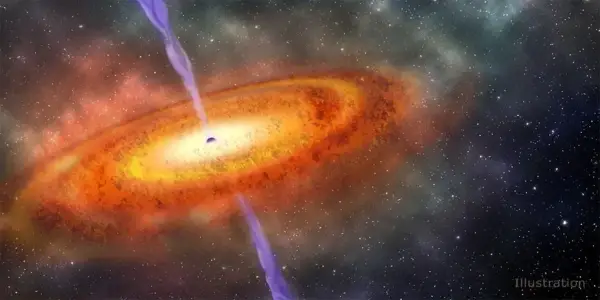
An international team of researchers, including those from the Kavli Institute for the Physics and Mathematics of the Universe, has utilized the James Webb Space Telescope to identify 12 black holes dating back 12.9 billion years, offering new perspectives on galactic development.
In-depth analysis
New discoveries
Recent findings from the James Webb Space Telescope reveal a population of massive black holes and unexpectedly mature galaxies dating back to shortly after the Big Bang. This challenges existing cosmological models by showing that these early structures had substantial mass, suggesting a more complex relationship between galaxies and their central supermassive black holes than previously understood.
Mission updates
The James Webb Space Telescope continues to provide groundbreaking insights into the early universe, focusing on the dynamics of ancient galaxies and their central black holes. This ongoing research aims to enhance our comprehension of cosmic evolution.
Who is affected
The findings impact astronomers and astrophysicists who study galaxy formation and evolution. Additionally, they influence theoretical models of cosmic development, potentially altering the understanding of how dark matter and dark energy interact with galaxies.
Next steps
The research team will analyze additional JWST data and conduct further observations to investigate the relationship between supermassive black holes and their host galaxies during the early universe. These efforts aim to clarify the mechanisms of galaxy evolution.
Did you know?
Why we should care
The discoveries made by the James Webb Space Telescope are not just academic; they can redefine our understanding of the universe's origins and structure. For everyday people, this knowledge can inspire a deeper appreciation for science and the cosmos, encouraging future generations to explore careers in STEM. Furthermore, understanding cosmic evolution might even inform advancements in technology and materials, impacting sectors like telecommunications and energy.
The universe's unsolved mystery
Despite the advancements in our understanding of early galaxies and black holes, significant questions remain. How exactly did these supermassive black holes form so rapidly? The current models struggle to explain the observed size and maturity of these galaxies, inviting further exploration. This gap in knowledge highlights the complexity of cosmic evolution and the potential for new physics beyond our current theories.
The person who looks at the stars
Meet Clara Chen, a high school astronomy teacher in Seattle who spends her evenings gazing at the stars through her telescope. For Clara, the latest findings from the JWST are more than just data; they are a source of inspiration for her students, many of whom come from underrepresented backgrounds in science. Clara encourages them to dream big, sharing how these ancient quasars challenge conventional wisdom. She often says, 'If the universe can surprise us, so can we.' Her passion fosters curiosity and ambition in her classroom, proving that the mysteries of the cosmos can motivate the next generation of explorers and thinkers.
Exploring the 'Ultraview Effect': Human...
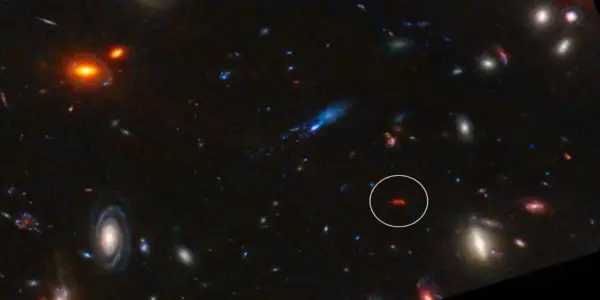
Astronomers Uncover a Rapid Star-Forming Galaxy...
This Week In Space Podcast: Episode 187 Explores...
Congress Questions NASA's Facility Closures Amid...

Senegal Joins Artemis Accords, Expanding...

FULU Foundation Introduces Repair Bounty System...
Discovery of Betelgeuse's Companion Star Unveiled
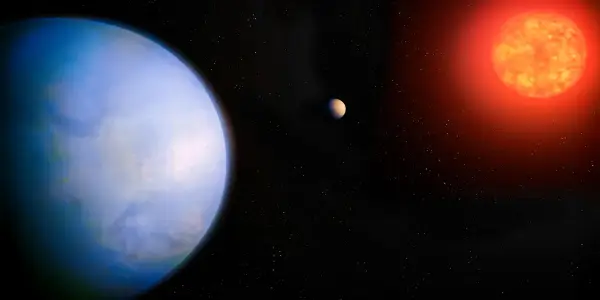
Nearby Super-Earth Identified as Key Target in...

Exploring Alternatives to the Meta Quest 3 Elite...
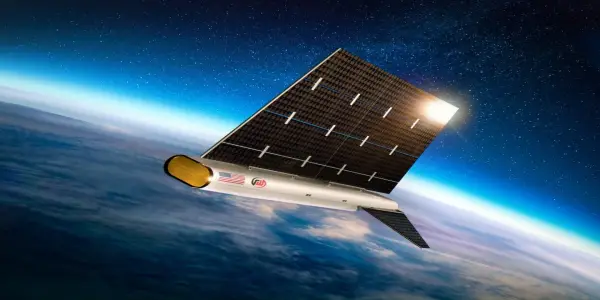
SabreSat: An Innovative Air-Breathing Satellite...
James Webb Space Telescope May Have Detected the...

Celestial Wonders of Autumn 2025: Eight Key Night...
NASA's Upcoming Roman Space Telescope Set to...
Potential Evidence of Dark Matter Emerges from...
The Pleiades Star Cluster Reveals Its Extensive...

Innovative Portable Reflecting Telescope...
Astrophysicists Unveil Dark Universe Through...

Lenovo's Legion Tab Gen 3 Sees Significant Black...
MIT Researchers Uncover Ancient Traces of...
Astronomers Identify Ancient Water in...
Proposed Fleet of Sun-Gazing Spacecraft Aims to...

OnePlus 15 vs. Samsung Galaxy S25 Plus: A Clash...
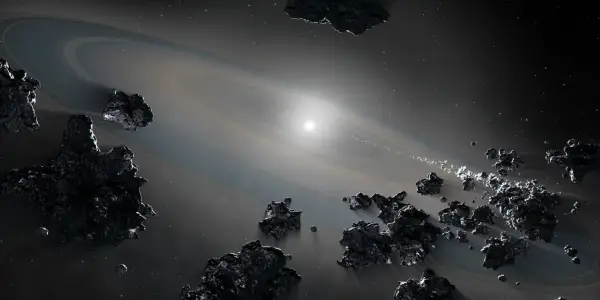
Astronomers Discover Ancient White Dwarf Actively...

Jeff Bezos's AI Hardware Venture Takes Aim at...

Samsung Unveils Unprecedented Black Friday Deal...
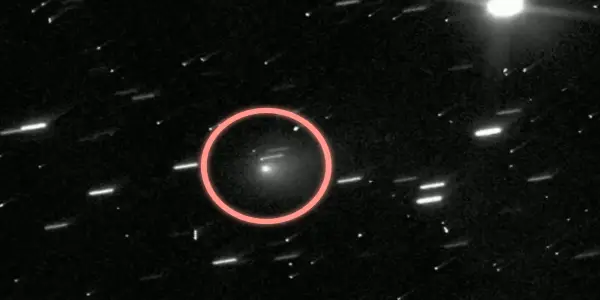
Interstellar Comet 3I/ATLAS Reveals Water...
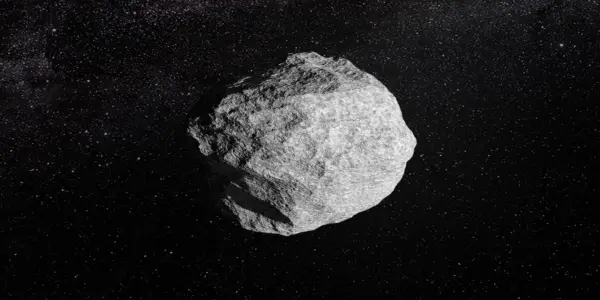
Young Canadian Astronomer Identifies Two...
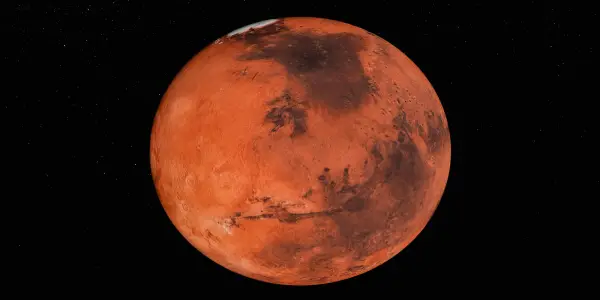
NASA's Ambitious Timeline for Human Exploration...

Affordable Fitness Tracking: The Amazfit Active 2...
Impulse Space Enters Lunar Exploration: New...
NASA Advances Artemis 2 Mission with Orion...
NASA Unveils New Images of Interstellar Comet...

Samsung Galaxy S26 Expected to Feature Enhanced...
AI Reveals Over 800 New Cosmic Anomalies from...
UK Advances in Space Defense and Naval Drone...
China's Mars Orbiter Captures Image of...
New Simulations Shed Light on the Enigmatic...
Assessing the Financial Impact of NASA's Apollo...
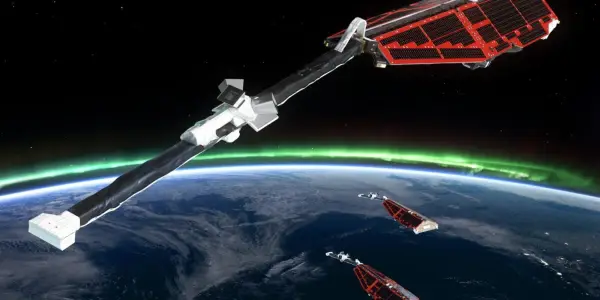
Expansion of Earth’s Magnetic Field Weak Spot...
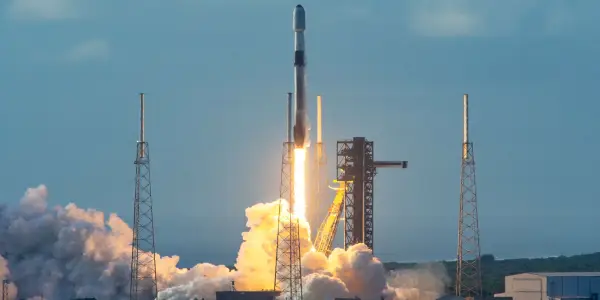
SpaceX Achieves Major Milestone with Launch of...