U.S. Strengthens Ties with Central Asia Under Trump’s America First Policy
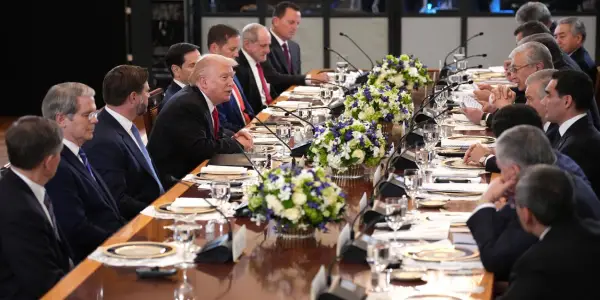
On November 6, 2025, U.S. relations with Central Asia took a significant turn as leaders from five republics convened in Washington, marking a renewed commitment to economic cooperation and energy collaboration.
In-depth analysis
Background context
The November 2025 meeting in Washington marked a significant step in U.S.-Central Asia relations, as leaders from five Central Asian nations gathered to strengthen partnerships. This initiative aims to reduce their reliance on Russian influence while navigating the complexities of post-Soviet geopolitics, reflecting a renewed U.S. commitment to the region.
Key political implications
The U.S. engagement in Central Asia could reshape regional dynamics, potentially diminishing Russian influence while enhancing the geopolitical leverage of the involved nations. This shift may encourage greater autonomy for Central Asian republics.
Who gains / who loses
Countries like Turkmenistan stand to gain significantly from improved U.S. partnerships, allowing for enhanced energy exports. Conversely, Russia may face losses as its longstanding energy monopoly weakens, potentially destabilizing its influence in the region.
Possible future scenarios
If U.S. initiatives succeed, Central Asian nations may achieve greater energy independence and economic integration with Europe. However, ongoing geopolitical tensions could challenge these efforts, complicating regional cooperation and stability.
Did you know?
Why you should know this
The U.S. engagement with Central Asian countries is reshaping energy dynamics that can influence gas prices and availability in Europe and beyond. For consumers, this means potential changes in energy costs and sources, as new routes for natural gas could stabilize or fluctuate market conditions. Understanding these geopolitical shifts can help individuals grasp how global politics directly impacts their daily lives.
Behind the political curtain
While often overshadowed by larger global events, the U.S. has been involved in Central Asia since the early 1990s. Surprisingly, it was the 1991 dissolution of the Soviet Union that first highlighted Central Asia's strategic energy resources, prompting the U.S. to recognize their potential long before recent initiatives.
Ordinary person in an extraordinary situation
Meet Aisulu, a 34-year-old entrepreneur from Almaty, Kazakhstan. As a business owner in the renewable energy sector, she has felt the pressures of regional politics firsthand. With the renewed U.S. focus on Central Asia, Aisulu sees a flicker of hope for her business. She envisions new partnerships that could lead to tech exchanges and funding opportunities. However, she also remains cautious, having witnessed previous promises fade under political maneuvering. Aisulu’s story illustrates the delicate balance between optimism and skepticism in a region grappling with its identity and economic future amidst shifting alliances.

EA Raises Concerns Over Sale to Saudi Arabia's...

Ireland Moves Forward with Bill Targeting Israeli...
Japan Reacts Strongly to China's Travel Advisory...
US Tariffs Impact Nuevo Leon's Steel Sector,...
Trump Appoints Special Envoy to Greenland,...

Inquiry Critiques Scottish Government's Covid-19...
Cuba Rejects U.S. Security Threat Claims Amid...
Khamenei Assassination: A Pivotal Shift in...
Former Honduran President Hernández Convicted of...

The Rise of Technocracy in Modern Governance

US Passport Ranking Dips to Lowest Level in...
Six Finalists Announced for the 2026...
Trump Reverses Stance on Greenland After UK...

Spain's Attorney General Convicted in...
The 1969 Sino-Soviet Border Conflict: A Near Miss...
Colombia's ELN Rebels Intensify Military Drills...

Understanding Donald Trump’s Vision of Military...
AfD Leader Raises Concerns Over Potential Threats...
Trump Considers Tomahawk Missile Support for...
Trump to Engage with Syrian Leader Following...
Intensified Clashes Erupt Between Afghan and...

NASA Unveils Stunning Images of Interstellar...

Jared Isaacman Renominated as NASA Administrator...
Assessing Trump's Nobel Peace Prize Worthiness...
Trump Addresses Nuclear Testing, Government...
Canada's Carney to Meet Xi in China, Signaling a...
South Africa's G20 Presidency: A Mixed Legacy of...
Limited Expectations as Trump and Xi Approach...
South Korea Rebuilds Trust and Reassesses Foreign...
Russian and Indian Foreign Ministers Convene...

Pope Leo Embarks on First International Trip to...
Canada and China Take Steps Toward Repairing...
Jim Avila, Esteemed ABC News Correspondent, Dies...
Israel Seeks Diplomatic Renewal with Bolivia...
Cuban Authorities Engage in Deadly Clash with...
Peru Sever Diplomatic Relations with Mexico Amid...
New England Senators Play Crucial Role in...

UK Officials Under Scrutiny Following Collapse of...
Global Community's Stance on Israel: A Complex...
U.S. Extends Sanctions Relief as Syrian Leader...