Blue Origin Successfully Launches New Glenn Rocket, Marks Milestone with First Booster Landing
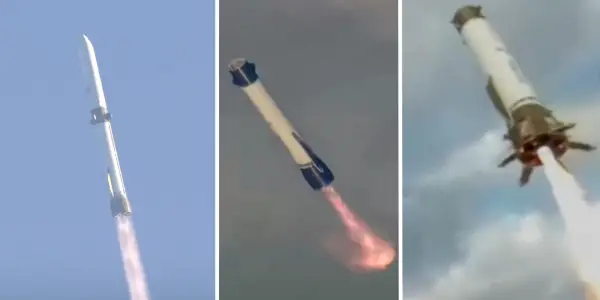
Blue Origin's New Glenn rocket completed its second launch today, successfully deploying NASA's ESCAPADE probes to Mars and achieving a significant milestone with its first booster landing at sea.
In-depth analysis
New discoveries
The ESCAPADE mission seeks to unravel the mysteries of Mars' atmospheric evolution, focusing on the processes that led to its current state. By utilizing advanced probes, the mission aims to provide unprecedented insights into the planet's history and the potential for past life, enhancing our understanding of Martian dynamics.
Mission updates
The ESCAPADE mission successfully launched today aboard Blue Origin's New Glenn rocket, marking a significant milestone with the first recovery of its booster. The probes are now en route to study Mars' atmosphere.
Who is affected
Researchers and scientists involved in planetary science will benefit from the data generated by the ESCAPADE mission. Additionally, the findings may impact future Mars exploration initiatives and enhance our understanding of planetary atmospheres, which is crucial for astrobiology.
Next steps
Following the launch, the ESCAPADE probes will begin their journey to Mars, utilizing innovative trajectories to optimize their path. The mission team will monitor the probes' progress, preparing for data collection and analysis once they reach their destination.
Did you know?
Why we should care
The launch of NASA's ESCAPADE mission aboard Blue Origin's New Glenn rocket is more than a scientific endeavor; it represents a new era in space exploration. As we seek answers about Mars' atmospheric evolution, the findings could reshape our understanding of climate change on Earth. Moreover, the cost-effective nature of this mission hints at a future where space research is more accessible, potentially leading to innovations that impact daily life.
The universe's unsolved mystery
The question of how Mars lost its atmosphere remains one of the most perplexing mysteries in planetary science. Understanding this process not only offers insights into Mars' past but could also inform future missions aimed at terraforming or human colonization. As scientists probe deeper into this enigma, the implications extend far beyond our solar system, challenging our perceptions of habitability and climate dynamics.
The person who looks at the stars
For Clara Thompson, an aspiring astrophysicist from a small town in New Mexico, the launch of the ESCAPADE mission resonates deeply. As a child, she spent countless nights gazing at the stars, dreaming of unraveling the secrets of the universe. Clara sees the mission as a beacon of possibility, representing the merging of commercial innovation and scientific inquiry. As she studies Martian atmospheres, Clara feels a connection to the explorers of the past and hopes to inspire future generations. The successful recovery of the New Glenn booster also symbolizes a future where space travel is more routine, allowing dreamers like her to transform aspirations into reality.
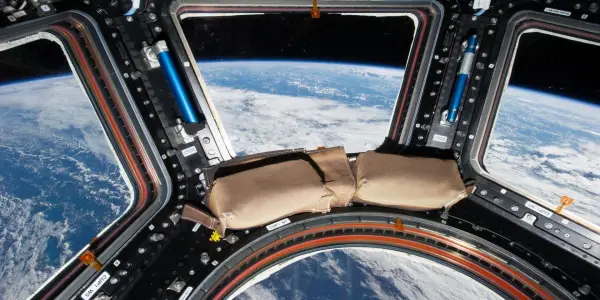
Exploring the 'Ultraview Effect': Human...
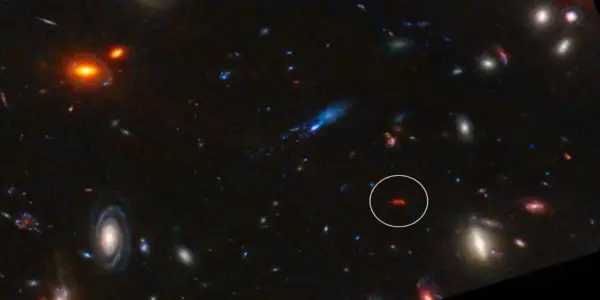
Astronomers Uncover a Rapid Star-Forming Galaxy...
This Week In Space Podcast: Episode 187 Explores...
Congress Questions NASA's Facility Closures Amid...

Senegal Joins Artemis Accords, Expanding...

FULU Foundation Introduces Repair Bounty System...

Discovery of Betelgeuse's Companion Star Unveiled
Nearby Super-Earth Identified as Key Target in...

Czech Startup Zaitra Pioneers AI-Driven Satellite...
SabreSat: An Innovative Air-Breathing Satellite...
Innovative Portable Reflecting Telescope...

Celestial Wonders of Autumn 2025: Eight Key Night...
NASA's Upcoming Roman Space Telescope Set to...
Potential Evidence of Dark Matter Emerges from...
The Pleiades Star Cluster Reveals Its Extensive...
New Study Reveals Theia and Earth May Have Shared...
Astrophysicists Unveil Dark Universe Through...

Lenovo's Legion Tab Gen 3 Sees Significant Black...

MIT Researchers Uncover Ancient Traces of...
Astronomers Identify Ancient Water in...
Samsung Galaxy S26 Expected to Feature Enhanced...

OnePlus 15 vs. Samsung Galaxy S25 Plus: A Clash...
Astronomers Discover Ancient White Dwarf Actively...

Jeff Bezos's AI Hardware Venture Takes Aim at...

Samsung Unveils Unprecedented Black Friday Deal...
Interstellar Comet 3I/ATLAS Reveals Water...
Young Canadian Astronomer Identifies Two...
NASA's Ambitious Timeline for Human Exploration...

Affordable Fitness Tracking: The Amazfit Active 2...
Impulse Space Enters Lunar Exploration: New...
NASA Advances Artemis 2 Mission with Orion...

NASA Unveils New Images of Interstellar Comet...

Exploring Alternatives to the Meta Quest 3 Elite...
AI Reveals Over 800 New Cosmic Anomalies from...
UK Advances in Space Defense and Naval Drone...

China's Mars Orbiter Captures Image of...
New Simulations Shed Light on the Enigmatic...
Assessing the Financial Impact of NASA's Apollo...
Expansion of Earth’s Magnetic Field Weak Spot...
SpaceX Achieves Major Milestone with Launch of...