Erdogan's Crackdown on Opposition Raises Concerns Over Turkey's Democratic Integrity
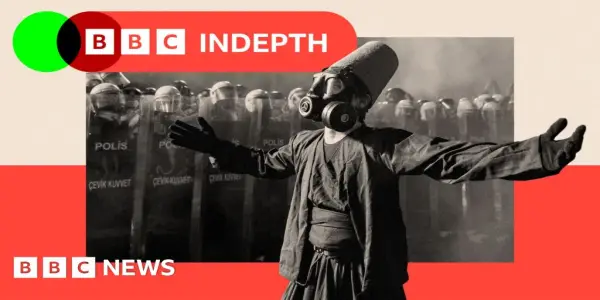
Erdogan's crackdown on dissent raises alarms about Turkey's democracy as opposition leaders face imprisonment. The country's historical role as a bridge is a...
In-depth analysis
Background context
Turkey's political landscape is increasingly dominated by President Recep Tayyip Erdogan's authoritarian tendencies, marked by the imprisonment of key opposition figures like Istanbul's Mayor Ekrem Imamoglu. This crackdown on dissent raises alarms about the erosion of democratic norms, complicating Turkey's historical role as a bridge between Eastern and Western political ideologies.
Key political implications
Erdogan's actions signal a troubling shift towards autocracy, undermining democratic processes and raising concerns about the future of political competition in Turkey.
Who gains / who loses
Erdogan's regime benefits from the suppression of opposition, consolidating power and minimizing electoral competition. Conversely, opposition parties and civil society face significant setbacks, jeopardizing their ability to challenge the ruling government effectively.
Possible future scenarios
If current trends continue, Turkey may see further erosion of democratic institutions, potentially leading to widespread civil unrest. Alternatively, a strong opposition could galvanize public support, challenging Erdogan's grip on power in upcoming elections.
Did you know?
Why you should know this
The political climate in Turkey directly impacts global stability, trade, and diplomatic relations, especially between East and West. As Erdogan tightens his grip on power, the ramifications extend beyond Turkey's borders. For citizens worldwide, understanding these dynamics is crucial, as they may influence international policies, economic relationships, and even the safety of expats and travelers in the region.
Behind the political curtain
Interestingly, before his imprisonment, Ekrem Imamoglu was not only a political figure but also a popular mayor who had won Istanbul by a significant margin. His victory was seen as a potential turning point in Turkish politics, suggesting that Erdogan's regime felt threatened enough to take extreme measures against him.
Ordinary person in an extraordinary situation
Fatma, a 28-year-old teacher in Istanbul, joined the protests following Imamoglu's arrest, feeling a surge of hope and frustration. With her students observing the political climate, she believes that their future hinges on the restoration of democratic values. Fatma recalls how her grandfather fought for democracy decades ago, and now she feels compelled to continue that legacy. The protests, though met with police force, represent a pivotal moment for her generation. Each march is a statement that they refuse to be silenced, showcasing resilience and a desire for accountability in leadership. Fatma’s story underscores how the fight for democracy is deeply personal, as ordinary citizens like her grapple with the stakes of political repression.
Expert Commentary
Zohran Mamdani's Vision for Global Municipal...

The Evolving Landscape of Copyright Enforcement...
The Role of Palestinian Statehood in Advancing...
European Automakers Face New Chip Shortage as...
Trump Addresses Nuclear Testing, Government...

Spain's Attorney General Convicted in...
The Rise of Technocracy in Modern Governance
Syria's Foreign Minister Visits China to...
Mamdani Emerges Victorious in NYC Mayoral Race...

E.U. Ambassador to the U.S. Affirms Positive...
Trump to Engage with Syrian Leader Following...
Bhutan's Complex Relationship with India: A...
Japan Protests China's Travel Advisory Amid...
Pope Leo Embarks on First International Trip to...
UK Officials Under Scrutiny Following Collapse of...
Nydia Velázquez Steps Down, Sparking Calls for...

Challenges Faced by Costumes in 'Mighty Morphin...

Baden Bower Reduces Pitch-to-Publish Timeline by...
Oracle's Stance on Israel Sparks Controversy...
Cuba Rejects U.S. Security Threat Claims Amid...
Israel Seeks Diplomatic Renewal with Bolivia...

Jetpack Navigation 3 Achieves Stability for...
Intensified Clashes Erupt Between Afghan and...
South Korea Rebuilds Trust and Reassesses Foreign...
Ireland Moves Forward with Bill Targeting Israeli...
Trump Considers Tomahawk Missile Support for...
New Yorkers Kick Off Early Voting for Mayoral...

Isaac Asimov's Perspective on Star Trek: A Sci-Fi...

NASA Unveils Stunning Images of Interstellar...
South Africa's G20 Presidency: A Mixed Legacy of...
Cuban Authorities Engage in Deadly Clash with...
Mark Carney Discusses Political Transition During...
Khamenei Assassination: A Pivotal Shift in...

US Passport Ranking Dips to Lowest Level in...
Explosion at Tennessee Munitions Facility Leaves...
Canada's Carney to Meet Xi in China, Signaling a...
Limited Expectations as Trump and Xi Approach...
Nevada's Governor's Office Allegedly Intervened...
Lessons from Ulysses S. Grant on Civil-Military...
The 1969 Sino-Soviet Border Conflict: A Near Miss...