SpaceX Successfully Launches Starlink Satellites in Nighttime Mission from Florida
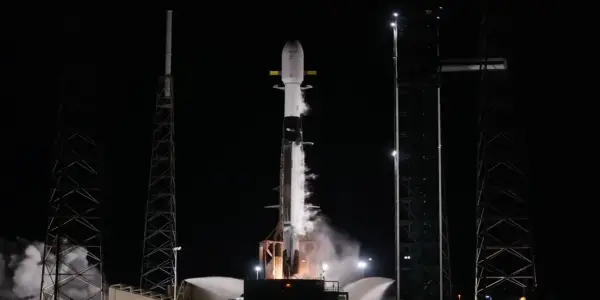
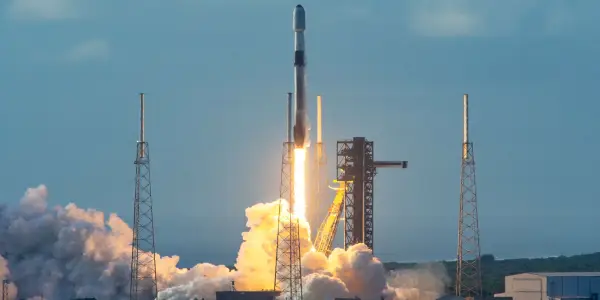
On November 18, SpaceX completed another successful nighttime launch of its Starlink internet satellites from Cape Canaveral, enhancing its satellite constellation.
In-depth analysis
New discoveries
The recent Falcon 9 launch has propelled the total number of operational Starlink satellites to over 9,000, marking a pivotal advancement in satellite internet technology. This increase not only enhances global connectivity but also demonstrates SpaceX's ongoing commitment to innovation in satellite deployment and operational efficiency, crucial for addressing the digital divide.
Mission updates
The Falcon 9 rocket successfully launched on November 18, achieving a flawless nighttime deployment of new Starlink satellites. The mission also marked the 81st successful landing of the rocket's reusable first stage, reinforcing SpaceX's operational efficiency.
Who is affected
The expansion of the Starlink satellite constellation directly impacts individuals in underserved regions who lack reliable internet access. As SpaceX enhances its satellite network, communities worldwide stand to benefit from improved connectivity, which is essential for education, business, and daily communication.
Next steps
Looking ahead, SpaceX plans to continue its aggressive deployment of Starlink satellites to bolster global internet coverage. The company aims to solidify its position in the competitive satellite internet market while enhancing service accessibility for remote areas.
Did you know?
Why we should care
The successful launch of Starlink satellites by SpaceX is more than a technological feat; it's a step toward universal internet access. For families in rural areas or developing nations, reliable internet can mean access to education, healthcare, and job opportunities. This launch represents a commitment to bridging the digital divide, making connectivity possible for those who currently lack it.
The universe's unsolved mystery
As SpaceX propels more satellites into orbit, the broader question of space debris looms larger. With thousands of satellites now in the sky, the risk of collisions and their environmental impact becomes a pressing concern. The challenge lies in balancing technological advancement with sustainable practices to ensure that the cosmos remains a safe space for exploration.
The person who looks at the stars
Meet Clara Ramirez, a middle school science teacher in a rural town. For her students, the night sky is often a distant dream, with limited access to educational resources. Clara has been following SpaceX's missions closely, inspired by the potential of Starlink to bring internet to her students. She envisions a future where her classroom can connect to the world beyond their small community, allowing students to explore the universe through virtual field trips and online learning. With each successful launch, Clara feels a glimmer of hope that her students' dreams of becoming scientists or astronauts might one day be within reach, thanks to the technology that connects them to the vast possibilities of the cosmos.

James Webb Telescope Identifies Rapidly Growing...
Exploring the 'Ultraview Effect': Human...
Affordable Fitness Tracking: The Amazfit Active 2...

Jeff Bezos's AI Hardware Venture Takes Aim at...
Astronomers Capture First Image of Two Orbiting...
Boeing's Upcoming Starliner Mission Set for April...
Mapping the Invisible: Astronomers Uncover Dark...

China's Mars Orbiter Captures Image of...
Innovative Portable Reflecting Telescope...
Satellite Observations Reveal Unconventional...
Expansion of Earth’s Magnetic Field Weak Spot...
Celestial Wonders of Autumn 2025: Eight Key Night...

OnePlus 15 vs. Samsung Galaxy S25 Plus: A Clash...
Proposed Fleet of Sun-Gazing Spacecraft Aims to...
SpaceX Achieves Major Milestone with Launch of...

MiHoYo Expands Ambitions with New MMO Project...
Impulse Space Enters Lunar Exploration: New...

Reviving Adult Friendships: Strategies to Combat...
New Mexico Startup Unveils Ambitious Plan to...
NASA Faces Scrutiny Over Boeing Starliner...
China's Shenzhou 22 Mission Launches Uncrewed...
Russian Cosmonauts Conduct Extended Spacewalk to...
NASA's Ambitious Timeline for Human Exploration...
Assessing the Financial Impact of NASA's Apollo...
Unistellar eQuinox 2 Smart Telescope Sees...

Top Black Friday Smartwatch Deals Worth...

The Pleiades Star Cluster Reveals Its Extensive...

Childcare Crisis: Families Struggle as...
Astronomers Capture Evidence of Dark Matter's...
Japanese Astronaut Observes Typhoon Activity from...
SpaceX Set to Launch NASA's Pandora Exoplanet...
Potential Evidence of Dark Matter Emerges from...

Astrophysicists Unveil Dark Universe Through...
Samsung Galaxy S26 Expected to Feature Enhanced...

Unusual Wind from Neutron Star Challenges Space...
NASA's Artemis 3 Moon Mission Delayed to 2028 Due...
New Simulations Shed Light on the Enigmatic...
Artemis 2 Astronauts Safely Return After Historic...

NASA Unveils New Images of Interstellar Comet...
Astrophotographer Captures Stunning Image of...