Innovative Fluorescent Probe Reveals Microbial Activity in Ocean Carbon Cycling
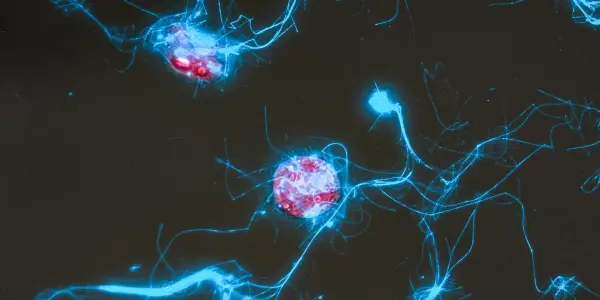
A newly developed fluorescent sugar probe enables scientists to visualize the breakdown of complex carbohydrates by marine microbes, offering insights into their role in the ocean's carbon cycle.
In-depth analysis
Natural phenomena
The introduction of a novel fluorescent sugar probe marks a significant advancement in understanding marine ecosystems. This innovative tool allows scientists to observe in real-time how marine microbes decompose complex carbohydrates, particularly focusing on sugars like α-mannan found in algae. The probe utilizes Förster resonance energy transfer (FRET), illuminating the intricate interactions between algae and their microbial consumers.
Impact on communities
The research findings offer vital insights for coastal communities reliant on marine resources. By understanding how sugars are metabolized in oceanic environments, stakeholders can better assess the health of marine ecosystems and their contributions to local economies.
Scientific updates
The study highlights the successful application of automated glycan assembly to create a fluorescent sugar probe, enabling researchers to track the degradation of α-mannan in various environments. This breakthrough allows for real-time observation of microbial activity, enhancing the understanding of carbon dynamics in marine ecosystems.
Future outlook
The development of this fluorescent probe opens new avenues for research into microbial metabolism and carbon cycling. As scientists continue to explore its applications, it may lead to improved strategies for managing marine resources and addressing climate change impacts.
Did you know?
Why this matters for our planet
Understanding how marine microbes break down sugars directly impacts the health of ocean ecosystems and the global carbon cycle. As these microbes play a pivotal role in carbon sequestration, enhancing our knowledge of their functions can lead to more effective strategies for combating climate change. This research connects to everyday life by highlighting the intricate relationships within our oceans that contribute to overall planetary health.
Earth's undiscovered wonder
Did you know that marine microbes can decompose complex carbohydrates at a rate that influences carbon cycling in ocean environments? This newly developed fluorescent probe reveals these processes in real-time, showcasing the previously hidden dynamics of microbial life and its critical role in regulating atmospheric carbon dioxide levels.
The voice of Earth
Marcus, 34, from Chicago, spent his childhood by the shores of Lake Michigan, where he first learned about the delicate balance of aquatic ecosystems. Now a marine biologist, he was deeply moved when he witnessed the effects of climate change firsthand during a research trip to the Gulf of Mexico. The vibrant algae blooms he once admired were now indicators of ecological distress. The discovery of a new fluorescent probe resonated with him; it represents hope for understanding and protecting these vital marine systems. As he reflects on his work, Marcus feels a profound responsibility to uncover the secrets of marine microbes, believing that every small discovery can contribute to a healthier planet for future generations.
Rising Gas Bills Despite Low Natural Gas Prices:...

Political Turmoil Deepens as Another French Prime...
Understanding Artificial Reefs: A Solution for...
Innovative Fluorescent Probe Reveals Microbial...
ESA's Mars Orbiters Capture Rare Sight of...

Exploring the Total Number of People Who Have...

The Intersection of AI Development and Natural...

Exploring Iterative Creativity: Pelicans on...

Post-Artemis 2: What Insights Will Scientists...

The Evolution of Real-Time AI Translation:...
Sun Emits Second-Strongest Flare of 2025, Causing...
Supercomputers Analyze Enceladus's Plume Dynamics

Apple Offers Support Following Fire in Hong Kong
Reassessing the Impact of Farmed Seafood on Ocean...
Asteroid 2025 TF Makes Close Approach to Earth,...
Historic Tri-National Initiative to Safeguard the...

Google Enhances Weather Forecasting with...
Live Stream of Comets Lemmon and SWAN Approaching...

Rammed Earth Homes of 2026 Showcase Sustainable...
New Glenn Rocket Completes Successful Test...
Damage Assessment Underway in Northern Australia...

Exploring the Depths of Nature: Boyd Varty's...
Stunning Winners of the 2025 Australian...

The Impact of Disasters on Relationships: A...
The Future of Exoplanet Discovery: Anticipating...
Moss Survives 9 Months in Space and Thrives After...

China's Meng Xiang Ship Aims for Record-Setting...

The Impact of the Three Gorges Dam on Earth's...

Sound Design Takes Center Stage in 'Alien: Earth'

The Download: Exploring Planetary Discovery and...

30 Unusual Bat Species That Challenge...
The Challenges of Sending a Supervillain into the...

Peacemaker Season 2 Approaches Climax with...
Researchers Collaborate with Michelin Chefs to...
Breakthrough in Microscopy Sheds Light on Ocean's...

Exploring the Nature of Intelligence: Insights...
Measuring Earth's Rotation with Gyroscopes

Rising Frustration in Aceh as Flood Relief...
Exocomets Detected Around Distant Stars
New Fossil Discovery Alters Understanding of...