Impact of Star Variability on Water Retention in Earth-Like Exoplanets
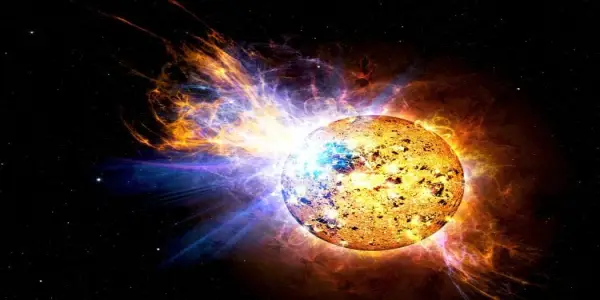
A new study published in The Astronomical Journal explores how fluctuations in a star's brightness affect the habitability of exoplanets. The research focuses on the relationship between stellar activity and the ability of these planets to retain water.
In-depth analysis
Natural phenomena
A recent study highlights the role of star variability, specifically fluctuations in brightness, in shaping the environmental conditions of exoplanets. Researchers examined nine exoplanets orbiting distinct stars, including K-type and M-type stars, to assess how these changes affect planetary climates and the crucial ability to retain water, a key factor for habitability.
Impact on communities
The implications of this research extend to scientific communities focused on astrobiology and planetary science, as understanding stellar influences on exoplanets can guide future exploration and potential colonization efforts.
Scientific updates
The study revealed that the equilibrium temperatures of the examined exoplanets were largely unaffected by their stars' variability. Notably, even planets at the inner edges of habitable zones demonstrated potential for water retention, challenging previous assumptions regarding the habitability of worlds around highly variable stars.
Future outlook
As astronomers delve deeper into the complexities of star-exoplanet relationships, future research will likely refine our understanding of habitability criteria, particularly for planets orbiting the abundant yet unpredictable M-type stars.
Did you know?
Why this matters for our planet
The study of star variability and its effects on exoplanets has profound implications for our understanding of habitability beyond Earth. As we face climate challenges here, learning how other worlds can sustain water and life is essential. This research helps refine the search for habitable planets, potentially guiding future exploration and even the possibility of human settlement in distant solar systems.
Earth's undiscovered wonder
Did you know that M-type stars, which make up about 70% of the stars in our galaxy, can last trillions of years? This longevity presents a unique opportunity for planets within their habitable zones to develop and sustain life over astronomical timescales, potentially allowing life to evolve in ways we can't yet imagine.
The voice of Earth
Marcus, 34, from Chicago, has always been fascinated by the stars. As a child, he would gaze up at the night sky, wondering if other worlds were out there with life. After hearing about the recent findings on exoplanets and their potential to retain water, he felt a spark of hope. Marcus often shares this passion with his young daughter, Emma, teaching her about the universe's mysteries. He dreams of a future where humanity can explore these distant planets together, fostering a connection with the cosmos that transcends generations.

VTN Architects Completes Nuoc Ui School in...

The Impact of the Three Gorges Dam on Earth's...
China's Astronauts Return Safely, but Another...

Innovative Gel Shows Promise in Regenerating...

Rising Frustration in Aceh as Flood Relief...
Young Star V1298 Tau Sheds Light on Planet...
Intense Solar Activity: Sunspot Region Produces...

US Government to Halt SNAP Benefits Amid Ongoing...
Understanding Artificial Reefs: A Solution for...
Jupiter's Rapid Spin Influences Water...
Significant Solar Activity Forecasted to Cause...

American Museum of Natural History Launches...
The Allure of Venezuela's Oil Reserves: Analyzing...

Exploring the Depths of Nature: Boyd Varty's...


Apple Offers Support Following Fire in Hong Kong

Indigenous Activists Challenge COP30's Rainforest...

Reassessing Economic Growth: Valuing Natural...
Geomagnetic Storm Forces Delay of Blue Origin's...

Exploring the Conclusion of 'Predator: Badlands'
Damage Assessment Underway in Northern Australia...
Exploring Sustainable Approaches to Deep-Sea...

Exploring the Nature of Intelligence: Insights...

Rammed Earth Homes of 2026 Showcase Sustainable...
New Technique Unveils Natural Clock in Dinosaur...
New Study Reveals Microbes Colonizing Freshly...

Innovative Engine Harnesses Deep Space Energy for...
Newly Discovered Snake Species Named After Steve...

Steven Spielberg Steps Back from Sci-Fi Series...

WhatsApp Security Vulnerability Exposes 3.5...

Putin Initiates Strategic Plan for Russia's Rare...

New Ice Age Episodes of Prehistoric Planet Now...

Pacific Northwest's Subduction Zone Revealed to...
Study Reveals Fast Healing of Deep Earthquake...

Reassessing the Impact of Farmed Seafood on Ocean...
Insights into Lithospheric Dynamics from Turkana...
First Mosquito Sightings in Iceland Linked to...

Post-Artemis 2: What Insights Will Scientists...
Exocomets Detected Around Distant Stars