ESA's Mars Orbiters Capture Rare Sight of Interstellar Comet 3I/ATLAS
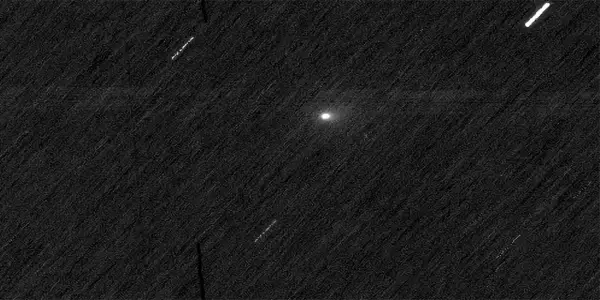
The European Space Agency's Mars orbiters have successfully observed the interstellar comet 3I/ATLAS, marking a significant moment in astronomical research as scientists work to uncover its origins and composition.
In-depth analysis
Natural phenomena
The European Space Agency's ExoMars Trace Gas Orbiter and Mars Express spacecraft have successfully captured images of the interstellar comet 3I/ATLAS. This event marks only the third documented observation of such a comet, occurring during its closest approach to Mars on October 3, at a distance of about one million kilometers.
Impact on communities
The observation of 3I/ATLAS has sparked significant interest within the scientific community, highlighting the potential for advancements in our understanding of celestial phenomena and the origins of our solar system.
Scientific updates
Researchers are analyzing the comet's coma, which offers insights into its composition and the processes at play as it approaches the Sun. The faintness of 3I/ATLAS posed challenges, but innovative imaging techniques are being employed to enhance data collection from both orbiters.
Future outlook
The upcoming Comet Interceptor mission, set for launch in 2029, will further explore interstellar comets like 3I/ATLAS. Ongoing analysis of current data is expected to deepen our understanding of these ancient celestial bodies and their significance in the cosmos.
Did you know?
Why this matters for our planet
The observation of comet 3I/ATLAS is crucial for understanding the building blocks of our solar system and the origins of life. By studying these interstellar visitors, scientists can uncover vital information about the chemical elements that formed Earth. This knowledge could influence future space exploration and even inspire new technologies that benefit life on our planet, from sustainable practices to advancements in materials science.
Earth's undiscovered wonder
Did you know that comets like 3I/ATLAS can contain organic compounds, the very ingredients thought to spark the beginnings of life on Earth? These ancient celestial bodies are essentially time capsules, preserving the chemistry of our solar system's infancy and offering clues about the potential for life beyond our planet.
The voice of Earth
Marcus, 34, from Chicago, gazes at the night sky through his telescope, captivated by the thought of distant comets. As a high school science teacher, he often shares the story of 3I/ATLAS with his students, emphasizing its importance in understanding our cosmic origins. For Marcus, the comet isn't just a fleeting spectacle; it's a reminder of humanity's quest for knowledge. He recalls a moment when a student, inspired by his lessons, asked if comets could bring new life to distant planets. That question sparked a class project on astrobiology, igniting a passion for science among his students. To Marcus, 3I/ATLAS represents hope and the endless possibilities that lie beyond Earth.
Jupiter and the Moon Align on October 13: Viewing...
New Research Suggests Water Could Form During...
Viewing Comet C/2025 R2 (SWAN) During Its October...
Mars Tactics: A New Strategic Frontier from...
China's Astronauts Return Safely, but Another...
Perseverance Rover Discovers Unusual Rock Near...
The Future of Exoplanet Discovery: Anticipating...
Young Star V1298 Tau Sheds Light on Planet...
Draconid Meteor Shower Peaks on October 8: What...
Exploring the Nature of Intelligence: Insights...

Google Launches WeatherNext 2: Enhanced AI...
October’s Night Sky Features a Supermoon and...
New Ice Age Episodes of Prehistoric Planet Now...
Upcoming Venus Missions Set to Explore Earth's...
Insights into Lithospheric Dynamics from Turkana...

Rammed Earth Homes of 2026 Showcase Sustainable...
SpaceX to Launch Over 100 Satellites Today on...

Understanding the Formation of Tectonic Plates

Rising Frustration in Aceh as Flood Relief...

Reassessing the Impact of Farmed Seafood on Ocean...
Ecuadorian Quarry Yields 112-Million-Year-Old...
Study Reveals Fast Healing of Deep Earthquake...

Post-Artemis 2: What Insights Will Scientists...
Blue Origin's New Glenn Rocket Successfully Lands...
October 2025 New Moon Offers Rare Antares...

Apple Offers Support Following Fire in Hong Kong
Aging Stars Pose Threat to Nearby Planets, New...
Becoming a Backyard Meteorologist: A Guide with...

Newly Discovered Snake Species Named After Steve...
Ancient Crocodile Fossils Unearthed in Australia...

FX Confirms Season 2 Renewal for 'Alien: Earth'

Catherine O’Hara, Iconic Actress from...

The Intersection of AI Development and Natural...

Exploring Iterative Creativity: Pelicans on...
Understanding Artificial Reefs: A Solution for...

Sound Design Takes Center Stage in 'Alien: Earth'

The Impact of the Three Gorges Dam on Earth's...
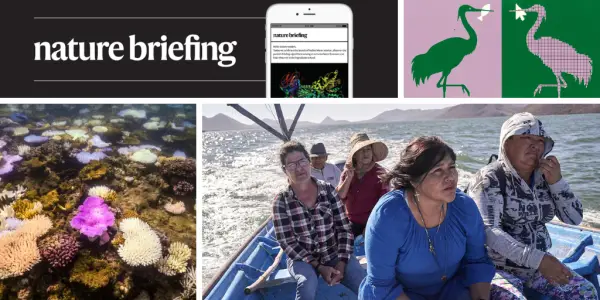
New Report Warns Corals Have Reached Irreversible...

WhatsApp Security Vulnerability Exposes 3.5...

VTN Architects Completes Nuoc Ui School in...