The Future of Exoplanet Discovery: Anticipating Thousands More
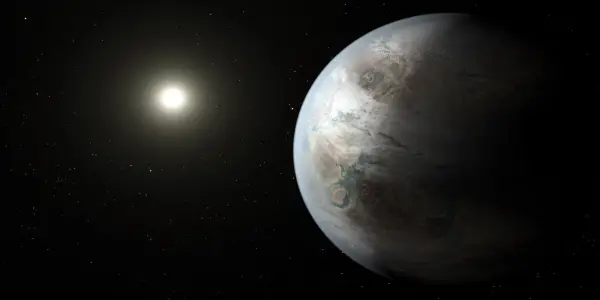
As the astronomical community celebrates the 30th anniversary of the first exoplanet discovery, a new era of exploration is set to unfold, promising a significant increase in the number of known exoplanets.
In-depth analysis
Natural phenomena
The realm of exoplanet research is experiencing unprecedented growth, with the known exoplanet count exceeding 6,000. This milestone aligns with the 30th anniversary of the first exoplanet discovery, highlighting significant advancements in astronomical techniques and technologies aimed at identifying new worlds, particularly those resembling Earth.
Impact on communities
The surge in exoplanet discoveries is poised to engage scientific communities worldwide, fostering collaboration and innovation in research. This influx of data may also inspire educational initiatives centered around astronomy and the search for extraterrestrial life.
Scientific updates
Upcoming missions like the European Space Agency’s PLATO and NASA’s Roman Space Telescope are set to revolutionize exoplanet detection. These missions will employ advanced techniques such as gravitational microlensing and transiting planet detection, significantly enhancing the capabilities of astronomers and expanding our understanding of potential Earth-like planets.
Future outlook
With a forecasted increase in exoplanet candidates, the next decade promises a transformative era in astronomy. As new missions begin, the astronomical community anticipates a wealth of discoveries that could reshape our understanding of planetary systems and the conditions for life beyond Earth.
Did you know?
Why this matters for our planet
The discovery of over 6,000 exoplanets opens new avenues for understanding our universe and our place within it. As scientists seek Earth-like worlds, the potential for discovering habitable planets could reshape our approach to climate change and conservation on Earth. This knowledge might inspire innovative solutions to protect our own planet while considering the broader cosmic context of life.
Earth's undiscovered wonder
A fascinating fact about exoplanets is that the first confirmed discovery, 51 Pegasi b, was found using a method called radial velocity. This technique measures tiny shifts in a star's light caused by gravitational interactions, highlighting how precise and innovative astronomical methods have become in uncovering the mysteries of the universe.
The voice of Earth
Marcus, 34, from Chicago, has always gazed up at the night sky with wonder. As a child, he dreamed of distant worlds, inspired by tales of space exploration. Recently, he attended a seminar on exoplanets, where he learned about the possibility of finding Earth-like planets. Marcus felt a deep connection, realizing that the search for life beyond our planet might one day reflect the importance of protecting our own environment. This sparked a new passion in him: advocating for sustainable practices in his community, driven by the hope that future generations might explore these distant worlds.
Rising Gas Bills Despite Low Natural Gas Prices:...

UK Churches Embrace Heat Pumps for Sustainable...

Understanding Artificial Reefs: A Solution for...

Innovative Fluorescent Probe Reveals Microbial...

Becoming a Backyard Meteorologist: A Guide with...

Exploring the Total Number of People Who Have...

The Intersection of AI Development and Natural...

Exploring Iterative Creativity: Pelicans on...

Post-Artemis 2: What Insights Will Scientists...

The Evolution of Real-Time AI Translation:...
Sun Emits Second-Strongest Flare of 2025, Causing...

HEO Robotics Expands Satellite Imaging...

Apple Offers Support Following Fire in Hong Kong

Sound Design Takes Center Stage in 'Alien: Earth'
Asteroid 2025 TF Makes Close Approach to Earth,...

Historic Tri-National Initiative to Safeguard the...

Amazon Fires Emit Record Carbon Levels,...
Live Stream of Comets Lemmon and SWAN Approaching...

Rammed Earth Homes of 2026 Showcase Sustainable...

New Glenn Rocket Completes Successful Test...

Damage Assessment Underway in Northern Australia...

Exploring the Depths of Nature: Boyd Varty's...

Stunning Winners of the 2025 Australian...
Upcoming Venus Missions Set to Explore Earth's...
ESA's Mars Orbiters Capture Rare Sight of...

Moss Survives 9 Months in Space and Thrives After...

China's Meng Xiang Ship Aims for Record-Setting...
NASA's Mars Sample Return Mission Faces...

Reassessing the Impact of Farmed Seafood on Ocean...

The Download: Exploring Planetary Discovery and...

30 Unusual Bat Species That Challenge...

Wildlife Photographer of the Year 2025:...

Peacemaker Season 2 Approaches Climax with...
Perseverance Rover Discovers Unusual Rock Near...
Breakthrough in Microscopy Sheds Light on Ocean's...

Exploring the Nature of Intelligence: Insights...
Measuring Earth's Rotation with Gyroscopes

New Report Warns Corals Have Reached Irreversible...
Exocomets Detected Around Distant Stars
New Fossil Discovery Alters Understanding of...