Unexpected Nutrient Source Discovered in Deep-Sea Ecosystems
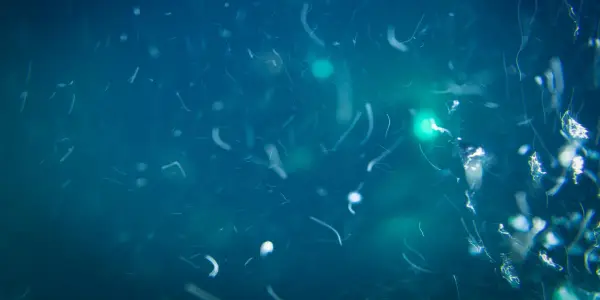
Researchers have identified a surprising food source in the deep ocean that could transform our understanding of marine ecosystems and carbon cycling.
In-depth analysis
Natural phenomena
Recent findings reveal that deep-sea microbes thrive on marine snow, a nutrient-rich aggregate of decaying organic material. As this material descends under immense hydrostatic pressure, it releases dissolved carbon and nitrogen, providing a crucial food source for these microorganisms, fundamentally altering perceptions of nutrient availability in the deep ocean.
Impact on communities
The discovery of nutrient leakage from marine snow may reshape local fishing communities' strategies, as it highlights the importance of deep-sea ecosystems in sustaining marine life and potentially influencing fish populations.
Scientific updates
The study published in Science Advances emphasizes that significant amounts of carbon may leak from marine snow during descent, challenging previous assumptions about carbon sequestration in ocean sediments. This suggests a reevaluation of the ocean's role in the global carbon cycle and climate regulation.
Future outlook
Upcoming field studies aboard the German research vessel Maria S. Merian aim to uncover molecular signatures of nutrient leakage across various ocean depths. These investigations will further illuminate the dynamics of deep-sea ecosystems and their implications for climate science.
Did you know?
Why this matters for our planet
Understanding the nutrient dynamics in deep-sea ecosystems is crucial for global climate health. As these microbes process and recycle carbon, their role in the carbon cycle becomes even more vital. This research may reshape how we approach ocean conservation, emphasizing the importance of deep-sea ecosystems in mitigating climate change and supporting fisheries that many communities rely on for food and livelihood.
Earth's undiscovered wonder
Deep-sea microbes can thrive in conditions previously thought to be barren, demonstrating that life can adapt even in extreme environments. Recent findings show that these organisms can utilize dissolved organic matter released from marine snow, highlighting a vital nutrient source that helps sustain complex ecosystems at depths of up to 6 kilometers.
The voice of Earth
Marcus, 34, from Chicago, often finds solace in the ocean’s waves during his weekend getaways. One evening, while watching the sunset on the shore, he learned about the deep-sea microbes that play a crucial role in the carbon cycle. Moved by their resilience, he felt a newfound connection to the ocean, realizing that even the remote depths contribute to life on land. Inspired, Marcus now advocates for ocean conservation, understanding that every action can impact these unseen ecosystems.
Expert Commentary

Exploring Iterative Creativity: Pelicans on...

Damage Assessment Underway in Northern Australia...

WhatsApp Security Vulnerability Exposes 3.5...

Putin Initiates Strategic Plan for Russia's Rare...
James Webb Space Telescope Reveals First 3D...
Upcoming Venus Missions Set to Explore Earth's...

Coyote vs. Acme Blends Looney Tunes with...

Ancient Australian Rocks Provide Insights into...

Exploring Sustainable Methods for Rare Earth...
The Allure of Venezuela's Oil Reserves: Analyzing...

Innovative Engine Harnesses Deep Space Energy for...

Blue Origin's New Glenn Rocket Set to Launch...

VTN Architects Completes Nuoc Ui School in...

November's Full Supermoon: A Celestial Event to...

Sun Unleashes Spectacular Solar Flare Amid...

Rammed Earth Homes of 2026 Showcase Sustainable...
Understanding Artificial Reefs: A Solution for...

Artemis II Sparks Renewed Interest in Lunar...

Intaaya Retreat in Indonesia Features Innovative...

Understanding the Formation of Tectonic Plates

Apple Offers Support Following Fire in Hong Kong

Tennessee's Nature-Based Solutions for Health and...

American Museum of Natural History Launches...
NASA's Mars Sample Return Mission Faces...

Protests Erupt at COP30 Climate Summit in Belém

Rising Frustration in Aceh as Flood Relief...

Innovative Gel Shows Promise in Regenerating...

FX Confirms Season 2 Renewal for 'Alien: Earth'

Supercomputers Analyze Enceladus's Plume Dynamics
Reassessing the Impact of Farmed Seafood on Ocean...

Sun Emits Second-Strongest Flare of 2025, Causing...

Mars Express Reveals Evidence of Ancient Ice Age...

Post-Artemis 2: What Insights Will Scientists...

New Insights from the Butterfly Nebula May...

Innovative Technique Utilizes Dragonberry Weed to...

Natural History Museums: Essential Partners in...


Steven Spielberg Steps Back from Sci-Fi Series...
Young Star V1298 Tau Sheds Light on Planet...

First Mosquito Sightings in Iceland Linked to...