Detection of Phosphine on Brown Dwarf Complicates Search for Extraterrestrial Life
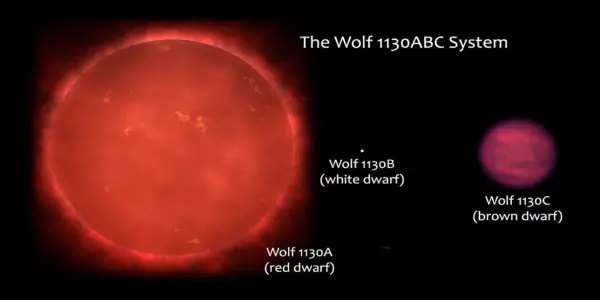
Recent findings indicate that phosphine, a potential biosignature, should be approached with caution until non-biological origins are conclusively ruled out.
In-depth analysis
Natural phenomena
The detection of phosphine on the brown dwarf Wolf, located about 50 light-years from Earth, represents a significant advancement in astrophysics. This celestial body, straddling the boundary between planets and stars, has now provided strong spectral signatures of phosphine, a compound often associated with biological processes. This breakthrough highlights the complexities of chemical formations in such extreme environments.
Impact on communities
This discovery has sparked renewed interest in astrobiology, prompting both excitement and skepticism within scientific communities worldwide. Researchers are now more motivated to explore the implications of phosphine as a potential biosignature.
Scientific updates
Researchers utilized advanced spectral analysis techniques to confirm the presence of phosphine on Wolf, challenging previous assumptions about its formation. This finding emphasizes the need for a deeper understanding of chemical processes in environments once thought inhospitable to phosphine synthesis, reflecting a shift in scientific perspectives.
Future outlook
The ongoing investigation into the conditions that allow for phosphine's presence on Wolf is crucial for future astrobiological studies. This discovery not only enhances our knowledge of cosmic chemistry but also encourages scientists to refine their approaches to identifying potential biosignatures.
Did you know?
Why this matters for our planet
The detection of phosphine on the brown dwarf Wolf could reshape our understanding of life's potential beyond Earth. This finding suggests that environments previously considered inhospitable may nurture complex chemical processes. For everyday people, this discovery ignites curiosity and hope about our place in the universe, reminding us that the search for life is not confined to Earth alone.
Earth's undiscovered wonder
Phosphine, a molecule associated with biological processes on Earth, was thought to exist mainly in the atmospheres of planets like Venus. The recent detection on Wolf challenges this notion, revealing that it can form in unexpected cosmic environments, hinting at the complexity of chemistry in the universe.
The voice of Earth
Marcus, 34, from Chicago, has always found solace in stargazing. One night, he learned about the phosphine discovery on Wolf while attending an astronomy lecture. As he looked up at the stars, he felt a profound connection to the universe, imagining unknown worlds where life might exist. This discovery sparked a dream in Marcus to advocate for space exploration, believing that understanding these celestial bodies could one day unveil new chapters in humanity's story.
Expert Commentary
Moss Survives 9 Months in Space and Thrives After...

Newly Discovered Snake Species Named After Steve...

Top Organic Mattresses of 2025: Birch, Avocado,...
Live Stream of Comets Lemmon and SWAN Approaching...

Innovative Architectural Designs Inspired by...

SpaceX to Launch Over 100 Satellites Today on...
October’s Night Sky Features a Supermoon and...

Exploring Iterative Creativity: Pelicans on...

Catherine O’Hara, Iconic Actress from...

UK Churches Embrace Heat Pumps for Sustainable...

The Impact of Disasters on Relationships: A...

Peacemaker Season 2 Approaches Climax with...
The Future of Exoplanet Discovery: Anticipating...

WhatsApp Security Vulnerability Exposes 3.5...
Exocomets Detected Around Distant Stars

China's Meng Xiang Ship Aims for Record-Setting...

Rising Frustration in Aceh as Flood Relief...
New Fossil Discovery Alters Understanding of...

US Greenhouse Gas Emissions Increase Amid Cold...

Indigenous Activists Challenge COP30's Rainforest...

Becoming a Backyard Meteorologist: A Guide with...

The Challenges of Sending a Supervillain into the...
Innovative Fluorescent Probe Reveals Microbial...

The Evolution of Real-Time AI Translation:...
Jupiter and the Moon Align on October 13: Viewing...
Ancient Australian Rocks Provide Insights into...
ESA's Mars Orbiters Capture Rare Sight of...

Sun Emits Second-Strongest Flare of 2025, Causing...

Damage Assessment Underway in Northern Australia...
Breakthrough in Microscopy Sheds Light on Ocean's...

Tennessee's Nature-Based Solutions for Health and...

Notable Aquatic Highlights from the 2025 Nature's...

Mars Tactics: A New Strategic Frontier from...
NASA's Mars Sample Return Mission Faces...
Embracing the Light: A Reflection on Our...

Beau Greaves: The Rising Star of Darts Shines...

Reassessing the Impact of Farmed Seafood on Ocean...

Apple Offers Support Following Fire in Hong Kong

Understanding the Formation of Tectonic Plates
Upcoming Venus Missions Set to Explore Earth's...