Utrecht's Rijnvliet Development Features Edible Landscape
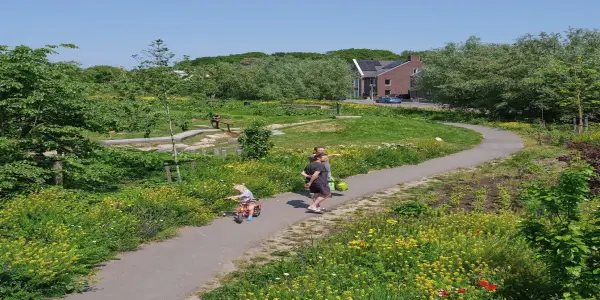
The Rijnvliet housing development in Utrecht, Netherlands, designed by Felixx Landscape Architects & Planners and De Zwarte Hond, incorporates 1,000 fruit trees and 220 species of edible plants.
In-depth analysis
Natural phenomena
The Rijnvliet housing development in Utrecht showcases a harmonious blend of urban living and natural ecosystems. Designed to include 1,000 fruit trees and a variety of 220 edible plant species, the project mimics natural habitats, fostering biodiversity and supporting local wildlife. Its layered planting strategy enhances ecological resilience while promoting sustainable food production.
Impact on communities
This initiative has the potential to transform community interactions by promoting sustainable living practices. By integrating edible landscapes into residential areas, it encourages local residents to engage with their environment and fosters a sense of ownership and responsibility towards food production.
Scientific updates
Recent advancements in landscape architecture have been applied in Rijnvliet, emphasizing ecological design principles. The integration of multiple plant layers not only supports biodiversity but also enhances urban resilience against climate challenges, such as flooding, by incorporating permeable paving and green infrastructure for improved water management.
Future outlook
As urban areas increasingly prioritize sustainability, projects like Rijnvliet may inspire similar developments worldwide. The focus on edible landscapes could redefine urban planning, promoting biodiversity while addressing food security and climate resilience in cities.
Did you know?
Why this matters for our planet
The Rijnvliet housing development isn't just about aesthetics; it’s a model for sustainable urban living. By integrating 1,000 fruit trees and 220 edible plant species, this project promotes local food production and biodiversity. Residents can enjoy fresh produce while reducing their carbon footprint, showcasing how urban spaces can be transformed into self-sustaining ecosystems that benefit both people and the planet.
Earth's undiscovered wonder
Did you know that urban gardens like those in Rijnvliet can produce up to 30% more food per acre compared to traditional farms? This is due to their unique planting designs and biodiversity, which create healthier ecosystems and improve resilience against pests and diseases.
The voice of Earth
Marcus, 34, from Chicago, discovered his passion for gardening during the pandemic. Seeking solace, he transformed his balcony into a mini urban orchard, planting tomatoes, herbs, and berries. Inspired by projects like Rijnvliet, he dreams of a day when cities embrace edible landscapes. Each fruit he harvests reminds him of the connection between nature and community, deepening his commitment to sustainable living. Marcus understands that every small effort contributes to a healthier planet.

The Impact of Disasters on Relationships: A...
Researchers Collaborate with Michelin Chefs to...
Reassessing the Impact of Farmed Seafood on Ocean...
Rising Gas Bills Despite Low Natural Gas Prices:...
New Fossil Discovery Alters Understanding of...
NASA's Mars Sample Return Mission Faces...
Innovative Fluorescent Probe Reveals Microbial...
Protests Erupt at COP30 Climate Summit in Belém
Insights into Lithospheric Dynamics from Turkana...

Trump Criticizes China's Trade Actions, Confirms...
New Research Sheds Light on Jet Streams of Gas...
The Late Ordovician Mass Extinction: A Pivotal...

UK Churches Embrace Heat Pumps for Sustainable...
Stunning Winners of the 2025 Australian...
Exploring the Nature of Intelligence: Insights...
Embracing the Light: A Reflection on Our...
New Research Suggests Water Could Form During...
Study Reveals Fast Healing of Deep Earthquake...
The Intersection of AI Development and Natural...

Sound Design Takes Center Stage in 'Alien: Earth'
Impact of Star Variability on Water Retention in...
Perseverance Rover Uncovers New Clue in Mars Life...

Peacemaker Season 2 Approaches Climax with...
New Report Warns Corals Have Reached Irreversible...
SpaceX to Launch Over 100 Satellites Today on...
October’s Night Sky Features a Supermoon and...
Tennessee's Nature-Based Solutions for Health and...
Understanding Artificial Reefs: A Solution for...
New Insights from the Butterfly Nebula May...

Johnny Keefer's Ascent Raises Questions About...

Turkey Declines Rare Earth Element Sales to the...
Mars Tactics: A New Strategic Frontier from...

Political Turmoil Deepens as Another French Prime...

Google Enhances Weather Forecasting with...
Ancient Crocodile Fossils Unearthed in Australia...
Live Stream of Comets Lemmon and SWAN Approaching...

The Challenges of Sending a Supervillain into the...
Sun Emits Second-Strongest Flare of 2025, Causing...

The Impact of the Three Gorges Dam on Earth's...
Ecuadorian Quarry Yields 112-Million-Year-Old...