New Lunar Findings Uncover Temperature Disparities on Moon's Far Side
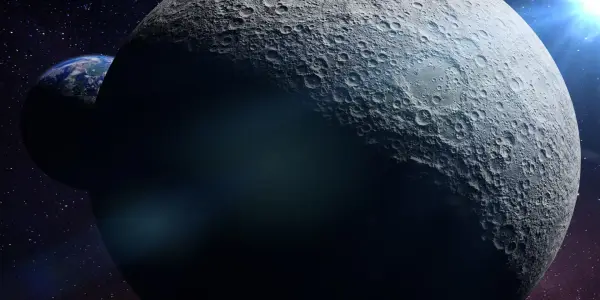
Recent analysis of lunar samples from the Moon's far side indicates it formed from cooler magma than its near side, revealing significant differences in the Moon's internal composition.
In-depth analysis
Natural phenomena
The recent study of the Moon's far side reveals that it formed from magma at significantly lower temperatures compared to the near side. Analysis of rock samples from the Chang'e 6 mission indicates a complex geological history, marked by uneven internal structures and varying mineral compositions, suggesting distinct geological processes across the lunar surface.
Impact on communities
This research enhances public interest in lunar exploration, potentially inspiring educational initiatives and scientific engagement. Communities may benefit from increased investment in space research and technology, fostering a greater understanding of planetary science.
Scientific updates
The findings indicate that the far side of the Moon has a lower concentration of heat-producing elements, which may be linked to an ancient asteroid impact. This uneven distribution challenges previous theories about the Moon's formation and geological activity, prompting further investigation into its thermal history and composition.
Future outlook
As researchers continue to analyze the lunar samples, they aim to clarify the Moon's thermal evolution and its implications for planetary formation. Ongoing lunar missions are expected to provide additional insights, further enriching our understanding of celestial bodies.
Did you know?
Why this matters for our planet
Understanding the Moon's geological history is crucial for grasping planetary formation processes, which have implications for Earth and beyond. The discovery of varied formation temperatures on the Moon highlights how different celestial bodies evolve. As we prepare for future lunar missions and potential colonization, these insights could guide sustainable practices on the Moon, impacting our technology and resource management on Earth.
Earth's undiscovered wonder
The Moon's far side is not just a barren landscape; it holds a record of our solar system's history. Surprisingly, the far side's surface is older than the near side, with rocks dated at around 2 billion years, providing a unique glimpse into the Moon's geological processes that differ from what we see from Earth.
The voice of Earth
Marcus, 34, from Chicago, has always been captivated by the night sky. As a child, he spent countless evenings with his grandfather, peering through a telescope. Learning about the Moon's far side reignited his passion. He often reflects on how these distant rocks, formed at cooler temperatures, hold clues to our own planet's history. Marcus dreams of one day visiting the Moon, hoping to connect with the legacy of human exploration and the profound mysteries that still exist just beyond our reach.
Expert Commentary
New Fossil Discovery Alters Understanding of...

Indigenous Activists Challenge COP30's Rainforest...
SpaceX to Launch Over 100 Satellites Today on...

UK Churches Embrace Heat Pumps for Sustainable...

The Impact of Disasters on Relationships: A...
Insights into Lithospheric Dynamics from Turkana...

Johnny Keefer's Ascent Raises Questions About...
Expansion of Texas Natural Gas Infrastructure...
Sun Emits Second-Strongest Flare of 2025, Causing...

Google Enhances Weather Forecasting with...

Post-Artemis 2: What Insights Will Scientists...
VTN Architects Completes Nuoc Ui School in...

Reassessing the Impact of Farmed Seafood on Ocean...

Newly Discovered Snake Species Named After Steve...
Michael Benson's Nanocosmos Highlights Natural...
Tennessee's Nature-Based Solutions for Health and...
The Challenges of Sending a Supervillain into the...
October’s Night Sky Features a Supermoon and...

The Download: Exploring Planetary Discovery and...

Exploring the Depths of Nature: Boyd Varty's...
New Study Reveals Microbes Colonizing Freshly...
Understanding the Formation of Tectonic Plates
Japanese Hot Springs May Illuminate the Early...

Innovative Architectural Designs Inspired by...

Catherine O’Hara, Iconic Actress from...
Moss Survives 9 Months in Space and Thrives After...
Stunning Winners of the 2025 Australian...
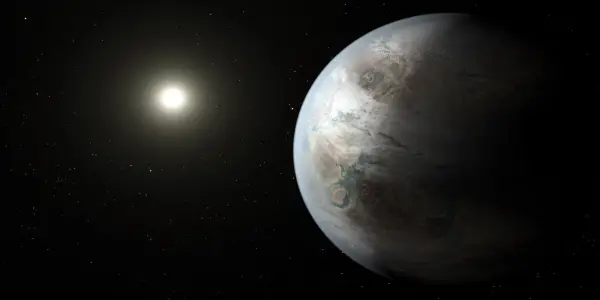
The Future of Exoplanet Discovery: Anticipating...
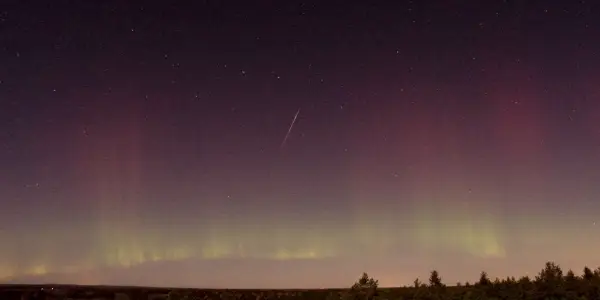
Draconid Meteor Shower Peaks on October 8: What...

Natural History Museums: Essential Partners in...
Researchers Collaborate with Michelin Chefs to...
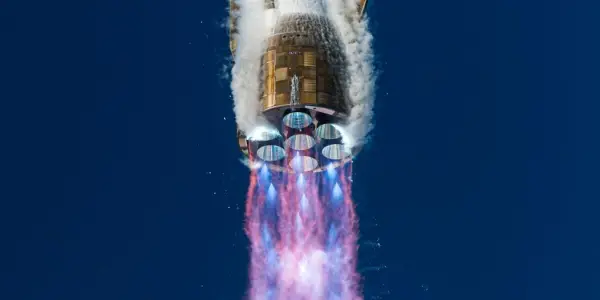
New Glenn Rocket Completes Successful Test...

Wildlife Photographer of the Year 2025:...

Discovery of Submerged Land Bridge in Turkey...
Ecuadorian Quarry Yields 112-Million-Year-Old...

WhatsApp Security Vulnerability Exposes 3.5...

Rising Frustration in Aceh as Flood Relief...
Perseverance Rover Discovers Unusual Rock Near...
Damage Assessment Underway in Northern Australia...
Young Star V1298 Tau Sheds Light on Planet...