New Organic Molecules Discovered in Cassini Data from Saturn’s Moon Enceladus
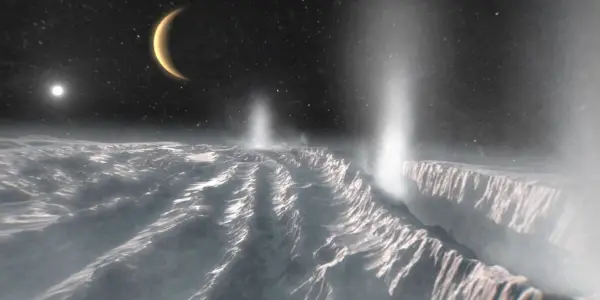
A new study reveals organic molecules in Cassini data from Saturn's moon Enceladus, fueling hope for extraterrestrial life amid its icy plumes and subsurface...
In-depth analysis
Current environmental changes
Recent findings from the Cassini spacecraft indicate that Enceladus is actively ejecting plumes of water vapor and ice particles from its subsurface ocean. This dynamic activity, characterized by high-velocity jets, suggests a complex interplay of geological and possibly biological processes occurring beneath the moon's icy surface, enhancing its profile as a site of astrobiological interest.
Impact on society
The discovery of organic molecules on Enceladus has profound implications for humanity's understanding of life's potential beyond Earth, sparking public interest and inspiring future scientific endeavors in astrobiology.
Policy implications
These revelations about Enceladus may influence space exploration funding and priorities, prompting policymakers to consider increased investment in missions aimed at investigating extraterrestrial life and the environments that support it.
Future outlook
The ongoing interest in Enceladus suggests that future missions will likely focus on direct exploration of its surface and subsurface, aiming to uncover definitive evidence of life and enhance our understanding of habitable conditions in the solar system.
Did you know?
Why this concerns all of us
The discovery of organic molecules on Enceladus challenges our understanding of life’s potential in the universe. It prompts us to reconsider our own planet’s fragility and the limits of habitability. As climate change alters Earth’s environment, this research underscores the need to protect our biosphere, reminding us that life can thrive in unexpected places, yet also be endangered.
Nature's hidden secret
Enceladus is not just a frozen moon; it actively spews plumes of water vapor and ice particles into space, reaching heights of up to 800 kilometers. This fascinating activity is driven by a subsurface ocean, making it one of the most intriguing celestial bodies in the search for extraterrestrial life.
The person whose life climate changed
Maria Torres, a marine biologist from coastal California, has dedicated her career to studying the effects of climate change on ocean ecosystems. After learning about the organic molecules found on Enceladus, she felt a renewed sense of hope. Inspired by the moon's potential for life, Maria is now more determined than ever to advocate for marine conservation. She sees parallels between the hidden depths of Enceladus and the unexplored resilience of Earth’s oceans, believing that both may hold secrets to life's adaptability. This revelation fuels her passion to protect marine habitats, emphasizing that the quest for understanding life extends far beyond our planet.
Expert Commentary
Antarctic Robot Explorer Surfaces After Eight...

Introducing the Clamshell Writer Deck: A Focused...

U.S. Fish and Wildlife Service's Plan to Cull...

Pacific Nations Set Ambitious Goal for 100%...

Rerouted Shipping Offers Unique Insights into...

The Emerging Debate on Geoengineering: A Call for...
Emerging Ocean Hotspots Heighten Risk of...
Impact of Global Warming on Reptile Sex Ratios...

Key Insights on the Future of Electricity Demand...

Recent Study Indicates Accelerated Pace of Global...
Unprecedented Strength of Hurricane Melissa Marks...
New Report Highlights Risks of Marine Carbon...

Guide to Setting Up and Customizing Gemini Raise...

Top Five Books Exploring the Intersection of...

UK Prepares for Cold Snap with Snow Forecasts...

Exploring the Depths of Human Connection: Ursula...
Key Outcomes from COP30: Innovations in...
Breakthrough Research Unveils Thermal Convection...

Sex Workers Launch 'Anti-OnlyFans' Platform to...

Hurricane Melissa's Death Toll Reaches 28 in...

South Africa's G20 Agenda: Addressing Debt,...

Japanese Trade Group, Including Studio Ghibli,...

The Economic Risks of Abruptly Halting Solar...

Lab Gloves May Complicate Microplastics Research,...
Bill Gates's Climate Remarks Spark Controversy...
The Overlooked Link Between Climate Change and...

Emerging Superfoods from the Amazon: Beyond Açaí
Revolutionizing Ocean Research: Robotic Floats...
Palantir's CEO Alex Karp Defends Company’s...

Foldable Phones on the Rise: 2026 Expected to...
New Mapping of Antarctica's Subglacial Landscape...
Grand Egyptian Museum Unveiled as Torre dei Conti...
Hurricanes and Droughts: A Dangerous Connection...

Revival of Wild Turkeys: A Conservation Triumph...
The Resilient Desert Flora Thrives in Extreme...
Reevaluating the Polar Bear Narrative Amid...

Global Rice Yields Plummet Due to Extreme...

AI Unveils Hidden Lion Roar, Revolutionizing...

Study Reveals Airborne Microplastics May...