The Resilient Desert Flora Thrives in Extreme Heat: Insights from Death Valley's Tidestromia Oblongifolia
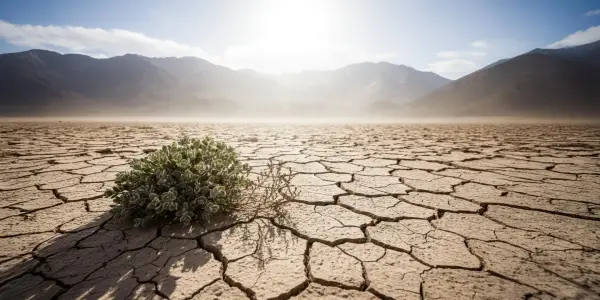
Researchers at Michigan State University have uncovered how Tidestromia oblongifolia not only survives but flourishes in the extreme conditions of Death Valley, revealing potential strategies for enhancing crop resilience in a warming world.
In-depth analysis
Current environmental changes
Death Valley's extreme climate, characterized by summer temperatures exceeding 120 degrees Fahrenheit, serves as a stark example of environmental changes driven by global warming. As temperatures are projected to rise further, studying resilient species like Tidestromia oblongifolia becomes crucial for understanding how certain plants survive and even thrive in such harsh conditions.
Impact on society
The resilience of Tidestromia oblongifolia highlights potential agricultural solutions amid rising temperatures. As crop yields for essential staples decline due to heat stress, the ability to adapt plant species becomes increasingly vital for food security.
Policy implications
Research into heat-tolerant plants like Tidestromia oblongifolia underscores the need for agricultural policies that prioritize resilience and adaptation strategies. Investment in plant research and development could play a critical role in safeguarding food systems against climate change.
Future outlook
The exploration of desert plants may pave the way for breakthroughs in agricultural resilience. As climate conditions worsen, leveraging the adaptations of species like Tidestromia oblongifolia could lead to innovative approaches in crop management and sustainability.
Did you know?
Why this concerns all of us
As climate change intensifies, extreme heat threatens food security worldwide. With rising temperatures, crops like wheat and maize struggle, jeopardizing livelihoods and increasing food prices. Understanding how Tidestromia oblongifolia thrives in Death Valley could unlock new agricultural strategies, ensuring we can continue to feed growing populations amidst harsh conditions. Our daily meals may depend on this research.
Nature's hidden secret
Tidestromia oblongifolia, the most heat-tolerant plant known, can triple its growth rate under extreme temperatures. This remarkable adaptation highlights how some plants can not only survive but thrive where most cannot, revealing nature's incredible resilience.
The person whose life climate changed
Maria Gonzalez, a third-generation farmer in California's Central Valley, has witnessed firsthand the devastating effects of climate change on her crops. Last summer, unprecedented heat waves wiped out nearly half of her corn yield, threatening her family's livelihood. As she navigates these challenges, Maria is hopeful that research on resilient plants like Tidestromia oblongifolia could lead to breakthroughs that allow her to adapt her farming practices. With her children watching her every move, she dreams of a future where they can continue the family tradition of farming, but she knows it will require innovation and resilience. For Maria, each seed sown carries the weight of hope for a sustainable future.

Can New Alcohol Warning Labels Shift Ireland's...

Guide to Setting Up and Customizing Gemini Raise...

Ancient Tools Illuminate Early Human Innovation...

Experts Caution Against Solar Geoengineering:...

OnePlus 15R Poised to Redefine Battery Life...
U.S. Fish and Wildlife Service's Plan to Cull...

Decline in Indian Passport Ranking Despite...

Doom's Programming Error Sparks Renewed Interest...
Navigating Climate Distress Amid Brain Injury...

AI's Water Consumption May Soon Match That of 10...

The Crucible: A Test of Nerves in Snooker's Most...

The Resilient Desert Flora Thrives in Extreme...

Foldable Phones on the Rise: 2026 Expected to...

The Deadly Impact of Plastic Ingestion on Marine...

£9 Billion Government Initiative to Revamp...

Key Outcomes from COP30: Innovations in...

Unexpected Shift in North Pacific Storm Track...

Japanese Trade Group, Including Studio Ghibli,...

Palantir's CEO Alex Karp Defends Company’s...

Accelerating Climate Impacts Could Lead to...

Tragic Cargo Plane Crash in Kentucky Claims Lives...

Lawsuit Alleges Tesla Wrongfully Terminated Deaf...

Global Rice Yields Plummet Due to Extreme...

Bill Gates's Climate Remarks Spark Controversy...

Recent Study Indicates Accelerated Pace of Global...

Fisher Makes Historic Return to Ohio Forests...

India's Climate Adaptation Fund Faces Budget Cuts...

Pacific Nations Set Ambitious Goal for 100%...

The Emerging Debate on Geoengineering: A Call for...

Understanding the Urgency of Climate Change: Key...
Hurricanes and Droughts: A Dangerous Connection...

New Lancet Report Reveals Alarming Impact of...

Revitalizing Wellness at Fairmont Chateau Lake...

Teachers' Unions Take a Stand Against Climate...

Antarctic Robot Explorer Surfaces After Eight...

Trump's Environmental Policies Could Lead to 1.3...

Massive Leak Exposes 183 Million Email Passwords:...

Cate Blanchett Joins Festive Guest Editors for...