Maine Governor Rejects Proposed Data Center Construction Freeze
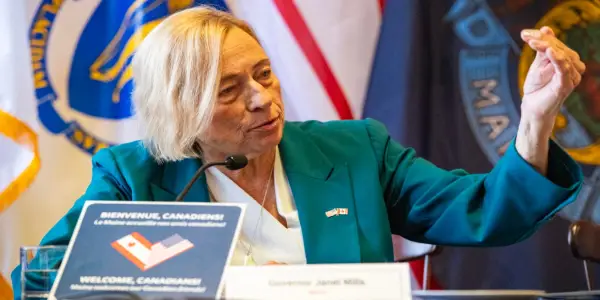
Governor Janet Mills vetoes a bill that would have frozen data center projects until late 2027, citing local economic concerns.
In-depth analysis
Current environmental changes
Maine's decision to veto a moratorium on large data centers reflects ongoing concerns about environmental sustainability and energy consumption. The bill aimed to address the increasing scrutiny of data center projects, which are often criticized for their significant electricity usage and potential ecological impact, particularly in light of climate change discussions.
Impact on society
The vetoed bill highlighted a community divided between environmental concerns and the economic benefits of data centers, particularly job creation in areas recovering from industrial decline. Local support for specific projects underscores the complex interplay between technological development and community needs.
Policy implications
Governor Mills' decision to veto the moratorium suggests a need for nuanced policies that balance economic growth with environmental protection. Her openness to alternative legislation indicates a potential shift toward more regulated development of data centers, aiming to mitigate adverse effects while fostering local economies.
Future outlook
As Maine navigates the challenges of expanding digital infrastructure, the state's regulatory landscape may evolve to better address community concerns and environmental impacts. Stakeholders will closely monitor how future policies shape the balance between technological advancement and sustainability.
Did you know?
Why this concerns all of us
The decision to veto the data center moratorium speaks to a broader issue that affects everyone: the balance between technological progress and environmental sustainability. As more data centers emerge, they consume vast amounts of energy, which can lead to higher electricity costs for households. This decision could set a precedent that influences not just Maine’s energy policies, but also the national conversation on how communities manage the intersection of job creation and environmental health.
Nature's hidden secret
Did you know that data centers can consume more energy than entire cities? In fact, a single large data center can use as much electricity as 100,000 homes. This staggering demand raises significant concerns about sustainability and resource management, especially in regions where energy sources are limited.
The person whose life climate changed
Meet Lisa Thompson, a single mother and former mill worker in Jay, Maine. With the closure of the local paper mill, she faced uncertain times, struggling to make ends meet. Lisa's hopes were reignited when she learned about the proposed data center project, which promises hundreds of jobs. For her, this isn’t just about employment; it’s a chance to provide a stable future for her children. She drives community support for the center, believing it could revitalize their town. Yet, Lisa also grapples with the environmental implications, hoping that any progress made will consider sustainability. Her story reflects the complex interplay of economic necessity and ecological responsibility in today’s society.
Expert Commentary

Revitalizing Wellness at Fairmont Chateau Lake...

South Africa's G20 Agenda: Addressing Debt,...
Reevaluating the Polar Bear Narrative Amid...

KDE Plans to Phase Out X11 Support in Upcoming...

£9 Billion Government Initiative to Revamp...

Key Outcomes from COP30: Innovations in...

The Shift in Climate Discourse: Navigating the...

UN Treaty for High Seas Conservation Now Effective

Exploring the Depths of Human Connection: Ursula...

The Economic Risks of Abruptly Halting Solar...

OnePlus 15R Poised to Redefine Battery Life...

Tragic Cargo Plane Crash in Kentucky Claims Lives...
Hurricane Melissa Marks a Historic Category 5...

The Consensus Model at UN Climate Talks: An...
Revolutionizing Ocean Research: Robotic Floats...

Teachers' Unions Take a Stand Against Climate...

Key Insights on the Future of Electricity Demand...

Brian Greene to Host Inaugural Global Space...

Exploring Climate Change Through Sound: The Role...
AI's Water Consumption May Soon Match That of 10...

Breakthrough Research Unveils Thermal Convection...

OpenAI Introduces 'Group Chats' Feature in...

Protests and Food Safety Concerns Challenge...
Hurricane Melissa's Death Toll Reaches 28 in...

Heat Flow on Saturn’s Moon Enceladus Suggests...

Foldable Phones on the Rise: 2026 Expected to...

Meta Enhances Smart Glasses with Garmin and...

Massive Leak Exposes 183 Million Email Passwords:...

The Impact of US Withdrawal on Global Climate...

New Mapping of Antarctica's Subglacial Landscape...
UK Prepares for Cold Snap with Snow Forecasts...

Grand Egyptian Museum Unveiled as Torre dei Conti...

Experts Caution Against Solar Geoengineering:...
Deforestation-Free Beef: A Sustainable Approach...

Ancient Tools Illuminate Early Human Innovation...
The Overlooked Link Between Climate Change and...

Decline in Indian Passport Ranking Despite...

Urgent Action Needed as Scientists Warn of...