COP30's Biofuel Initiative Raises Concerns Over Food Security and Environmental Impact
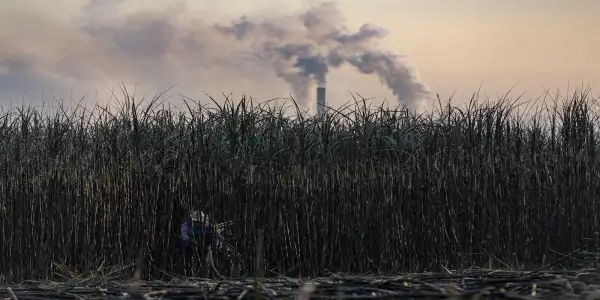
As global leaders gather for COP30, the push for biofuels as a sustainable energy source faces scrutiny over its potential repercussions on food supply and ecological integrity.
In-depth analysis
Current environmental changes
The ongoing COP30 summit in Belém highlights significant environmental shifts tied to biofuel production. As nations advocate for increased biofuel use, concerns grow over its contribution to deforestation and biodiversity loss. Recent studies reveal that biofuels can generate up to 80% more carbon emissions than fossil fuels due to indirect land-use changes, raising alarms about their sustainability.
Impact on society
The push for biofuels has direct repercussions on food security, as agricultural land is repurposed for energy crops. This shift has led to rising food prices, disproportionately affecting vulnerable communities worldwide.
Policy implications
The pledges made at COP30 for expanding biofuel production necessitate a reevaluation of existing agricultural and environmental policies. Without stringent regulations, increased biofuel cultivation risks exacerbating ecological degradation and undermining food security, necessitating a balanced approach to energy and agricultural policies.
Future outlook
Looking ahead, the trajectory of biofuel production will hinge on addressing its environmental and social implications. Policymakers must navigate the delicate balance between energy needs and ecological preservation to ensure sustainable development in the biofuel sector.
Did you know?
Why this concerns all of us
The debate over biofuels affects every consumer, as decisions made at COP30 will ultimately shape energy prices and food availability. If biofuel production expands without careful regulation, food costs may rise, putting pressure on household budgets. Additionally, environmental repercussions could lead to degraded ecosystems, impacting air quality and water supplies that communities depend on daily.
Nature's hidden secret
Many may not realize that biofuel production can create a ‘carbon debt’—initially releasing more CO2 than it saves over years. This paradox occurs when forests are cleared for crops, releasing stored carbon and endangering local ecosystems, highlighting that the path to sustainability is more complex than it seems.
The person whose life climate changed
Meet Ana, a farmer in Brazil whose land is now earmarked for biofuel crop cultivation. Once thriving with diverse crops, her farm is shifting towards monoculture, raising concerns about soil health and her family's livelihood. With her income dwindling and biodiversity lost, Ana grapples with the reality that the push for biofuels, while aimed at energy solutions, threatens her way of life and the environment she cherishes. Her story illustrates how global energy policies ripple down to individual lives, forcing hard choices between sustainability and survival.
New Delhi Suffers Severe Air Pollution Following...

New Report Highlights Risks of Marine Carbon...

Doom's Programming Error Sparks Renewed Interest...

Golden Hare from Iconic Treasure Hunt Fetches...

Innovative Approach to Sustainable Living: The...

Portalgraph Revolutionizes 3D Visualization with...

Debate Over Genetic Engineering of Wildlife:...

OpenAI Unveils Ambitious Vibe Coding Initiative,...

Revisiting Pan-African Aspirations Through the...

Pacific Nations Set Ambitious Goal for 100%...

Massive Leak Exposes 183 Million Email Passwords:...

The Bugatti Veyron's Unique Oil Change: A Costly...

Impact of Global Warming on Reptile Sex Ratios...

Tehran on the Brink: Water Crisis Highlights...
Deforestation-Free Beef: A Sustainable Approach...

Cate Blanchett Joins Festive Guest Editors for...

Augusta Township Residents Mobilize Against...

South Africa's G20 Agenda: Addressing Debt,...

Emerging Superfoods from the Amazon: Beyond Açaí

Preserving Modern Jewelry and Vintage Heirlooms:...

Conspiracy Theories Divert Attention from Genuine...

Brian Greene to Host Inaugural Global Space...
India's Climate Adaptation Fund Faces Budget Cuts...

Startup Aims to Ignite a New Era in U.S. AI...

Rikako Nagashima's Wool Calendars Highlight...

Bill Gates's Climate Remarks Spark Controversy...
California's Proposition 50: Voters Set to...

Rising Temperatures Intensify Skin Conditions...

Revival of Wild Turkeys: A Conservation Triumph...

The Shift in Climate Discourse: Navigating the...

Peaky Blinders: A Catalyst for West Midlands...

Sex Workers Launch 'Anti-OnlyFans' Platform to...

Perrier-Jouët and Design Miami Launch Inaugural...
UN Warns 2025 Expected to Rank Among Hottest...
The Overlooked Link Between Climate Change and...

Revolutionizing Camping: Solar-Powered Tent...

Key Insights on the Future of Electricity Demand...

Bill Gates Advocates for Innovation as Key to...

The Hidden Costs of Men's Alcohol Consumption on...

Joe Swash Opens Up About the Challenges of Being...