Thawing Permafrost in Alaska Raises Alarm Over Climate Impact
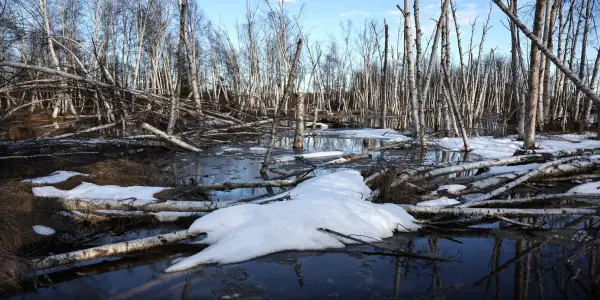
Alaska's permafrost is melting rapidly, releasing vast amounts of water and carbon, with significant implications for global climate dynamics.
In-depth analysis
Current environmental changes
In Alaska, extensive permafrost thawing is underway, releasing approximately three trillion gallons of water each year. This shift marks a significant increase in freshwater outflow, alongside a surge in carbon emissions, with northern rivers now discharging around 250 gigagrams of carbon annually, a stark rise from previous decades.
Impact on society
The thawing permafrost disrupts local ecosystems, affecting marine life and altering coastal salinity. This environmental shift poses risks not only to biodiversity but also to human health, with the potential emergence of new pathogens.
Policy implications
The accelerated thawing of permafrost highlights the urgent need for policymakers to integrate these findings into climate action plans. Enhanced monitoring and research are essential to accurately assess carbon emissions and their broader implications for global climate strategies.
Future outlook
As Arctic temperatures continue to rise, understanding the feedback loops associated with permafrost thawing will be crucial. Continued research will provide insights necessary for effective climate mitigation efforts and adaptation strategies.
Did you know?
Why this concerns all of us
The thawing of permafrost in Alaska affects global climate stability, influencing weather patterns, sea levels, and even food security. As rivers release unprecedented amounts of carbon and freshwater, communities worldwide could face more severe flooding, unpredictable weather, and changes in marine ecosystems. This isn't just an Arctic issue; it's a wake-up call for everyone on the planet.
Nature's hidden secret
Permafrost has stored an estimated 1.5 trillion metric tons of carbon for thousands of years. As it thaws, this ancient carbon, once safely locked away, is released into the atmosphere, contributing to climate change at alarming rates. This feedback loop is one of nature's most concerning secrets, with profound implications for our future.
The person whose life climate changed
Meet Sarah, a coastal fisherman in Alaska, who has spent her life relying on the ocean’s bounty. As the permafrost thaws and alters water salinity, her catches have dwindled, pushing her to the brink of financial instability. Sarah’s struggle reflects a deeper crisis; she is not just losing her livelihood but also her cultural heritage tied to the sea. The disruption of marine ecosystems has forced her to adapt quickly, but what happens when the ocean she knows becomes unrecognizable? Her story highlights the immediate and personal impact of climate change on individuals who are often overlooked in the broader narrative.
Expert Commentary
Puffins Make Historic Return to Isle of Muck...
Tragic Cargo Plane Crash in Kentucky Claims Lives...

Revitalizing Wellness at Fairmont Chateau Lake...
Unprecedented Strength of Hurricane Melissa Marks...
Grand Egyptian Museum Unveiled as Torre dei Conti...

Decline in Indian Passport Ranking Despite...
The Resilient Desert Flora Thrives in Extreme...

Fisher Makes Historic Return to Ohio Forests...
Reevaluating the Polar Bear Narrative Amid...
Scientists Warn Earth Has Reached Critical...
Revisiting India's Air Quality Standards Amid...
Hurricane Melissa Marks a Historic Category 5...
UN Treaty for High Seas Conservation Now Effective
Lawsuit Alleges Tesla Wrongfully Terminated Deaf...
Trump's Environmental Policies Could Lead to 1.3...
Global Climate Action in the Absence of the US: A...
The Consensus Model at UN Climate Talks: An...
Advocating for Forest Sovereignty: A Call for...

KDE Plans to Phase Out X11 Support in Upcoming...

Sex Workers Launch 'Anti-OnlyFans' Platform to...
Palantir's CEO Alex Karp Defends Company’s...
New Report Highlights Risks of Marine Carbon...
Key Outcomes from COP30: Innovations in...
Antarctic Robot Explorer Surfaces After Eight...

Marvel Gears Up for a Major Avengers Event:...

Golden Hare from Iconic Treasure Hunt Fetches...
New Mapping of Antarctica's Subglacial Landscape...

Research Uncovers Factors Behind Weight Gain...
Japanese Trade Group, Including Studio Ghibli,...

OpenAI Introduces 'Group Chats' Feature in...

Study Reveals Airborne Microplastics May...

AI's Water Consumption May Soon Match That of 10...
The Economic Risks of Abruptly Halting Solar...
The Rapid Intensification of Hurricane Melissa...

Spring Studio Integrates Biomaterials for...

Guide to Setting Up and Customizing Gemini Raise...
Urgent Action Needed as Scientists Warn of...

Exploring Climate Change Through Sound: The Role...