New Discoveries Reveal Hidden Microbial Life Beneath Arctic Ice
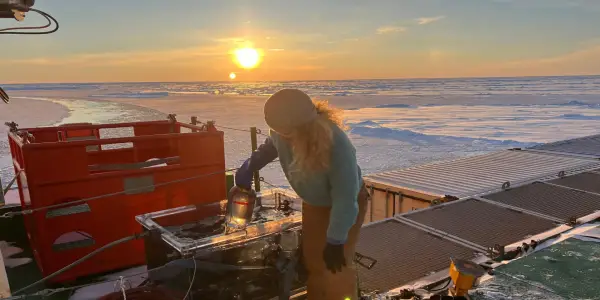
Recent research has uncovered a thriving community of nitrogen-fixing bacteria beneath melting Arctic ice, providing essential nutrients that could reshape marine ecosystems and carbon absorption in the region.
In-depth analysis
Current environmental changes
Recent research indicates that melting Arctic ice is revealing a hidden ecosystem of nitrogen-fixing bacteria, essential for marine nutrient cycles. This shift is expected to alter the ecological dynamics of the region, as increased nitrogen availability may boost algal growth, which is pivotal for the Arctic marine food web.
Impact on society
The increase in nitrogen levels and subsequent algal blooms could significantly affect marine biodiversity and fisheries, influencing food security and local economies dependent on these resources.
Policy implications
These findings necessitate a reevaluation of environmental policies regarding Arctic ecosystems. Policymakers must account for the potential changes in marine life and carbon absorption capabilities as they develop strategies to mitigate climate change impacts.
Future outlook
As research progresses, understanding the role of nitrogen fixation in the Arctic will become increasingly vital. This knowledge will be crucial for predicting ecological shifts and informing climate action initiatives.
Did you know?
Why this concerns all of us
The melting of Arctic ice impacts global ecosystems and food security. As nitrogen-fixing bacteria thrive, they could boost algal blooms, which are essential for marine life. This shift may influence fish populations, affecting communities that rely on fishing for their livelihoods. Understanding these changes is crucial for managing resources and ecosystems in our interconnected world.
Nature's hidden secret
Beneath the Arctic ice, a unique community of nitrogen-fixing bacteria has been found thriving in conditions once thought inhospitable. These bacteria can convert nitrogen from seawater into ammonium, potentially transforming nutrient dynamics in the marine food web and altering our understanding of Arctic ecosystems.
The person whose life climate changed
Meet Anna Jensen, a 34-year-old fisherwoman from a small coastal town in Norway. For years, Anna has relied on stable fish populations for her family's livelihood. Recently, she noticed a decline in her catch, linked to shifting algae blooms and changing marine ecosystems due to climate change. The discovery of nitrogen-fixing bacteria beneath melting Arctic ice gives Anna a glimmer of hope. If these new ecosystems can support healthier fish populations, it could mean a revival for her community. Yet, uncertainty looms as she grapples with the unpredictable nature of the ocean, reminding her that climate change's impact extends beyond science—it's a daily reality for those who depend on the sea.
Expert Commentary
India's Climate Adaptation Fund Faces Budget Cuts...

Zaha Hadid Architects' Yidan Center Reaches...
The Overlooked Link Between Climate Change and...

Urgent Action Needed as Scientists Warn of...
Hurricane Melissa's Death Toll Reaches 28 in...
Reevaluating the Polar Bear Narrative Amid...
Key Insights Ahead of COP30 Summit in Brazil: A...

The Consensus Model at UN Climate Talks: An...
Unprecedented Strength of Hurricane Melissa Marks...

Exploring Climate Change Through Sound: The Role...
The Economic Risks of Abruptly Halting Solar...
Antarctic Robot Explorer Surfaces After Eight...
Recent Study Indicates Accelerated Pace of Global...
Impact of Global Warming on Reptile Sex Ratios...

Key Insights on the Future of Electricity Demand...

Ancient Tools Illuminate Early Human Innovation...

Revitalizing Wellness at Fairmont Chateau Lake...
Deforestation-Free Beef: A Sustainable Approach...

Can New Alcohol Warning Labels Shift Ireland's...

Guide to Setting Up and Customizing Gemini Raise...
Global Climate Action in the Absence of the US: A...

The Crucible: A Test of Nerves in Snooker's Most...

Chronic Diseases in Animals Mirror Human Health...

The Shift in Climate Discourse: Navigating the...
Lab Gloves May Complicate Microplastics Research,...

Palantir's CEO Alex Karp Defends Company’s...

Revisiting India's Air Quality Standards Amid...

Introducing the Clamshell Writer Deck: A Focused...

Teachers' Unions Take a Stand Against Climate...

Sex Workers Launch 'Anti-OnlyFans' Platform to...

KDE Plans to Phase Out X11 Support in Upcoming...

Doom's Programming Error Sparks Renewed Interest...
Trump's Environmental Policies Could Lead to 1.3...
Council of Europe Chief Signals Openness to...
Emerging Ocean Hotspots Heighten Risk of...
The Resilient Desert Flora Thrives in Extreme...
New Mapping of Antarctica's Subglacial Landscape...

Emerging Superfoods from the Amazon: Beyond Açaí