Intensified Competition Threatens African Penguins Amid Fishing Pressures
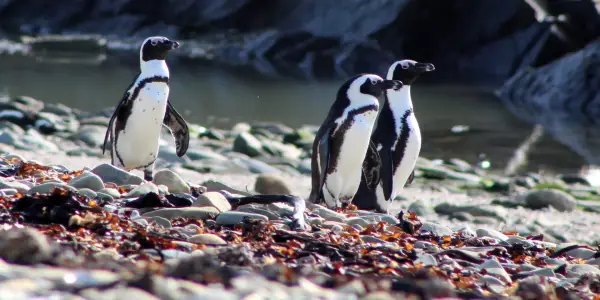
A recent study reveals that African penguins are increasingly foraging in proximity to commercial fishing fleets, exacerbating competition for limited food resources. This research introduces a new metric, 'overlap intensity,' which quantifies the impact of fishing on the penguin population.
In-depth analysis
Current environmental changes
Recent research indicates alarming shifts in the foraging behavior of Critically Endangered African penguins, particularly during times of diminished fish stocks. As sardine and anchovy populations decline, penguins increasingly compete with commercial fishing vessels, leading to a concerning overlap in their foraging areas, which has intensified over the last three decades.
Impact on society
The decline of African penguins affects local communities reliant on eco-tourism and fishing. As penguin populations dwindle, the ecological balance shifts, potentially disrupting marine ecosystems and the livelihoods tied to them.
Policy implications
The findings advocate for enhanced fisheries management and the establishment of dynamic marine protected areas. Legal agreements have emerged to create no-fishing zones around critical penguin habitats, reflecting a growing recognition of the need for sustainable practices that balance conservation and industry interests.
Future outlook
The ongoing pressures from climate change and overfishing necessitate immediate action to protect African penguins. Continued research and adaptive management strategies will be crucial for ensuring the survival of this species and maintaining ecological integrity in their marine environment.
Did you know?
Why this concerns all of us
The decline of the African penguin isn't just a story of a single species; it highlights a broader ecological crisis impacting global fish stocks, which many rely on for food and livelihoods. As fish populations dwindle, fishing communities face economic hardship, and consumers may see rising prices at the market. Protecting these penguins can lead to healthier marine ecosystems, ultimately benefiting everyone from fishermen to families that depend on seafood.
Nature's hidden secret
African penguins have a unique adaptation: they can drink seawater, thanks to specialized glands that filter out the salt. This allows them to thrive in their coastal habitats, but as fish stocks decline, their survival becomes increasingly precarious, revealing the delicate balance of marine ecosystems.
The person whose life climate changed
Meet Thandi, a local fisherman from Simon's Town, South Africa. For years, Thandi has relied on the sardines and anchovies that also sustain the African penguin population. As fish stocks have dwindled, he has faced tough choices—either fish harder in crowded waters or seek alternative livelihoods. Thandi often sees penguins struggling to find food and feels a deep connection to their plight. He believes that protecting their breeding grounds will not only help the penguins but also secure his family's future. The recent legal changes give him hope that a sustainable balance can be achieved, allowing both his community and the penguins to thrive.

Japanese Trade Group, Including Studio Ghibli,...

Top Five Books Exploring the Intersection of...

The Shift in Climate Discourse: Navigating the...

California's Proposition 50: Voters Set to...

India's Climate Adaptation Fund Faces Budget Cuts...
UN Treaty for High Seas Conservation Now Effective

New Delhi Suffers Severe Air Pollution Following...

Advocating for Forest Sovereignty: A Call for...

Marvel Gears Up for a Major Avengers Event:...

Chronic Diseases in Animals Mirror Human Health...

South Africa's G20 Agenda: Addressing Debt,...

Brian Greene to Host Inaugural Global Space...
Puffins Make Historic Return to Isle of Muck...

Cate Blanchett Joins Festive Guest Editors for...

Nike and LEGO Collaborate to Redesign Playground...

Addressing API Overload: A Developer's Confession

Emerging Superfoods from the Amazon: Beyond Açaí

OpenAI Introduces 'Group Chats' Feature in...

AI Unveils Hidden Lion Roar, Revolutionizing...
Revival of Wild Turkeys: A Conservation Triumph...

Meta Enhances Smart Glasses with Garmin and...

Sex Workers Launch 'Anti-OnlyFans' Platform to...

Guide to Setting Up and Customizing Gemini Raise...
Hurricane Melissa Marks a Historic Category 5...

New Lancet Report Reveals Alarming Impact of...

Urgent Action Needed as Scientists Warn of...

The Emerging Debate on Geoengineering: A Call for...

Key Insights on the Future of Electricity Demand...

Can New Alcohol Warning Labels Shift Ireland's...
Global Rice Yields Plummet Due to Extreme...

Startup Aims to Ignite a New Era in U.S. AI...

Debate Over Genetic Engineering of Wildlife:...

Apple Seeks Changes to Indian Tax Law Amid...

Introducing the Clamshell Writer Deck: A Focused...

Revolutionizing Camping: Solar-Powered Tent...

Tragic Cargo Plane Crash in Kentucky Claims Lives...

Revitalizing Wellness at Fairmont Chateau Lake...

Pacific Nations Set Ambitious Goal for 100%...

Dezeen Jobs Launches Initiative to Celebrate...

U.S. Fish and Wildlife Service's Plan to Cull...