Innovative 'Superfood' Supplement Aims to Bolster Honeybee Nutrition Amidst Challenges
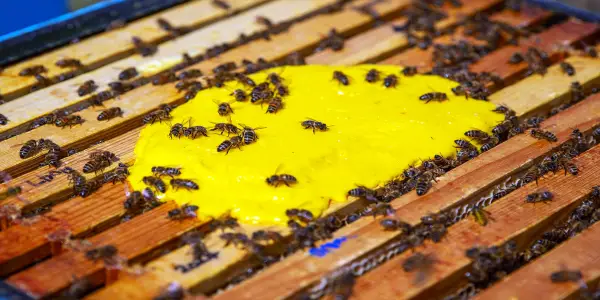
A new supplement designed for honeybees could enhance their nutrition and improve colony resilience, addressing critical challenges posed by climate change and agricultural practices.
In-depth analysis
Recent discoveries
Recent studies have revealed the critical role of specific plant sterols in honeybee nutrition, particularly β-methylenecholesterol, which is vital for brood development. Researchers identified that honeybees cannot synthesize these sterols and must obtain them directly from pollen. This has led to the development of a genetically engineered yeast supplement that enhances sterol availability.
Implications for public health
Improved honeybee nutrition has far-reaching implications for public health, as healthy bee populations are essential for pollinating crops that constitute a significant portion of the human diet. Enhancing bee health can contribute to food security and agricultural sustainability.
Who is affected
Beekeepers, farmers, and consumers are directly affected by the health of honeybee populations. Beekeepers face challenges in maintaining strong colonies, while farmers rely on bees for effective pollination. Consumers ultimately benefit from a stable food supply reliant on these critical pollinators.
Potential future studies
Future research could explore the long-term effects of sterol-enriched diets on honeybee health and productivity. Additionally, studies may investigate the ecological impacts of genetically engineered supplements and their role in supporting both honeybee and wild pollinator populations.
Did you know?
How this affects your health
The health of honeybee populations directly impacts food security and nutrition. As key pollinators, their decline could lead to reduced crop yields and a less diverse food supply. This means that our diets may suffer, potentially increasing reliance on less nutritious, processed foods. Supporting honeybee health through improved nutrition is vital for preserving agricultural ecosystems and ensuring a rich variety of foods for future generations.
The scientific surprise
The research reveals a surprising dependency of honeybees on specific plant sterols for brood development. Unlike many insects, bees cannot synthesize these nutrients, making their diet crucial for colony health. Identifying β-methylenecholesterol as a dominant sterol highlights the complex nutritional needs of honeybees and opens up new pathways for enhancing their resilience against environmental challenges.
The doctor and the patient: a personal story
Marcus, 34, from Chicago, grew up watching his grandfather tend to a vibrant garden filled with flowers. After learning about the struggles of honeybees, he felt a personal connection, realizing that his childhood memories were tied to these pollinators. Last summer, after volunteering at a local apiary, Marcus witnessed the fragile state of the hives firsthand. He spoke with a beekeeper who shared stories about dwindling populations and the need for better nutrition for the bees. This experience ignited a passion in Marcus to advocate for bee health, understanding that their survival is intertwined with our own food sources. He now actively promotes local initiatives to plant bee-friendly flowers, hoping to create a sanctuary for these essential insects.
Expert Commentary

Measles Outbreak in South Carolina Leads to...

New Experimental Drug Shows Potential in...

New Imaging Technique Unveils Brain's Pulsatile...

RFK Jr. Advocates for Enhanced Nutrition...

Remembering Nicole Lynn Allenbaugh: A Life of...

Top Foods to Alleviate Gas and Bloating,...
Exploring Ketamine's Potential for First...

Significant Number of CDC Vaccination Databases...

New Research Suggests Increased Melanoma Risk...

Understanding Muscle Growth: A Comprehensive Guide

Escalating Threat of Antimicrobial Resistance:...

COVID-19 Resurgence: Current Trends and Symptoms...

The Surge of Anti-Aging Supplements: Unpacking...

Impact of REM Sleep on Memory Consolidation...

Understanding Dry Mouth: Insights from Dental...

Florida Doctor's Office Linked to Hepatitis C...

Pet Vaccination Skepticism Rises Amid Growing...

Study Links COVID-19 mRNA Vaccine to Extended...

UK Man Hospitalized After Consuming Excessive...
Understanding Statins: Essential Information for...

Understanding Delayed Autism Diagnoses: New...

UK Regulator Signals Major Overhaul for Rare...

New Study on Hormonal Contraceptives and Breast...

Emerging H3N2 Variant Raises Concerns for Winter...

Research Reveals How Ozempic Affects Alcohol...

Concerns Grow in the U.S. as H3N2 Flu Strain...

Norovirus Cases Resurge in New Jersey: Key...

Fiji Faces Alarming Surge in HIV Cases Linked to...

Breakthrough Study Reveals Microscopic...
Three Foods Linked to Enhanced Heart Health and...

Prisma Health Implements Temporary Restrictions...

Experts Warn Against Potential Split of MMR...

Measles Outbreak in Buncombe County Linked to...

Reevaluating Creatine Dosage: New Insights...

Insights on End-of-Life Care from Palliative...

Promising Research Offers Hope for Osteoporosis...

Misdiagnosed Fatigue Leads to Late Diagnosis of...

Maine Faces Growing HIV Outbreak: Health...

Study Links Soybean Oil to Obesity, Raising...

Timing of Cancer Treatments May Influence Patient...