Trump Administration Faces Criticism Over Ebola Response in Central Africa
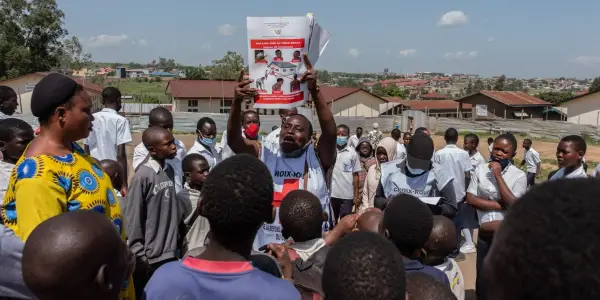
As Ebola outbreaks persist in Central Africa, the Trump administration's handling and funding decisions are under scrutiny.
In-depth analysis
Recent discoveries
Recent findings indicate that the Bundibugyo strain of the Ebola virus is complicating the current outbreak in Central Africa, particularly in the Democratic Republic of Congo. This strain often evades standard testing methods, leading to underreported cases. Additionally, the lack of available vaccines and effective treatments has intensified the crisis, highlighting gaps in global health preparedness.
Implications for public health
The ongoing Ebola outbreak underscores significant public health challenges, particularly in regions with fragile healthcare systems. The situation emphasizes the necessity for improved disease surveillance and response mechanisms to mitigate the effects of future outbreaks.
Who is affected
The current Ebola outbreak primarily impacts populations in the eastern Democratic Republic of Congo and Uganda. Vulnerable communities, particularly those in remote and conflict-affected areas, face heightened risks due to inadequate healthcare resources and limited access to essential medical services.
Potential future studies
Future studies should focus on the efficacy of existing surveillance systems and the development of rapid testing methods for the Bundibugyo strain. Research on improving healthcare infrastructure in conflict zones may also provide insights into better managing infectious disease outbreaks.
Did you know?
How this affects your health
The ongoing Ebola crisis underscores the importance of robust global health systems. An effective response to outbreaks can prevent the spread of diseases beyond borders, impacting health security worldwide. Individuals should be aware of how international cooperation and funding directly influence local healthcare capabilities, as weakened systems can lead to increased risks for everyone, even in distant regions.
The scientific surprise
The emergence of the Bundibugyo strain highlights a critical gap in our understanding of Ebola. While much is known about the virus, the fact that conventional tests can miss this variant raises questions about the adequacy of existing diagnostic tools. This unexpected challenge emphasizes the need for ongoing research and innovation in infectious disease detection.
The doctor and the patient: a personal story
Marcus, 34, from Chicago, is a public health worker who has dedicated his life to combating infectious diseases. After hearing about the Ebola outbreak in the DRC, he felt a deep sense of urgency. His mother, originally from Congo, has family in the affected areas. With each report of new cases, Marcus struggles with the fear of losing loved ones. Recently, he participated in a fundraising event to support local health initiatives. As he shared his story, he was overwhelmed by the community's response, reminding him of the interconnectedness of global health and the importance of local action. This personal connection fuels his passion, driving him to advocate for better resources and support for those on the front lines.
Expert Commentary

Concerns Grow in the U.S. as H3N2 Flu Strain...

Study Links COVID-19 mRNA Vaccine to Extended...

How Diet Influences Body Odor and Attractiveness

Concerns Rise as ACIP Meeting Set to Revisit...

Understanding Dry Mouth: Insights from Dental...

The Impact of Gut Health on Menopause Symptoms:...


Viagra Shows Potential to Address Genetic Hearing...

New Government Initiative Aims to Map Human...

Microplastics Linked to Atherosclerosis in Male...

New Study on Hormonal Contraceptives and Breast...
COVID-19 Resurgence: Current Trends and Symptoms...

Study Links Grey Hair to Body's Defense Against...

Breakthrough Gel Offers Potential to Regrow Tooth...

Alzheimer's Disease May Originate from...

UK Launches Largest Prostate Cancer Screening...

Pfizer's mRNA Flu Vaccine Shows Superiority Over...

Neural Biomarkers of Food Cravings Impacted by...

Understanding the Recurrence of Urinary Tract...

Timing of Cancer Treatments May Influence Patient...

Breakthrough Study Reveals Potential Pathway to...

Significant Number of CDC Vaccination Databases...

Potential Risks of Apple Cider Vinegar: Experts...

Pet Vaccination Skepticism Rises Amid Growing...

Emerging H3N2 Variant Raises Concerns for Winter...

Innovative Approach to Childhood OCD Launched by...

Frequent Short Walks Outshine Long Morning...

CDC Revises Hepatitis B Vaccine Guidance for...

Study Reveals Misinformation About Sunscreen...

New Study Questions Efficacy of Omega-3...

New Experimental Drug Shows Potential in...

Exploring Testosterone Enhancement: Natural...

Breakthrough Study Reveals Microscopic...

Understanding Muscle Growth: A Comprehensive Guide

UK Regulator Signals Major Overhaul for Rare...
Confirmed Tuberculosis Case Emerges at Aegis...

Essential Nutrients for Brain Longevity: Insights...

MIT Research Uncovers Cysteine's Role in Gut...

New Study Suggests Walking as Few as 3,000 Steps...
Davis County Reports First Measles Case Amid...