Cleveland Restaurateur First to Experience Innovative Stroke Treatment with Vivistim System
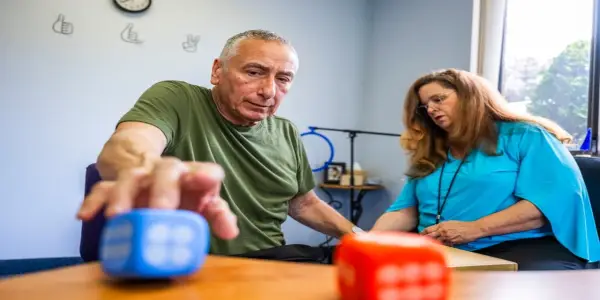
Tommy Fello, a prominent Cleveland restaurateur, is among the first to receive the groundbreaking Vivistim System, which stimulates the vagus nerve to foster new neural pathways for recovery after a stroke.
In-depth analysis
Recent discoveries
The introduction of the Vivistim System marks a significant breakthrough in stroke rehabilitation. This innovative therapy combines vagus nerve stimulation with intensive physical therapy, enhancing motor function in stroke patients, even years post-event. Early adopters, like Tommy Fello at the Cleveland Clinic, have reported notable improvements in daily activities, highlighting the therapy's transformative potential.
Implications for public health
The Vivistim System could reshape stroke recovery protocols, offering new avenues for rehabilitation. By integrating advanced technology with traditional therapy, it presents a promising solution for enhancing the quality of life for stroke survivors, ultimately reducing long-term healthcare costs.
Who is affected
Stroke survivors, particularly those who have plateaued in their recovery, stand to benefit significantly from the Vivistim System. While the treatment has shown promise for enhancing arm mobility, its potential applications may extend to other affected areas, including speech and language, impacting a broader patient demographic.
Potential future studies
Future research could focus on the long-term effects of the Vivistim System across various patient demographics. Investigating its efficacy in improving speech and language recovery, alongside motor function, may further validate its role in comprehensive stroke rehabilitation strategies.
Did you know?
How this affects your health
The Vivistim System introduces a game-changing approach to stroke rehabilitation, potentially reshaping recovery timelines for many patients. By combining vagus nerve stimulation with physical therapy, it addresses a key challenge: the plateau that often halts progress. This innovation not only enhances motor function but also fosters emotional well-being, as regaining independence can significantly uplift a patient’s quality of life.
The scientific surprise
The Vivistim System challenges traditional rehabilitation paradigms by leveraging the vagus nerve's role in recovery. Researchers have noted that stimulating this nerve can enhance brain plasticity, allowing patients to regain lost functions even years post-stroke. This unexpected connection opens new avenues for therapeutic interventions, suggesting that the nervous system's capabilities may extend far beyond what was previously understood.
The doctor and the patient: a personal story
Marcus, 34, from Chicago, never imagined he would struggle to pick up a spoon after his stroke. The once-active artist faced daily frustrations, feeling trapped in his own body. When he heard about the Vivistim System, hope flickered. After several weeks of therapy, he was overjoyed to find he could hold his paintbrush again. Each stroke on the canvas felt like reclaiming a part of himself. "It’s more than just movement; it’s my life returning to me," he said, his eyes glistening with tears of joy. Marcus is now not only painting again but also teaching art classes, sharing his journey of resilience with others.
Expert Commentary

Semaglutide Drugs Like Ozempic Reduce Intrusive...

Chronic Fatigue as an Early Indicator of Heart...

The Case for a National Leucovorin Registry to...

Emerging H3N2 Variant Raises Concerns for Winter...
Exploring Ketamine's Potential for First...

Concerns Rise as ACIP Meeting Set to Revisit...

Understanding Dry Mouth: Insights from Dental...

Understanding Delayed Autism Diagnoses: New...

Frequent Short Walks Outshine Long Morning...

Presidential Proclamation Marks National Breast...
Study Links COVID-19 mRNA Vaccine to Extended...
Fit 31-Year-Old Shares Bowel Cancer Journey,...

CDC Revises Hepatitis B Vaccine Guidance for...
Navigating Co-Parenting Challenges with AI...

RFK Jr. Advocates for Enhanced Nutrition...
Confirmed Tuberculosis Case Emerges at Aegis...
Breakthrough Study Reveals Microscopic...
New Experimental Drug Shows Potential in...

NHS Green Social Prescribing: A Path to Mental...

UK Regulator Signals Major Overhaul for Rare...

Understanding Muscle Growth: A Comprehensive Guide

Potential of mRNA Technology in Medicine Faces...

UK Man Hospitalized After Consuming Excessive...
Rising H3N2 Flu Variant Sparks Concerns Among...

The Surge of Anti-Aging Supplements: Unpacking...

Chronic Wasting Disease Resurfaces in Florida,...

Addressing the Testosterone Decline in Men: 15...

Experts Warn of Potentially Severe Flu Season...
Understanding Statins: Essential Information for...
Identifying Unconditional Love in Relationships:...

CDC Grants $1 Million to Danish Researchers Amid...

Misdiagnosed Fatigue Leads to Late Diagnosis of...

Eight Unique Hobbies Psychologists Recommend for...
New Study Reveals Vitamin D2 Supplements May...
New Dietary Guidelines Highlight Kiwis and Rye...

Genetic Mutations in Sperm Increase with Age,...

New Research Links Mediterranean and Plant-Based...

Exploring Testosterone Enhancement: Natural...

Significant Number of CDC Vaccination Databases...

Study Links Grey Hair to Body's Defense Against...