Google's Deep Research Tool Enhances Project Initiation with AI Assistance
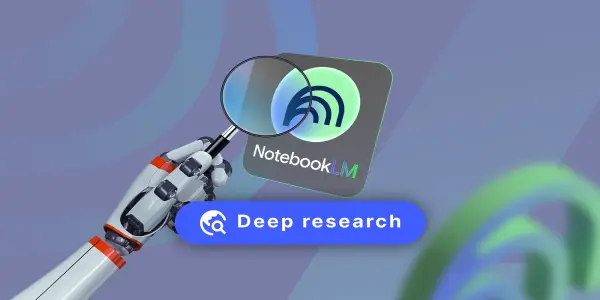
Google's new Deep Research tool in Notebook LM revolutionizes project initiation with AI, streamlining information synthesis across various platforms for enh...
In-depth analysis
Top trending topics
The launch of Google's Deep Research feature in Notebook LM is capturing attention across the tech landscape. This AI-driven tool enhances research efficiency by integrating seamlessly with Google applications and external documents, reflecting a growing trend towards advanced productivity solutions that leverage artificial intelligence for deeper insights and streamlined information synthesis.
Audience engagement
Users are actively exploring the capabilities of Deep Research, sharing their experiences and findings on social media platforms. This engagement highlights the tool's potential to transform research workflows and encourages discussions about best practices for maximizing its effectiveness.
Industry impact
The introduction of Deep Research is poised to influence various sectors, particularly education and professional research environments. By providing comprehensive analytical capabilities, it encourages a shift in how individuals approach information gathering, potentially raising the standard for research quality across industries.
Future trends
As AI tools like Deep Research evolve, the demand for enhanced user skills in curating and verifying information will likely increase. Future developments may focus on improving AI's ability to filter relevant data, further integrating such tools into daily workflows.
Did you know?
Why everyone is talking about this
Google’s Deep Research tool is capturing attention for its potential to revolutionize how we approach information gathering. In an age where data overload can stifle productivity, this AI-driven feature promises to streamline research processes. By allowing users to synthesize insights from various sources seamlessly, it invites a new era of informed decision-making, especially in fields where accuracy is paramount.
What stays off-camera
A lesser-known aspect of Deep Research is its reliance on user input to curate effective search parameters. Users who take time to define their queries clearly often see significantly better results, highlighting the tool's need for human intuition in navigating complex topics.
A day behind the scenes
Imagine Sarah, a graduate student working on her thesis about urban housing policies. With a looming deadline, she turns to Deep Research. Initially skeptical, she was amazed when Fast Research provided basic summaries, but it was Deep Research that unveiled in-depth case studies and historical data. These findings not only enriched her work but also changed her perspective on the subject. Her day transformed from stress to a newfound excitement as she discovered insights that challenged her assumptions, demonstrating how technology can create a profound impact on academic pursuits.
Expert Commentary

Debunking the Myth: Do Metal Spoons Keep...

UN Highlights Climate-Induced Displacement as...

Lack of Grand Jury Approval Raises Doubts in...

Exploring Time Travel and Quantum Concepts with...

Google Unveils Gemini 3: A Major Leap in AI...

BBC Presenter Faces Discipline for On-Air...

Germany Reviews Apple's Modifications to App...

Exploring the Complexities of Childhood in...

Security Risks in Microsoft Teams Highlighted by...

Las Cruces Police Chief Calls for Public Support...

Lina Khan Discusses Antitrust Issues on 'The Adam...

Instagram's Adam Mosseri Warns of Authenticity...

The Cognitive Impact of AI: How Tools Like...

The Enigmatic Ado: A Voice that Defies Visibility

Asteroid 33 Polyhymnia May Contain Elements...
Unlocking Python Learning with NotebookLM: A...

Jack Osbourne Faces Backlash for Emotional...

30 Days with a Google TV Projector: A Bedroom...

Digital Reconstruction Brings Ancient Faces to...

The Disruptive 'Mosquito Buzz' at Shibuya Station...

Netflix Unveils Opening Scene of Stranger Things...

Study Warns Students: Relying on ChatGPT May...

Maximize Your Use of NotebookLM with These Five...

Streaming Show Fans Express Discontent Over...

Reddit CEO Steve Huffman Achieves Billionaire...

Three Mobile Apps to Acquire Lucrative Skills in...

Google Launches Early Access for Gemini Voice...
Understanding BMW iX3's Driving Mode Limitations:...

COP30 in Brazil: Addressing Global Climate Issues...
Integrating ISA Ports into Contemporary...

Megyn Kelly Sparks Outrage Over Comments on...

Decline in Popularity of Trump Halloween Costumes...

Tim Cook Engages with President Trump and Tech...

Microsoft Faces Social Media Backlash Amid AI...

Key Developments in Video Gaming to Anticipate in...

Understanding AI's Role in Education: Insights...
Integrating Obsidian, Zotero, and NotebookLM: A...

Judson Althoff to Lead Microsoft Ignite 2025...

The Future of Higher Education: Navigating Cost...