Asteroid 33 Polyhymnia May Contain Elements Beyond the Known Periodic Table

Scientists are exploring Asteroid 33 Polyhymnia, which may contain elements beyond the known periodic table, challenging current scientific understanding and...
In-depth analysis
Top trending topics
Asteroid 33 Polyhymnia is capturing attention due to its enigmatic composition, challenging conventional understanding of asteroid materials. Its classification as a Compact Ultradense asteroid raises intriguing questions about the existence of superheavy elements beyond the periodic table, making it a focal point in contemporary space research and exploration.
Audience engagement
The discovery surrounding 33 Polyhymnia has sparked significant interest among both scientists and the general public, encouraging discussions about the potential for new elements and materials that could reshape our understanding of the universe.
Industry impact
The implications of studying Polyhymnia extend to various industries, particularly materials science and nanotechnology. Confirming the existence of new elements could lead to breakthroughs that enhance technological applications and drive innovation in these fields.
Future trends
As interest in asteroid exploration grows, future missions are likely to focus on sample collection from bodies like Polyhymnia. This trend may unlock new scientific insights and foster advancements in material applications derived from space.
Did you know?
Why everyone is talking about this
The conversation around Asteroid 33 Polyhymnia is igniting imaginations, as its strange composition could redefine our understanding of the universe. Scientists are not just intrigued by what it is made of, but what it signifies about the existence of elements beyond our current grasp. Such discoveries could fundamentally alter materials science and even lead to innovations in technology, sparking excitement in both academic and commercial sectors.
What stays off-camera
While many discuss the technical aspects of Polyhymnia, few know that the asteroid's name comes from Greek mythology, referring to the muse of sacred poetry. This connection adds a layer of poetic intrigue, highlighting the intersection of science and the arts in humanity's quest for knowledge.
A day behind the scenes
On a typical day at the University of Arizona's research lab, scientists gather to analyze data from Polyhymnia. Among them is Dr. Elena Torres, who recalls a moment of serendipity while examining spectral readings. She discovered an anomaly that hinted at the presence of a previously unknown element. As the team rallied around this finding, excitement filled the air; it was a reminder of how space exploration often leads to unexpected revelations. The atmosphere buzzed with camaraderie, as researchers shared theories and speculations about what else might lie hidden in the cosmos, pushing the boundaries of their understanding.
Expert Commentary

Lina Khan Discusses Antitrust Issues on 'The Adam...

The Disruptive 'Mosquito Buzz' at Shibuya Station...

Maximize Your Use of NotebookLM with These Five...

New York City Mayoral Election Draws National...

Unlocking Python Learning with NotebookLM: A...

Integrating Obsidian, Zotero, and NotebookLM: A...

FIA Addresses Controversy Over Marshal...

Republicans Strategize for 2026 Midterms Without...

Decline in Sales of Trump-Related Books Signals...

Debunking the Myth: Do Metal Spoons Keep...

Instagram's Adam Mosseri Warns of Authenticity...

Streamlining Research: A Five-Step Workflow with...

Jon Stewart Committed to 'The Daily Show' Amid...

New Study Reveals How Personalized Algorithms...

Three Key Reasons Your Executive Isn’t Making an...

Reddit CEO Steve Huffman Achieves Billionaire...

AI-Enhanced Teddy Bear Returns to Market After...

JD Vance Links UFOs to Demonic Entities in...

Apple TV Set to Launch Ambitious Sci-Fi Series...

New Teaser for 'Avengers: Doomsday' Hints at...

Understanding AI's Role in Education: Insights...

Three Mobile Apps to Acquire Lucrative Skills in...
Google's NotebookLM Mobile Introduces Enhanced...

Navigating Difficult Family Conversations:...
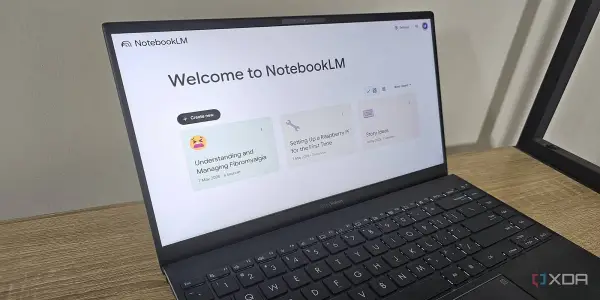
Incorporating NotebookLM Revolutionizes Freelance...

Judson Althoff to Lead Microsoft Ignite 2025...

Shifts in ICE Strategy Following Minneapolis...

Python Bytes: #459 Updates on Dependency...

Tim Cook Engages with President Trump and Tech...

The Importance of Breathwork in Daily Life

Exploring the Complexities of Gender Differences...

Netflix Unveils Opening Scene of Stranger Things...

Las Cruces Police Chief Calls for Public Support...

COP30 in Brazil: Addressing Global Climate Issues...

Sisterly Conflict Erupts Over Wedding Plans as...

Reflecting on 'Toy Story': A Milestone in...

Microsoft Faces Social Media Backlash Amid AI...

Critical Vulnerability Exposed in OpenClaw:...

Samsung TVs to Integrate Google Photos, Enhancing...