Westinghouse Announces Ambitious Nuclear Reactor Agreement Worth $80 Billion
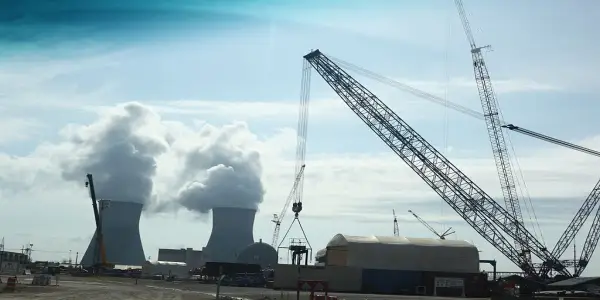
Westinghouse has announced an $80 billion agreement with the Trump administration to boost nuclear reactor construction, signaling a renewed commitment to nu...
In-depth analysis
Market overview
The recent agreement between Westinghouse Electric Company and the Trump administration marks a pivotal moment for the U.S. nuclear sector, aiming to secure an $80 billion investment for new reactor construction. This initiative underscores a renewed focus on nuclear energy amidst fluctuating market dynamics, where safety concerns and competition from renewables have historically influenced investment strategies.
Key business trends
The partnership involving GE Vernova and Hitachi highlights a trend towards collaboration in nuclear technology, emphasizing the development of both large AP reactors and small modular reactors as a response to evolving energy demands.
Impact on companies
The collaboration between Westinghouse, GE Vernova, and Hitachi is poised to reshape the nuclear landscape, potentially enhancing their market positions. However, the success of this initiative hinges on navigating regulatory frameworks and securing necessary financing in a competitive energy environment.
Future projections
Industry analysts suggest that the future of this nuclear initiative will largely depend on regulatory approvals and the ability to attract investment, indicating a cautious yet optimistic outlook for the sector's revival.
Did you know?
What this means for your wallet
The $80 billion investment in nuclear energy could have mixed effects on household finances. While it may lead to job creation and a more stable energy supply, consumers might face initial costs as utilities adjust pricing to support new infrastructure. In the long run, a diversified energy landscape could stabilize prices and reduce reliance on fossil fuels, potentially lowering electricity bills.
What analysts aren't telling you
Though many focus on the investment amount, analysts often overlook that the last major nuclear project in the U.S. was in 2016, and it faced significant delays and cost overruns. The industry's historical challenges highlight the uncertainty surrounding this new agreement.
One person's journey
Marcus, 34, from Chicago, grew up near a nuclear power plant. As a child, he was fascinated by the massive cooling towers and the idea that they provided energy to his community. However, after the Fukushima disaster, he became concerned about safety and environmental impacts. Recently, Marcus attended a town hall meeting discussing the new investment in nuclear energy. He felt a mix of hope and apprehension as experts spoke about innovative technologies. For him, the decision to embrace nuclear power is deeply personal; it's not just about energy, but about ensuring a safe and sustainable future for his young daughter, who he hopes will grow up with clean, reliable energy.
Expert Commentary

Japan's Ambitious Plan to Transform Hokkaido into...
Trump's Executive Order Targets Proxy Advisory...
Campbell's Dismisses Executive Following...
Verizon Announces Major Workforce Reductions,...
Upcoming Social Security COLA Adjustments: What...

Meta Platforms Poised for Significant Stock Split...

The Implications of the US Phasing Out the Penny
Standard Chartered Predicts End of Bitcoin...
Job Cuts at Amazon and T-Mobile Impact Bellevue's...
UK Introduces Pay-Per-Mile Tax for Electric...
Hollywood Heavyweights Urge Congress to Block...
Shopify Faces Outage Disrupting Retailers on...
Amazon's Partnership with OpenAI Boosts Jeff...
U.S. Retailers Face Penny Shortage as Minting...

FAA Probes Near-Miss Incident Involving Delta and...

Jim Beam Suspends Production at Key Kentucky...

Extended Cyber Monday Offers Still Available: Top...

Tesla Plans Subscription Price Hike for Full...
Chick-Fil-A Launches Chicken & Waffles Sandwich...
Shein Faces Legal Scrutiny in France Over...
Oil Prices Plummet as Stock Markets Rally Amid...
Saks OFF 5TH to Close Majority of Stores Amid...
CFPB Plans Workforce Furloughs and Case Transfers...

Meta to Block Access for Australians Under 16 on...
Amazon Begins Disbursing Refunds Following $2.5...

The Uncertain Fate of the Trump Phone: Delays and...

BCBS Class Action Settlement 2025: Key Details on...

Debunking Dental Myths: Insights from Experts on...
Optimal Locations for Future US Data Centers...
Amazon Announces 700 Job Cuts in New York City...
Do Kwon Sentenced to 15 Years for Role in $40...

Waymo Expands Autonomous Taxi Services to Include...
Trump's Appointment of Warsh as Fed Chair...

McLean Resident Sentenced to Nearly Two Years for...
Michael Dell Highlights Key Aspects of Elon...

Anthropic Unveils Enhanced Opus 4.5 Model,...
Palantir's CEO Defends Company Against...
BHP Revives Acquisition Interest in Anglo...