PECO Workers Begin Strike During Heat Wave, Citing Wage and Benefit Disputes
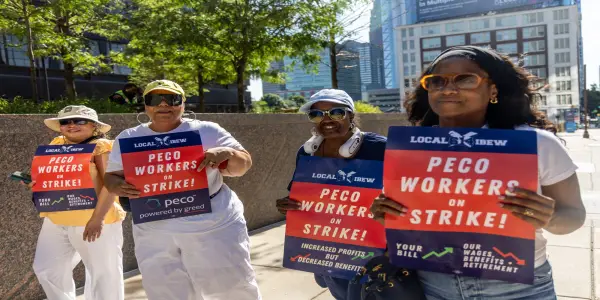
PECO workers strike over wages and benefits as management claims to have plans in place to maintain service amid the ongoing heat wave.
In-depth analysis
Market overview
The ongoing strike by PECO's union workforce amidst extreme heat highlights a significant labor dispute in the utilities sector. With around 1,000 members participating, this unprecedented action raises critical questions about employee relations and service delivery, particularly as the company serves 1.6 million customers in suburban Philadelphia.
Key business trends
Labor disputes in the utilities sector are becoming increasingly prominent, with recent strikes reflecting heightened employee demands for fair wages and improved working conditions. This trend indicates a shift in power dynamics between labor and management.
Impact on companies
The strike poses immediate challenges for PECO, potentially disrupting service delivery and customer satisfaction. As essential workers advocate for better conditions, the company faces pressure to address employee concerns, which could influence its operational efficiency and public image.
Future projections
Looking ahead, the outcome of the PECO strike may set a precedent for labor relations in the utilities industry. If unresolved, ongoing tensions could lead to further labor actions, impacting service reliability and shaping future negotiations across the sector.
Did you know?
What this means for your wallet
The PECO strike could lead to service disruptions, potentially impacting electricity and gas delivery. Customers may face delays or outages, which can affect everything from home comfort to business operations. If management and labor don't reach a swift resolution, the financial burden could extend to consumers, making it crucial to monitor the situation closely.
What analysts aren't telling you
While analysts highlight PECO's 10% wage increase proposal, they often overlook that the utility's parent company, Exelon, reported a 300% rise in net income in Q1. This stark contrast raises questions about the fairness of the wage offer in relation to the company's financial health.
One person's journey
Marcus, 34, from Chicago, has been a PECO lineman for over a decade. As temperatures soared during the strike, he found himself torn between financial stability and the fight for fair wages. With a young family relying on him, he shared how the uncertainty felt like a weight on his shoulders. 'We work hard to keep the lights on,' he said, 'but it’s hard to see a future when the company treats us like we’re expendable.' Marcus hopes that this strike will lead to a better work environment, not just for himself but for the next generation of utility workers who must feel valued to join the industry.
Expert Commentary

FAA Probes Near-Miss Incident Involving Delta and...

BCBS Class Action Settlement 2025: Key Details on...

Extended Cyber Monday Offers Still Available: Top...

Meta to Block Access for Australians Under 16 on...

Zipcar to Cease UK Operations Amid Operational...
Two Promising S&P 500 Dividend Stocks Trading at...
Amazon's Job Cuts: A 14,000-Strong Reduction...

Michael Burry Takes Bearish Position on Nvidia...
Saks OFF 5TH to Close Majority of Stores Amid...

After a $532 Million Business Sale, Millennial...

Optimal Locations for Future US Data Centers...
Verizon Announces Major Workforce Reductions,...
Supply Chain Challenges and Rising Equipment...
Rising Gas Prices in Illinois Linked to...

Campbell's Dismisses Executive Following...
Intel CEO Stands By Former TSMC Executive Amid...
Bank of America Settles $72.5 Million with...
Trump's Pardon of Binance Founder Raises Ethical...

The Implications of the US Phasing Out the Penny

Tesla Plans Subscription Price Hike for Full...


Trump's Executive Order Targets Proxy Advisory...
Potential $200 Monthly Increase in Social...
Analyst Highlights Palantir as a Leader in...
Proposed Bill Aims to Increase Social Security...
Norway's Sovereign Wealth Fund Rejects Musk's...
Jim Beam Suspends Production at Key Kentucky...
December 2025 SSI Payment Schedule Confirmed by...

Japan's Ambitious Plan to Transform Hokkaido into...
Upcoming Social Security COLA Adjustments: What...

Do Kwon Sentenced to 15 Years for Role in $40...

McLean Resident Sentenced to Nearly Two Years for...

Fact Check: Trump's Misstatements on Inflation...

Meta Platforms Poised for Significant Stock Split...

Black Friday 2025: Real-Time Sales Updates from...

Amazon's Partnership with OpenAI Boosts Jeff...

Beta Technologies Launches Successful $1 Billion...

Oil Prices Plummet as Stock Markets Rally Amid...

October Sees Modest Rise in Existing-Home Sales...