Seattle's Link Light Rail Surges Ahead to Become the Busiest in the U.S.
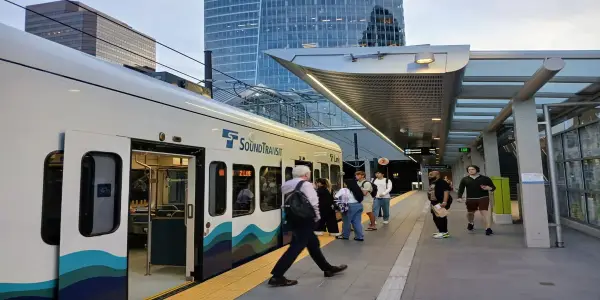
With over 160,000 daily riders, Seattle's Link light rail system has become the most heavily used in the nation, bolstered by the new 2 Line extension.
In-depth analysis
Market overview
Seattle's Link light rail system has reached a remarkable milestone with over 160,000 daily riders, establishing itself as the most frequented light rail system in the U.S. This growth is primarily driven by the expansion of the 2 Line, which enhances connectivity between Seattle and Bellevue, reflecting a broader shift towards increased public transit usage.
Key business trends
The expansion of Seattle's Link light rail system aligns with national trends favoring public transportation, particularly in urban areas. Increased ridership indicates a growing public reliance on transit solutions, which is reshaping urban mobility.
Impact on companies
The surge in ridership for Seattle's light rail system is likely to influence local businesses positively, as enhanced transit access can drive foot traffic and stimulate economic activity. Companies may need to adapt to changing commuter patterns and invest in proximity to transit hubs.
Future projections
Sound Transit anticipates nearly 400,000 daily boardings upon completion of the ST3 expansions, positioning Seattle as a leading player in public transit. This growth could redefine urban transit dynamics, especially compared to other major U.S. cities.
Did you know?
What this means for your wallet
Seattle's growing light rail ridership could lead to lower commuting costs for residents. As more people opt for public transit over personal vehicles, demand for parking and fuel may decrease, potentially easing financial pressures on families. Additionally, the expansion of services can lead to competition among transport providers, driving down fares and offering more affordable options for everyday commuters.
What analysts aren't telling you
A surprising aspect of Seattle's light rail success is that nearly 40% of new riders previously relied on driving alone. This shift not only reduces traffic congestion but also contributes to lower carbon emissions, aligning with broader environmental goals.
One person's journey
Marcus, 34, from Chicago, moved to Seattle seeking a fresh start. Initially skeptical about public transport, he found himself commuting daily on the Link light rail after relocating to Bellevue for a new job. The convenience of the expanded 2 Line transformed his routine. Instead of battling traffic, he now enjoys reading or catching up on podcasts during his commute. The sense of community on the train, where he often sees familiar faces, has made him feel more connected to Seattle. For Marcus, the light rail isn't just a means of getting from point A to B; it's become a vital part of his life in a new city.
Expert Commentary

Norway's Sovereign Wealth Fund Rejects Musk's...

Do Kwon Sentenced to 15 Years for Role in $40...

Proposed Bill Aims to Increase Social Security...

Extended Cyber Monday Offers Still Available: Top...

Top AI Stocks to Consider Amid Ongoing Industry...

Fact Check: Trump's Misstatements on Inflation...

Nvidia's Jensen Huang Sparks Fried Chicken Stock...

Cautionary Insights from Billionaire Entrepreneur...

Oil Prices Plummet as Stock Markets Rally Amid...

Chase Named New Issuer for Apple Card

After a $532 Million Business Sale, Millennial...

AMD Announces Record Revenue in Third Quarter...
Potential $200 Monthly Increase in Social...

U.S. Retailers Face Penny Shortage as Minting...

Campbell's Dismisses Executive Following...
December 2025 SSI Payment Schedule Confirmed by...

Moltbook Database Vulnerability Exposes AI Agents...

Google Takes Legal Action Against Text Scammers,...

Bitcoin's Energy Consumption: Analyzing...

Hollywood Heavyweights Urge Congress to Block...

The Rise of AI Influencers: A New Era in Social...

Trump's Appointment of Warsh as Fed Chair...
NASA's Jet Propulsion Laboratory to Lay Off 550...

Analyzing the Forbes Under 30 Class of 2026: A...

McLean Resident Sentenced to Nearly Two Years for...

Roblox Enhances Child Safety by Blocking Adult...

Dina Powell McCormick Appointed President and...
Zipcar to Cease UK Operations Amid Operational...
Starbucks Stock Rises Amid Calls for Boycott by...

Pennsylvania Electric Rates Set to Rise December 1

The Implications of the US Phasing Out the Penny

UK Introduces Pay-Per-Mile Tax for Electric...

The Remarkable Rise of Leopold Aschenbrenner:...

Waymo Expands Autonomous Taxi Services to Include...

Black Friday 2025: Real-Time Sales Updates from...

Verizon Announces Major Workforce Reductions,...

Anthropic Unveils Enhanced Opus 4.5 Model,...
Netflix Launches 10-for-1 Stock Split Amid...

CNBC's Andrew Ross Sorkin Voices Concerns Over...

Lutnick Brothers Capitalize on Data Center Boom...