SpaceX's Starship V3 Launch Attempt Postponed Amid Technical Issues
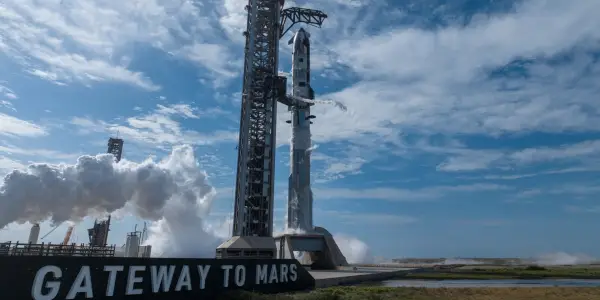
SpaceX has rescheduled the launch of its Starship V3 megarocket to May 22 after a last-minute scrub due to a technical glitch.
In-depth analysis
Market overview
The aerospace industry is witnessing significant developments as companies like SpaceX push the boundaries of rocket technology. The postponement of the Starship V3's launch highlights the inherent challenges in this sector, where technical issues can disrupt timelines and affect competitive positioning. As companies strive for innovation, the market remains dynamic and closely watched.
Key business trends
A growing emphasis on reusability and efficiency is shaping the aerospace sector. Companies are increasingly focused on enhancing their technology to meet ambitious exploration goals, with a particular spotlight on integrating advanced systems like SpaceX's Starship into national programs.
Impact on companies
Delays in testing and launching advanced aerospace vehicles like Starship V3 can significantly affect a company's operational timeline and market perception. As SpaceX navigates these technical challenges, its reputation and competitive edge in the commercial space sector are at stake, influencing investor confidence and strategic partnerships.
Future projections
The future of SpaceX's Starship program hinges on overcoming current technical setbacks. Successful resolution of these issues could accelerate timelines for upcoming missions, reinforcing the company's pivotal role in space exploration and its integration with NASA's Artemis program.
Did you know?
What this means for your wallet
The delay of Starship V3 could impact not only SpaceX's bottom line but also the broader commercial space economy. As the company seeks to secure contracts for satellite deployments and lunar missions, any setbacks may lead to increased costs that could eventually be passed on to customers. Investors and consumers alike should watch for how these delays influence pricing strategies in the satellite internet and launch service markets.
What analysts aren't telling you
While many focus on the technical aspects of Starship V3, a lesser-known factor is that SpaceX's rapid development cycle often leads to significant cost savings in the long run. Each iteration, despite its setbacks, builds on lessons learned, which could eventually lower launch costs by up to 30% compared to traditional rockets.
One person's journey
Marcus, 34, from Chicago, has always been captivated by space exploration. As a child, he watched every shuttle launch on TV, dreaming of the stars. Working in tech, he followed SpaceX closely, hoping their advancements could redefine the future. When he learned of the Starship V3 delay, his heart sank; it wasn't just a setback for a company, but a pause in humanity's journey to the Moon. 'I felt like I was waiting for a friend to arrive,' he said. Yet, he remains hopeful. 'Every challenge is a step towards something greater. I’ll keep watching and waiting.' Marcus embodies the passion of a new generation eager to see humanity push beyond our planet.

Governor Barr Addresses Banking Supervision...

Former Hospital Executive Accused of...

AMD, Cisco, and HUMAIN Launch Joint Venture to...

Do Kwon Sentenced to 15 Years for Role in $40...

Black Friday 2025: Real-Time Sales Updates from...

Beta Technologies Launches Successful $1 Billion...

Amazon's Job Cuts: A 14,000-Strong Reduction...

The Uncertain Fate of the Trump Phone: Delays and...

Chase Named New Issuer for Apple Card

Moltbook Database Vulnerability Exposes AI Agents...

Google Takes Legal Action Against Text Scammers,...

Delay in TikTok Sale Leaves US Investors Uncertain

Starbucks Faces Labor Strikes Amid Turnaround...

Verizon Announces Major Workforce Reductions,...

The Implications of the US Phasing Out the Penny

Michael Dell Highlights Key Aspects of Elon...

Cautionary Insights from Billionaire Entrepreneur...
Norway's Sovereign Wealth Fund Rejects Musk's...

Target Kicks Off Black Friday 2025 Sales with...

Zipcar to Cease UK Operations Amid Operational...

Pennsylvania Electric Rates Set to Rise December 1
Westinghouse Announces Ambitious Nuclear Reactor...

Hack of Real-Estate Data Firm Sparks Urgent...

Debunking Dental Myths: Insights from Experts on...

Extended Cyber Monday Offers Still Available: Top...
Amazon Begins Disbursing Refunds Following $2.5...

Intel CEO Stands By Former TSMC Executive Amid...

After a $532 Million Business Sale, Millennial...

Analyzing the Forbes Under 30 Class of 2026: A...

Chick-Fil-A Launches Chicken & Waffles Sandwich...

Jim Beam Suspends Production at Key Kentucky...

Rising Gas Prices in Illinois Linked to...

BHP Revives Acquisition Interest in Anglo...
Supply Chain Challenges and Rising Equipment...

FAA Probes Near-Miss Incident Involving Delta and...

Pfizer May Seek Political Leverage in $8.5...

Super Micro Faces Decline in Stock Following...

Trump's Executive Order Targets Proxy Advisory...