Penn Station to Undergo $8 Billion Renovation Aiming for Historic Elegance
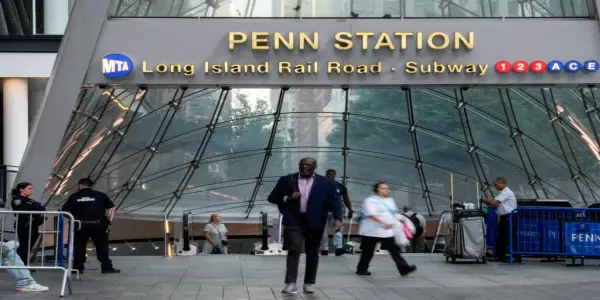
New plans for Penn Station's $8 billion renovation reveal a design inspired by its original grandeur, featuring classical architecture and modern amenities.
In-depth analysis
Market overview
The upcoming $8 billion renovation of Pennsylvania Station in New York City marks a significant investment in urban infrastructure. This project aims to restore the station's historic grandeur while accommodating the daily influx of approximately 600,000 commuters, surpassing the traffic of the region's major airports. Its success could set a precedent for future urban redevelopment initiatives.
Key business trends
The renovation reflects a growing trend toward blending historic preservation with modern functionality in urban spaces. Architects are increasingly prioritizing craftsmanship and ornamentation, drawing inspiration from iconic structures to enhance commuter experiences while maintaining architectural integrity.
Impact on companies
The collaboration between Amtrak and Madison Square Garden's ownership is crucial for the project's success, ensuring both entities can operate effectively during renovations. This partnership may influence future urban redevelopment strategies, highlighting the importance of cooperation between transportation and entertainment sectors.
Future projections
As construction begins in late 2024, the phased renovation of Pennsylvania Station is expected to reshape the transit landscape significantly. This project could lead to increased commuter satisfaction and set a benchmark for future urban transit developments, emphasizing the need for transparency and public engagement.
Did you know?
What this means for your wallet
The $8 billion renovation of Pennsylvania Station may not directly affect commute costs, as Amtrak has pledged no fare hikes. However, this investment could lead to increased property values in the surrounding area, which may drive up living costs for locals. Moreover, improved facilities could enhance the overall commuting experience, potentially offsetting other expenses related to travel.
What analysts aren't telling you
While the renovation promises a return to historical aesthetics, analysts often overlook that the original Pennsylvania Station was not just a transit hub but a cultural icon, influencing urban design across the country. Its destruction in the 1960s sparked national conversations on preservation that still resonate today.
One person's journey
Marcus, 34, from Chicago, remembers the first time he stepped into Pennsylvania Station as a teenager. The soaring ceilings and intricate details left him in awe, a stark contrast to the cramped, utilitarian space he often encountered in his hometown. Years later, during a visit to New York, he felt a pang of sadness seeing the station's decline. Now, he is cautiously optimistic about the renovation. For Marcus, the station is not just a transit point but a symbol of history and connection, and he hopes the new design will evoke that same sense of wonder for future generations.
Expert Commentary

Amazon Announces 700 Job Cuts in New York City...

F5 Networks Breach Poses Significant Risk to...

Amazon Begins Disbursing Refunds Following $2.5...

Moltbook Database Vulnerability Exposes AI Agents...

Top AI Stocks to Consider Amid Ongoing Industry...
NASA's Jet Propulsion Laboratory to Lay Off 550...

Amazon's Partnership with OpenAI Boosts Jeff...

Verizon Announces Major Workforce Reductions,...

After a $532 Million Business Sale, Millennial...

Campbell's Dismisses Executive Following...

Transportation Secretary Duffy's Dress Code...

Japan Raises Interest Rates to Highest Point...

Southwest Airlines' $140 Million Penalty Reduced...

Federal Employees Share Shutdown Experiences on...

Major Players in AI Infrastructure See...

Analyzing the Forbes Under 30 Class of 2026: A...

McLean Resident Sentenced to Nearly Two Years for...

Amazon Thwarts 1,800 Job Applications Linked to...

Nvidia's Jensen Huang Sparks Fried Chicken Stock...

Pennsylvania Electric Rates Set to Rise December 1

Westinghouse Announces Ambitious Nuclear Reactor...

MacKenzie Scott's Philanthropic Impact: Over $19...

Governor Barr Addresses Banking Supervision...

The Rise of AI Influencers: A New Era in Social...

Warner Bros. Discovery Turns Down Paramount...

U.S. Retailers Face Penny Shortage as Minting...

Trump's Proposed 100% Tariffs on China Ignite $18...
China's New Rare Earth Export Controls Ignite...

December 2025 SSI Payment Schedule Confirmed by...

Cryptocurrency Market Experiences Swift Decline...

Google Introduces Gemini 3 AI Model and...

AMD, Cisco, and HUMAIN Launch Joint Venture to...

Norway's Sovereign Wealth Fund Rejects Musk's...

Walmart Emerges as Key Player in Addressing...

Intel CEO Stands By Former TSMC Executive Amid...

Palantir's CEO Defends Company Against...

Lutnick Brothers Capitalize on Data Center Boom...

Black Friday 2025: A Mixed Bag for Retailers Amid...

Trump's Pardon of Binance Founder Raises Ethical...

October Sees Modest Rise in Existing-Home Sales...