Airlines Implement Charger Restrictions to Mitigate Fire Risks from Lithium Batteries
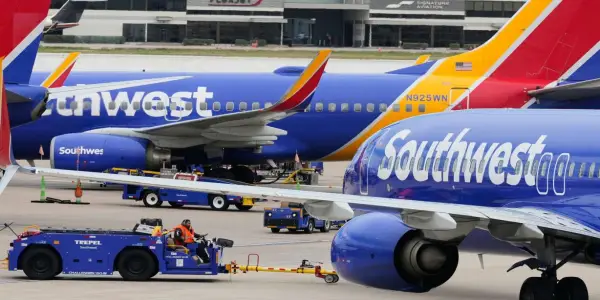
Starting April, airlines will limit passengers to one portable charger on flights to reduce the risk of lithium battery fires in the cabin.
In-depth analysis
Market overview
Airlines are implementing new restrictions on portable chargers to enhance in-flight safety, starting in April. Passengers will be limited to one visible charger to mitigate risks associated with lithium battery fires, a growing concern for aviation authorities amid rising incidents linked to personal electronic devices.
Key business trends
The trend towards stricter safety protocols in aviation is evident, as airlines prioritize passenger safety. This shift includes limiting the number of portable chargers, reflecting an industry-wide response to increasing safety concerns.
Impact on companies
Southwest Airlines' decision to restrict portable chargers illustrates a proactive stance on safety, potentially influencing other carriers to adopt similar measures. This policy aims to enhance fire hazard management and may affect operational procedures across the industry.
Future projections
As airlines continue to adapt to safety challenges posed by technology, future regulations are likely to evolve. Enhanced safety protocols may become standard practice, shaping the industry's approach to passenger safety and device management.
Did you know?
What this means for your wallet
The new restrictions on portable chargers might seem minor, but they could lead to increased costs for travelers. With only one allowed charger, consumers may need to invest in higher-quality or multifunctional devices that can handle longer battery life. Additionally, the push for in-seat power outlets could mean a shift in airline pricing, as airlines may seek to recoup costs by adjusting fares or charging for access to these amenities.
What analysts aren't telling you
While the focus is on safety, analysts often overlook that lithium battery fires, although rare, have caused significant disruptions, leading to costly delays and cancellations. In 2021 alone, such incidents resulted in over 1,000 flight diversions worldwide, highlighting the broader impact on air travel.
One person's journey
Marcus, 34, from Chicago, recalls his last flight to visit family. He packed two portable chargers, anticipating heavy device usage during a long layover. Mid-flight, he noticed a fellow passenger's charger overheating, which led to a brief scare for everyone on board. The incident made him realize the importance of safety measures. Now, as he prepares for his next trip, he feels a mix of relief and concern about the new restrictions, understanding that safety comes first, even if it means packing lighter.
Expert Commentary

Google Introduces Gemini 3 AI Model and...

Michael Burry Takes Bearish Position on Nvidia...

Super Micro Faces Decline in Stock Following...

Transportation Secretary Duffy's Dress Code...

Amazon Announces 700 Job Cuts in New York City...

Analyst Highlights Palantir as a Leader in...

Analyzing the Forbes Under 30 Class of 2026: A...

Tesla Plans Subscription Price Hike for Full...

Amazon Thwarts 1,800 Job Applications Linked to...

CFPB Plans Workforce Furloughs and Case Transfers...
FAA Probes Near-Miss Incident Involving Delta and...

Oil Prices Plummet as Stock Markets Rally Amid...

Unprecedented Early Black Friday Discounts on...

Anthropic Unveils Enhanced Opus 4.5 Model,...

Hack of Real-Estate Data Firm Sparks Urgent...

Mark Zuckerberg's Wealth Takes a Hit as Meta...


Michael Dell Highlights Key Aspects of Elon...

Dutch Authorities Halt Intervention in Nexperia...

Campbell's Dismisses Executive Following...

Trump's Pardon of Binance Founder Raises Ethical...

Roblox Enhances Child Safety by Blocking Adult...

Microsoft's Strategic Bet on OpenAI: A Risky Move...

AMD, Cisco, and HUMAIN Launch Joint Venture to...
December 2025 SSI Payment Schedule Confirmed by...

Waymo Expands Autonomous Taxi Services to Include...
Amazon Begins Disbursing Refunds Following $2.5...

Black Friday 2025: Real-Time Sales Updates from...

CISA and NSA Urge Immediate Action to Secure WSUS...

Verizon Announces Major Workforce Reductions,...

Meta Platforms Poised for Significant Stock Split...

USPS Chief Advocates for Revenue Growth Amid...

Norway's Sovereign Wealth Fund Rejects Musk's...

Starbucks Stock Rises Amid Calls for Boycott by...

Standard Chartered Predicts End of Bitcoin...

Beta Technologies Launches Successful $1 Billion...
Federal Reserve's December Interest Rate Decision...

Netflix Launches 10-for-1 Stock Split Amid...

Moltbook Database Vulnerability Exposes AI Agents...

BCBS Class Action Settlement 2025: Key Details on...