Exploring Key Features of Meta's Ray-Ban and Oakley Smart Glasses
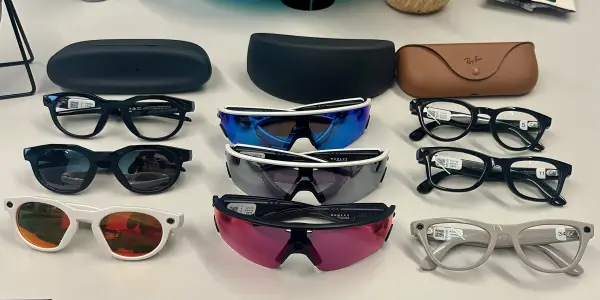
Discover the advanced features of Meta's Ray-Ban and Oakley smart glasses, including Live Translation and AI integration, enhancing your wearable tech experi...
In-depth analysis
Top trending topics
The latest advancements in smart glasses, particularly Meta's Ray-Ban Gen 2 and Oakley Meta HSTN models, are generating significant buzz. Key features like Live Translation and AI integration are capturing attention, reflecting a shift towards more interactive wearable technology. As consumers increasingly seek multifunctional devices, these innovations are at the forefront of industry discussions.
Audience engagement
Users are actively engaging with the new features of Meta's smart glasses, particularly the playful customization options within the AI app. The ability to adjust voice settings and interact with AI enhances user experience, appealing especially to younger demographics.
Industry impact
Meta's advancements in smart glasses signal a transformative phase for the wearable tech industry. The integration of AI for practical functionalities, such as real-time translation and personalized reminders, sets a new standard. This evolution is prompting competitors to innovate, reshaping consumer expectations and market dynamics.
Future trends
Looking ahead, the smart eyewear sector is likely to see increased emphasis on AI-driven features and user personalization. As competition intensifies, brands will focus on enhancing functionality while maintaining stylish designs to attract a broader audience.
Did you know?
Why everyone is talking about this
Meta's latest smart glasses are sparking conversations not just for their sleek design but for their significant technological leap. The integration of AI features like Live Translation and contextual information access marks a pivotal shift in how wearables can enhance daily life. As globalization increases, tools that bridge communication gaps are becoming essential, making these glasses particularly relevant for travelers and multicultural interactions.
What stays off-camera
While many focus on the stylish exterior of Meta's new smart glasses, a lesser-known fact is that they utilize advanced machine learning algorithms to improve translation accuracy over time. This means that the more a user interacts with the device, the better it becomes at understanding context and nuances in language, making it a continually evolving tool.
A day behind the scenes
The development of Meta's smart glasses involves a rigorous testing process that many never see. Engineers work closely with linguists to refine the Live Translation feature, often conducting tests in diverse environments—from bustling city streets to quiet parks. For instance, during a recent field test in New York, a team member named Sarah noted how the glasses struggled with street slang, prompting a recalibration of their AI models. Such real-world testing ensures the product is not only functional but genuinely enhances everyday experiences for users.
Expert Commentary

Lily Allen Opens Up About Her Heartfelt Album...

Syria Initiates Extensive Operation to Eliminate...

New Teaser for 'Avengers: Doomsday' Hints at...

Lack of Grand Jury Approval Raises Doubts in...

Sisterly Conflict Erupts Over Wedding Plans as...

Jack Osbourne Faces Backlash for Emotional...

FIA Addresses Controversy Over Marshal...

Three Key Reasons Your Executive Isn’t Making an...

Microsoft Faces Social Media Backlash Amid AI...

Understanding AI's Role in Education: Insights...

Reddit CEO Steve Huffman Achieves Billionaire...

Debunking the Myth: Do Metal Spoons Keep...

Exploring the Complexities of Childhood in...

Trump's Controversial Remarks on Robert Mueller's...
New Study Reveals How Personalized Algorithms...

COP30 in Brazil: Addressing Global Climate Issues...

AI-Enhanced Teddy Bear Returns to Market After...

Apple TV Set to Launch Ambitious Sci-Fi Series...

The Cognitive Impact of AI: How Tools Like...

Republicans Strategize for 2026 Midterms Without...

Shifts in ICE Strategy Following Minneapolis...

The Disruptive 'Mosquito Buzz' at Shibuya Station...

Las Cruces Police Chief Calls for Public Support...

Streamlining Research: A Five-Step Workflow with...
OpenAI Engineer Shares Insights on Swift Hiring...

BBC Presenter Faces Discipline for On-Air...

New Research Offers Effective Method to Safeguard...

Rachel Sennott Embraces Los Angeles in New HBO...

Reflecting on 'Toy Story': A Milestone in...

JD Vance Links UFOs to Demonic Entities in...

Incorporating NotebookLM Revolutionizes Freelance...

The Future of Higher Education: Navigating Cost...

Insights from Students Shape the Future of Ada...

Integrating Obsidian, Zotero, and NotebookLM: A...

Gamers Criticize NBA 2K for Fashion Updates Amid...

The Debate Over Retrocomputing: Emulation vs....

Asteroid 33 Polyhymnia May Contain Elements...

Google Unveils Gemini 3: A Major Leap in AI...

Scott Patterson's Bold Stance on Rory's...