Microsoft's Quantum Computing Claims Challenged by Peer-Reviewed Critique
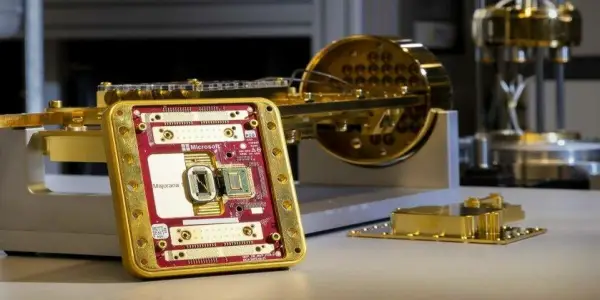
A recent Nature publication questions Microsoft's quantum computing progress, citing potential flaws in their Majorana particle research.
In-depth analysis
How the technology works
Microsoft's approach to quantum computing involves the use of Majorana particles, which are theorized to enable more stable qubits. Their research focuses on detecting phase transitions crucial for quantum calculations, utilizing specialized software to manipulate these particles. However, recent critiques have highlighted potential coding errors that undermine the reliability of these findings.
Why this innovation matters
Advancements in quantum computing have the potential to revolutionize various industries by solving complex problems faster than classical computers. The validity of these innovations is crucial for attracting investment and maintaining public trust in technological progress.
Who is affected
The ongoing debate impacts a wide range of stakeholders, including Microsoft, its competitors in the tech industry, and researchers in quantum physics. The integrity of research claims affects investment decisions and public perception of quantum technology's feasibility.
What could come next
Future developments may include a reevaluation of Microsoft's research methodologies and increased scrutiny of claims made by tech companies in the quantum space. This could lead to more rigorous standards for validation in quantum computing research.
Did you know?
How this will change your life
The ongoing scrutiny of Microsoft’s quantum computing claims could reshape the tech landscape, impacting everything from cybersecurity to artificial intelligence. If breakthroughs are delayed, industries relying on quantum advancements might face stagnation, affecting job growth and innovation. For consumers, this means slower progress in technologies like ultra-secure communications and advanced computational capabilities that could transform daily tasks, from banking to health monitoring.
The tech secret
Despite Microsoft’s bold proclamations about Majorana particles, many researchers believe that these particles, if they exist as theorized, could revolutionize computing. What’s surprising is that Majorana particles have eluded detection in experiments for decades, leading to skepticism about their practical application in quantum computing, which raises doubts about the viability of Microsoft's claims.
The human behind the innovation
Dr. Henry Legg, the researcher challenging Microsoft’s assertions, has a personal stake in the integrity of scientific research. Growing up in a family of engineers, he was inspired by his father’s dedication to honest experimentation. After years of studying quantum mechanics, Legg was motivated to speak out when he discovered potential flaws in Microsoft’s work. His commitment to transparency reflects a broader belief that science must remain accountable, especially in an era where tech companies wield immense influence over future technologies.
Expert Commentary
The scrutiny of Microsoft's claims regarding Majorana particles reflects broader issues in the rapidly evolving field of quantum computing. As competition heats up among tech giants, the integrity of research becomes paramount. The allegations of coding errors and incomplete data presentation raise critical questions about the reliability of findings that could shape the future of quantum technology. This situation serves as a reminder that ambitious claims in science must withstand rigorous examination. For Microsoft, the fallout from these critiques could impact not only its reputation but also the trajectory of quantum computing development, where trust and transparency are essential for attracting investment and collaboration.

Discover 10 Lesser-Known Free Android Apps Worth...

T-Mobile to Introduce Charges for Apple TV Perk...

Tim Cook Hints at Commemorative Plans for Apple's...
Top Affordable Android Tablet Options to Compete...

LG B5 65-Inch 4K OLED TV Available at Black...

GM Technician Faces Significant Depreciation...

Comparing the Samsung Galaxy XR, Apple Vision...

December 2025 Google System Updates: Key...

Apple Confirms December Release for Major iOS...

Google Messages Initiates Testing of @mentions...

Google Rolls Out Android 16 Part Two Update for...
Highlights from the ID@Xbox Showcase: October...
Google's Pixel 11 Series May Feature Tensor G6...

Even Realities Introduces G2 Smart Glasses with...
Microsoft's Copilot Actions Raises Security...

Limited-Time Offer: Refurbished MacBook Pro...
Google Enhances Cameyo to Streamline Windows App...

Upcoming amiibo Releases for 2025–2026: Mario...

Nintendo Unveils First-Ever Physical Soundtrack...

Vampire: The Masquerade - Bloodlines 2 Receives...

Celebrating Nintendo: The Top 100 Games of All...

Google AI Pro Expands Storage to 5 TB Without...

Fujifilm X-T30 III receives its very first...


Excitement Builds for Metroid Prime 4 After...

Bethesda Celebrates Fallout: New Vegas' 15th...

Rising Memory Costs Dampen PC Building Prospects...

Understanding the Microphone in Your Smart TV:...

Top Android Phones to Avoid in 2025 and...

The Role of Steam Tubes in LS Engines Explained
Microsoft Addresses Security Risks with November...

Meta's Ray-Ban Smart Glasses: Innovation Meets...

Chevrolet Corvette ZR1 Shatters Lap Record at...

Battlefield 6 Crossplay Dilemma: PS5 Players Torn...

Sony Moves to Halt Fan-Led Revival of Concord...

Google Warns Against Creating 'Bite-Sized'...
Apple's M5 Chip Significantly Enhances Local LLM...

Essential USB-Compatible Gadgets to Enhance Your...

Microsoft Addresses Security Flaw in Copilot AI...