Oxford Union President-Elect George Abaraonye Removed Following No-Confidence Vote
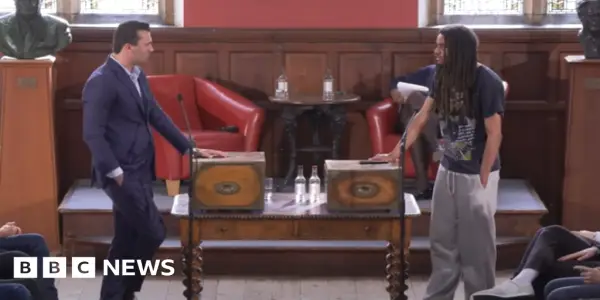
George Abaraonye has been ousted as Oxford Union president-elect after a no-confidence vote, fueled by controversial social media posts about Charlie Kirk.
In-depth analysis
Cultural events
The recent upheaval at the Oxford Union has sparked significant discourse about the nature of cultural events hosted by student organizations. The fallout from George Abaraonye's removal highlights the complexities of inviting speakers with polarizing views, as institutions grapple with balancing free expression and the potential for backlash. This incident may redefine future programming.
Impact on society
The no-confidence vote against Abaraonye illustrates broader societal tensions regarding free speech and political activism. As student unions navigate these issues, the implications extend beyond campus, influencing public discourse and the ways in which controversial figures engage with academic audiences.
Preserving heritage
The Oxford Union, with its storied history of fostering debate, faces the challenge of preserving its heritage while adapting to contemporary societal values. The recent controversy emphasizes the need for the organization to uphold its commitment to respectful discourse without compromising its foundational principles of open debate.
Future outlook
Looking ahead, the Oxford Union's handling of this situation may set precedents for how student organizations approach contentious topics. The balance between fostering open dialogue and maintaining a respectful environment will be crucial in shaping its future engagements and reputation.
Did you know?
Why this is part of our identity
The Oxford Union is a microcosm of the broader societal struggle between free speech and accountability. This incident highlights the challenges of maintaining a platform for diverse opinions while ensuring that discourse does not descend into hostility or violence. It's a critical moment for student organizations, reflecting the evolving expectations of young leaders in navigating complex political landscapes.
Unknown pages of culture
The Oxford Union was founded in 1823, initially as a debating society for students, but it evolved into a significant platform for influential figures, including Winston Churchill and Albert Einstein, who have graced its halls. Surprisingly, it was once nearly dissolved due to financial issues in the early 20th century, highlighting its vulnerable history.
The guardian of culture
Marcus, 34, from Chicago, recalls the day he first stepped into the Oxford Union as an exchange student. He had always admired its legacy of debate and intellectual rigor, but during a heated discussion on free speech, he felt a palpable tension in the air. When Abaraonye's controversial remarks were dissected, Marcus was struck by the mixture of passion and fear among students. For him, it was a poignant reminder that even prestigious platforms face the daunting task of balancing open dialogue with ethical responsibility. The experience deepened his appreciation for the delicate line between expression and respect, shaping his understanding of civic engagement.
Amazon's Alexa Plus Launches in Canada with...

The Olive Harvest in Palestine: A Cultural and...

From K-Pop to K-Food: The Rise of Korean Cuisine...

Guillermo del Toro and Oscar Isaac Infuse...

Exploring the Enchantment of Nollywood Cinema

Xinjiang Sees Surge in Tourist Visits Amid...
Populus Hotels in Seattle and Denver Redefine Art...

The Optimal Timing for Cold Plunges: Before or...
Launch of Prompt Decks Marks Milestone in AI...


AI Recipe Recommendations Raise Concerns for...

The Dual-Edged Sword of Android Gaming Handhelds:...

Verizon Announces Layoffs Affecting Over 13,000...

The Dark Return of Social Media Horror in...
The Challenges Facing Progressive Politics: A...

The Resurgence of Retro Christmas Decor: A...

The Personal is Political: An Examination of...

Budget Insights: Expert Panel Evaluates Labour’s...

Panpuri Launches Its First Singapore Store at...

The Challenge of Understanding an Inflated Economy

Understanding the Significance of Hunting in...

Duke University Students Forge New Path in Luxury...

Palm Royale Returns for Season 2 on Apple TV+
Palantir's CEO Defends Company Growth Amid...

The Social Media Dilemma: Why Many Women Keep...

Government Confident in Resolving Concerns Over...

English Mayors Granted Authority to Implement...
Trump's Actions May Complicate Zohran Mamdani's...
The Most Notable Missteps in Star Trek...

Xbox and Crocs Combine Gaming and Fashion with...

Google Enhances Arts & Culture App with AI...
Trump Proposes 'Permanent Pause' on Migration...

YouTube Access Issues Persist for Opera GX Users...
Google Leverages AI to Produce Television...

Google Pixel Cameras Experience Jittery...

Internet Archive Celebrates Milestone of One...

Moltbook: A Social Media Platform for AI Agents...

Authors Advocate Automatic Library Card...