Can Future Astronauts Utilize Bacteria to Construct Habitats on Mars?
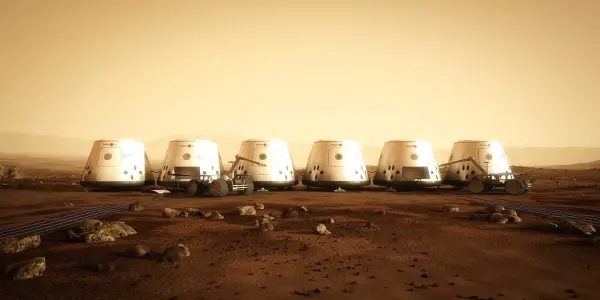
Explore groundbreaking research on using bacteria to create habitats on Mars, paving the way for sustainable colonization and in-situ resource utilization.
In-depth analysis
Top trending topics
The colonization of Mars is capturing global interest, particularly with NASA's plans for crewed missions in the coming decades. Innovative research on using bacteria to create building materials from Martian soil is gaining traction, highlighting the potential for sustainable living on the Red Planet and the shift towards in-situ resource utilization in space exploration.
Audience engagement
Public fascination with Mars colonization is rising, fueled by scientific advancements and the prospect of human life on another planet. Engaging discussions around sustainable practices and innovative technologies are resonating with audiences eager to follow humanity's next frontier.
Industry impact
The recent findings from the Polytechnic University of Milan could revolutionize space construction methods, reducing dependency on Earth-sourced materials. This approach not only enhances the feasibility of Martian habitats but also influences future biotechnological applications in various industries, promoting sustainability and innovation.
Future trends
As research on Martian colonization advances, a shift towards localized resource utilization is expected to dominate discussions in space exploration. The integration of biotechnology in construction and life support systems will likely emerge as a key focus in future missions to Mars.
Did you know?
Why everyone is talking about this
The conversation around Mars colonization is intensifying as humanity grapples with both the allure of exploration and the practicalities of survival. The innovative use of bacteria to create construction materials from Martian soil not only presents a fascinating intersection of biology and engineering but also raises profound questions about our ability to adapt life beyond Earth. This research could redefine how we understand sustainability in extraterrestrial habitats.
What stays off-camera
While the focus is often on the technological advancements for Mars colonization, it's noteworthy that the bacteria used in this study have been discovered in extreme environments on Earth, including deserts and the Arctic. Their natural resilience highlights the potential for life to thrive in harsh conditions, which may inform our approach to extraterrestrial habitats.
A day behind the scenes
In the lab at the Polytechnic University of Milan, researchers like Dr. Elena Rossi spend countless hours cultivating their bacterial cultures. A typical day involves meticulous monitoring of growth conditions, from temperature to nutrient levels. Surprisingly, they often use unconventional materials for experiments, such as recycled plastics, to simulate Martian soil. Their goal? To develop a bio-cement that not only binds materials but also supports future agricultural needs on Mars. Dr. Rossi shares, 'Every small success in the lab feels like a step closer to making Mars a second home for humanity.' This blend of creativity and science reflects the innovative spirit necessary for interplanetary colonization.
Understanding BMW iX3's Driving Mode Limitations:...
Tech Leaders Embrace Controversial Views on Human...

HBO's 'The Pitt' Sparks Increased Interest in...

Lina Khan Discusses Antitrust Issues on 'The Adam...

Google Unveils Gemini 3: A Major Leap in AI...

Trump Challenges Validity of Biden's Turkey...

Exploring Time Travel and Quantum Concepts with...

Streamlining Research: A Five-Step Workflow with...

Fox News' Misrepresentation of Portland Protests...

Critical Vulnerability Exposed in OpenClaw:...

Gilmore Girls Stars Discuss Rory's Boyfriend...

Key Developments in Video Gaming to Anticipate in...

BBC Presenter Faces Discipline for On-Air...

Debunking the Myth: Do Metal Spoons Keep...
Insights from Students Shape the Future of Ada...
The Cognitive Impact of AI: How Tools Like...

Three Key Reasons Your Executive Isn’t Making an...
Exploring Bazzite: A New Contender in the PC...

Decline in Popularity of Trump Halloween Costumes...
OpenAI Engineer Shares Insights on Swift Hiring...

Rachel Sennott Embraces Los Angeles in New HBO...

The Disruptive 'Mosquito Buzz' at Shibuya Station...

The Erosion of Democratic Discourse in America

Apple TV Set to Launch Ambitious Sci-Fi Series...

Norman Reedus Discusses Daryl Dixon's Connection...

UN Highlights Climate-Induced Displacement as...

Top Controllers for Call of Duty: Black Ops 7 —...

Study Warns Students: Relying on ChatGPT May...

Shifts in ICE Strategy Following Minneapolis...

Security Risks in Microsoft Teams Highlighted by...


Maximize Your Use of NotebookLM with These Five...

New York City Mayor-elect Zohran Mamdani Takes...

Sisterly Conflict Erupts Over Wedding Plans as...

JD Vance Links UFOs to Demonic Entities in...
Integrating Obsidian, Zotero, and NotebookLM: A...

AI-Enhanced Teddy Bear Returns to Market After...

Python Bytes: #459 Updates on Dependency...

Samsung TVs to Integrate Google Photos, Enhancing...