Trump and Hegseth's Militaristic Vision Takes Center Stage in Chicago
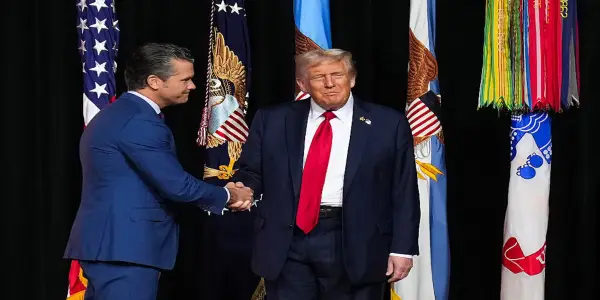
Trump and Hegseth's recent summit at Quantico promotes a militaristic vision, raising concerns about civil liberties and the implications for American democr...
In-depth analysis
Cultural events
The recent summit at Marine Corps Base Quantico, led by President Trump and Defense Secretary Hegseth, showcased a controversial push for a 'warrior culture' within the military. This gathering, marked by provocative rhetoric, has sparked debates about the intersection of military values and governance, reflecting a cultural shift towards hypermasculinity and militarization in American society.
Impact on society
The rhetoric from the summit has intensified societal divisions, particularly among urban and rural populations. Support for militarized law enforcement is growing among certain demographics, leading to heightened tensions and concerns about the implications for civil liberties.
Preserving heritage
The current climate raises critical questions about the preservation of democratic values and civil rights in the face of militarization. Experts emphasize the need to uphold the principles enshrined in the Constitution, urging vigilance against any encroachment on civil liberties by military forces in domestic affairs.
Future outlook
The trajectory of U.S. governance appears increasingly militarized, with experts warning of potential normalization of military involvement in civilian life. This trend could undermine democratic processes and further polarize an already divided society.
Did you know?
Why this is part of our identity
The intersection of military culture and governance is a defining moment for American identity. It challenges the foundational values of democratic engagement and civil liberties, revealing how deeply ingrained notions of strength and masculinity can shape public policy. As citizens, grappling with these shifts requires vigilance and a commitment to uphold the rights that define a free society.
Unknown pages of culture
In 1971, the U.S. military conducted a secret study known as the 'Project 100,000,' which aimed to recruit lower-ability individuals into the armed forces. This initiative not only impacted military culture but also raised questions about social equity and the treatment of marginalized communities within the military framework.
The guardian of culture
Marcus, 34, from Chicago, recalls his grandfather's service in World War II, a time when military pride was intertwined with community values. As he watches the recent military rhetoric unfold, he feels a pang of nostalgia mixed with fear. Once proud of his city’s resilience, he now worries as friends express concern over aggressive law enforcement tactics. For Marcus, preserving the memory of his grandfather's honorable service means advocating for a military that protects, not intimidates. The words of his grandfather echo in his mind: 'Strength is in protecting the weak, not in controlling them.' This belief drives Marcus to engage in local activism, determined to safeguard the values that formed his family's legacy.
Expert Commentary

Internet Archive Celebrates Milestone of One...

The Challenge of Understanding an Inflated Economy

Ben & Jerry's Co-Founder Launches Independent Ice...

Launch of Prompt Decks Marks Milestone in AI...

The Resurgence of Retro Christmas Decor: A...

First Contestant Eliminated from Strictly Come...
Divisions Emerge in the GOP Amid Epstein File...

Exploring the Cultural Richness of Zeyrek Çinili...
Government Confident in Resolving Concerns Over...

NTSB Report Indicates FAA Missed Opportunities to...

Reviving Venetian Heritage: Antonia Sautter’s Il...

Amazon's Alexa Plus Launches in Canada with...

Doja Cat Disavows Controversial Fortnite Post,...

The Perils of Innovation: Eight Scientists Who...

The Rise of 'Silver Influencers' on TikTok and...
New UK Passports to Feature King's Coat of Arms...
The Rise and Fall of a £1 Million Glastonbury...

DeepSeek Leadership Expresses Concerns Over AI's...

The Most Notable Missteps in Star Trek...

The Dark Return of Social Media Horror in...

The Quest for Authentic Sound: Issues with the...

Xinjiang Sees Surge in Tourist Visits Amid...

Nomad Offers Premium Leather Cases for iPhone 17...

Sustainable Luxury Takes Center Stage at Miami...
UK Establishes Annual Day of Remembrance for...

The Role of AI in Shaping Thanksgiving Traditions...

African Nations Urged to Forge Unique Democratic...
Trump's Actions May Complicate Zohran Mamdani's...
Debate Intensifies Over Russian Archaeologist's...

Eddie Jones Outlines Vision for Rugby's Future...

DJI Mini 5 Pro Review: Enhanced Features with a...

Elon Musk's Struggle for Authenticity in a...

Google Leverages AI to Produce Television...

St. Louis, Saskatchewan, Unites to Restore...
Populus Hotels in Seattle and Denver Redefine Art...
Historian Rutger Bregman Critiques BBC's Editing...

Verizon Announces Layoffs Affecting Over 13,000...

Understanding the Nuances of Theft in Modern...

Butlin's Holiday Incident Leads to Cancer...

Leading UK Scientist Warns Visa Restrictions...