Mistral Unveils Robostral Navigate: Advanced Robotics Navigation Model
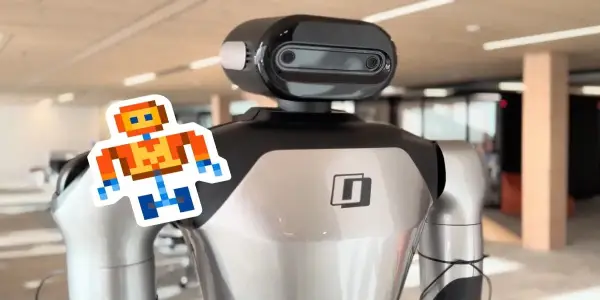
Mistral introduces Robostral Navigate, an 8B model achieving 76.6% on R2R-CE using only a single RGB camera, revolutionizing robotic navigation.
In-depth analysis
Exhibitions and events
Mistral recently unveiled Robostral Navigate at a high-profile tech conference, showcasing its capabilities in autonomous navigation. The event highlighted the model's impressive 76.6% success rate on the R2R-CE benchmark, drawing attention from industry leaders and potential partners. Demonstrations illustrated its functionality in various real-world scenarios, emphasizing its practical applications.
Artist highlights
Robostral Navigate stands out as a pioneering model in robotics, utilizing a single RGB camera for navigation. Its innovative approach combines pointing-based methods with reinforcement learning, showcasing Mistral's expertise in developing advanced autonomous systems.
Audience reception
The audience responded positively to Robostral Navigate, praising its efficiency and adaptability in complex environments. Attendees expressed excitement about its potential applications across sectors such as logistics and hospitality, indicating strong interest in its deployment within real-world settings.
Future trends
As the robotics landscape evolves, the emphasis on single-sensor systems like Robostral Navigate is likely to grow. Mistral's commitment to refining autonomous navigation solutions suggests a trend towards more streamlined and efficient technologies in the coming years.
Did you know?
Why you should see this
Robostral Navigate represents a leap in robotics, making autonomous navigation more accessible across industries like logistics and hospitality. Imagine a delivery robot seamlessly maneuvering through a crowded hotel lobby or a warehouse, optimizing efficiency without the need for cumbersome multi-sensor setups. This innovation could reshape how we interact with technology in our daily lives, streamlining operations and enhancing service experiences.
Secrets of art
A surprising aspect of Robostral Navigate is its ability to utilize a single RGB camera for navigation, a significant departure from traditional methods that rely on multiple sensors. This innovation not only simplifies design but also reduces costs, making advanced robotics more feasible for everyday applications.
The artist's hand
Marcus, 34, from Chicago, works in logistics and has witnessed firsthand the challenges of navigating busy environments. Recently, he observed a pilot program featuring Robostral Navigate in action. Watching the robot deftly avoid obstacles while delivering packages sparked a sense of hope in him. For Marcus, this technology isn't just about efficiency; it's about reimagining the future of work, where humans and robots collaborate seamlessly, allowing him to focus on more strategic tasks while trusting the robots with the heavy lifting.
Expert Commentary
Sotheby’s Unveils Renovated Breuer Building as...

A Homecoming for the Wyeth Family Legacy

McMichael Canadian Art Collection Unveils...

The Risks of Relying on AI for Game Art

Michael David's Reflective Art Challenges...

Restocked: Magic: The Gathering's Final Fantasy 7...

Studio PROBA Unveils Monumental Stone Sculptures...

Marcus Brutus Exhibition Opens at Harper's...

Exploring Nature's Artistry: Highlights from the...

Jujutsu Kaisen's Third Season Opening: A...

Must-Listen New Albums: Highlights from Rosalía,...

Essential Items for Your Get Home Bag

Shuffalo: The New Anagram Game from The New Yorker

Annie Leibovitz's Vogue Cover Featuring Timothée...
Top Tech Gifts for 2025: James Pero's Recommended...


David Shrigley Challenges Artistic Value with £1...

Alexis Mata Explores Distortion and...

Real-Life Inspirations Behind Iconic Horror Movie...

Autumn 2025 in Paris: A Guide to New Dining,...
Edmonia Lewis: A Pioneering Black Sculptor...

Vince Gilligan's Anti-AI Stance Highlighted in...

Transforming Muddy Colours: A Guide for Artists

Exploring the Innovative Features of Rebelle 8

Liu Wei Set to Transform The Met's Fifth Avenue...
Egypt Launches Grand Egyptian Museum to Showcase...

Chris Wolston’s Debut Museum Exhibition Unveils...
Devon Turnbull's Hi-Fi Pursuit Listening Room...

10 Effective Exercises Using a Medicine Ball

ElevenLabs Partners with Matthew McConaughey and...

Exploring Identity and Myth: A Conversation with...

Debunking the Myth of the Literary Genius in the...
Switch Bot Launches Compact Self-Emptying Robot...

Jaume Plensa's Retrospective in Michigan...

British Designers Launch Innovative Mini Garden...

Actress from 'Terrifier' Files Lawsuit Against...
Faye in 'Deliver Me from Nowhere' Represents...

China Sets New Record with Spectacular Drone...

Ripley's Acquires $12 Million Golden Toilet at...

Exploring the Dark Aesthetic: The Art of Nikola...