Edmonia Lewis: A Pioneering Black Sculptor Revisited
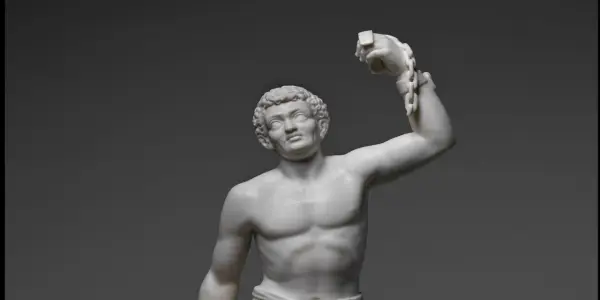
Zachary Fine explores Edmonia Lewis's impactful works at the Peabody Essex Museum, highlighting her role in reshaping 19th-century sculpture.
In-depth analysis
Exhibitions and events
The Peabody Essex Museum is currently hosting a retrospective on Edmonia Lewis, showcasing her impactful works, including the notable sculpture 'Forever Free.' This exhibition not only highlights her artistic achievements but also delves into the themes of race, gender, and identity that permeate her creations, providing a rich context for understanding her legacy.
Artist highlights
Edmonia Lewis stands out as a pioneering 19th-century sculptor, known for her unique focus on the narratives of formerly enslaved individuals, challenging conventional representations of freedom in her art.
Audience reception
Visitors to the exhibition have engaged deeply with Lewis's work, appreciating the nuanced portrayal of emancipation and the complexities of race and gender. The retrospective has sparked conversations about her relevance in contemporary discussions surrounding representation in art.
Future trends
The ongoing reevaluation of historical artists like Edmonia Lewis suggests a growing trend in art institutions to highlight underrepresented voices, fostering a more inclusive narrative within the art world that acknowledges diverse perspectives.
Did you know?
Why you should see this
The Peabody Essex Museum's retrospective on Edmonia Lewis offers a rare glimpse into the intersection of race, gender, and art in 19th-century America. By showcasing her powerful sculptures, especially 'Forever Free,' the exhibition compels visitors to confront the complexities of emancipation and identity. This exploration is relevant today, as it challenges us to reflect on historical narratives and their implications in our ongoing conversations about freedom and representation.
Secrets of art
Edmonia Lewis was not only an accomplished sculptor but also one of the first women of African and Native American descent to gain recognition in the art world. She defied conventions by establishing her studio in Rome, where she was influenced by classical art while simultaneously confronting the biases of her time, shaping her unique artistic voice.
The artist's hand
Marcus, 34, from Chicago, visited the Peabody Essex Museum after hearing about Edmonia Lewis's retrospective. Growing up in a neighborhood steeped in history, Marcus felt a deep connection to Lewis’s story as a Black artist. As he stood before 'Forever Free,' he was struck by the raw emotion of the figures, reflecting his own family's struggles with identity and empowerment. This moment resonated with him, reminding him of his grandmother's tales of resilience. For Marcus, Lewis's art wasn't just a historical piece; it was a mirror reflecting his own journey and those of his ancestors.
Expert Commentary
Edmonia Lewis: A Pioneering Black Sculptor...
Palestinian Artists Uphold New Visions of...
Nike Unveils Air Force 1 'Sakura,' A Sneaker...
Reviving the Charm of Coarse AI Art
Uncovering a Family Legacy: The Story Behind an...
Inauguration of JW Marriott Tokyo: A Fusion of...
Transforming Android Home Screens into Artistic...

Exploring Hokusai's The Great Wave Off Kanagawa:...
Highlighting 15 Key Design and Architecture...

Jujutsu Kaisen's Third Season Opening: A...
Essential Card Games Every Man Should Master
McMichael Canadian Art Collection Unveils...
A Homecoming for the Wyeth Family Legacy

Eighteenth-Century Mechanical Volcano Revived...
Paola Pivi Explores Freedom and Joy in New AGWA...

Upcoming Xbox Titles: Demonschool, SpongeBob...
Alexis Mata Explores Distortion and...
Devon Turnbull's Hi-Fi Pursuit Listening Room...
Annie Leibovitz Addresses Backlash Over Timothée...
Recent Louvre Heist Highlights Challenges in...
National Portrait Gallery Reveals Winners of 2025...
Revolutionizing Digital Art: The InkPoster Breaks...
Exploring Identity and Myth: A Conversation with...

Pusha T and Virginia Williams Announce...
Top Tech Gifts for 2025: James Pero's Recommended...
Studio PROBA Unveils Monumental Stone Sculptures...

The Future Perfect Launches Design Gallery in...
Chris Wolston’s Debut Museum Exhibition Unveils...
Exploring the Innovative Features of Rebelle 8

Microsoft Paint Embraces AI with New Features,...

Exploring Nature's Artistry: Highlights from the...
Gustav Klimt's Portrait of Elisabeth Lederer...

AI2 Unveils SERA: A New Era for Open Coding Agents
Significant Savings on the HUION Kamvas 13 (Gen...
Liu Wei Set to Transform The Met's Fifth Avenue...

A Fusion of Eras: Contemporary Art Installation...

Demna Takes Center Stage at LACMA Art+Film Gala...

A Review of the Standout Humor in The Simpsons'...

Essential Items for Your Get Home Bag
Faye in 'Deliver Me from Nowhere' Represents...