Congress Urges Action on NASA Delays Amid Growing Chinese Space Ambitions
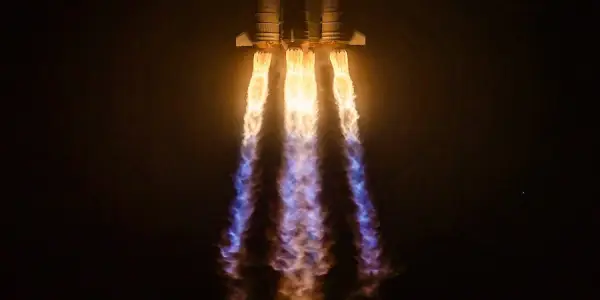
U.S. lawmakers stress the urgency for NASA to accelerate its Artemis program amid rising Chinese space ambitions, seeking strategies to maintain lunar leader...
In-depth analysis
How the technology works
The Artemis program relies on a complex architecture involving reusable lunar landers that necessitate multiple refueling missions in low-Earth orbit. This approach aims to facilitate crewed lunar missions, but the technology required for its successful implementation has not been demonstrated in actual space missions, raising concerns about its viability.
Why this innovation matters
This innovation is crucial as it directly impacts U.S. leadership in space exploration, particularly in the face of China's advancing lunar ambitions. Maintaining a competitive edge is essential for national security and technological prestige.
Who is affected
The implications of these developments affect a wide range of stakeholders, including NASA, U.S. lawmakers, and private aerospace companies. Additionally, the broader scientific community and international partners in space exploration are closely monitoring the situation.
What could come next
Future developments may include increased funding for NASA and a reevaluation of the Artemis program's strategies. Enhanced collaboration with private sector partners could also emerge as a response to the growing competition in space.
Did you know?
How this will change your life
If NASA's Artemis program falters, the U.S. may lose its position as a leader in space exploration, impacting funding for future innovations. This could slow advancements in technologies that benefit everyday life, such as satellite communications and GPS. A robust lunar presence could also lead to breakthroughs in science and technology that eventually trickle down to everyday products and services.
The tech secret
Surprisingly, the reusable lunar landers proposed for Artemis III have yet to be tested in actual missions. This lack of real-world validation raises questions about their reliability and the feasibility of multiple refueling operations in low-Earth orbit, which could complicate future lunar missions and extend timelines.
The human behind the innovation
Mike Griffin, a former NASA Administrator, has long been a vocal advocate for practical space exploration strategies. A graduate of Johns Hopkins University, Griffin has a background in aerospace engineering that fuels his skepticism towards complex systems like the Artemis architecture. His passion for streamlined missions stems from a childhood fascination with the Apollo program, where he watched the moon landing on a small black-and-white TV. Griffin's commitment to making space exploration efficient and achievable reflects a desire to inspire the next generation, ensuring that the U.S. remains a pioneer in space, not just a participant.
Expert Commentary
As someone watching this unfold, I can't shake the irony. We’ve handed China a two-decade head start simply because we keep treating space exploration like a political football rather than a national project. Every new administration kicks the playbook out the window and starts from scratch. Meanwhile, Beijing just keeps steadily executing its plan, day after day. Now we’re pinning our hopes on Artemis, a program so technically convoluted that even its own architects admit it might be unworkable. And Mike Griffin isn't being pessimistic—he’s being honest. We’ve become a nation that celebrates funding announcements instead of launch dates. The money is there, but the will is scattered. If we lose the Moon, it won’t be because China outspent us; it will be because we outcomplicated ourselves.

Even Realities Introduces G2 Smart Glasses with...


Netflix to Develop Animated Series Featuring...

Apple Expands Satellite Connectivity Features for...

Current iPhone Black Friday Offers: Best Deals on...

Google AI Pro Expands Storage to 5 TB Without...

T-Mobile to Introduce Charges for Apple TV Perk...

Microsoft's Copilot Actions Raises Security...

Microsoft Faces Stock Pressure as Analysts...

Nintendo Unveils First-Ever Physical Soundtrack...

Best Buy Unveils Early Black Friday Sales Ahead...

Weekly Cybersecurity Update: Active WSUS...

WhatsApp Plus Subscription Set to Launch with...

Google Rolls Out Android 16 Part Two Update for...

Battlefield 6 Crossplay Dilemma: PS5 Players Torn...

Asus Unveils Redesigned ROG Zephyrus Duo at CES...
Apple's M5 Chip Significantly Enhances Local LLM...

Apple Confirms December Release for Major iOS...

Significant Black Friday Discounts on AirPods:...

Revitalize Your Old PlayStation 2: A Guide to...

Google Expands Gemini Voice Assistant to Google...

Chevrolet Corvette ZR1 Shatters Lap Record at...

LG B5 65-Inch 4K OLED TV Available at Black...

Apple's Upcoming iPhone 18 Lineup May Signal...

Beware of These 12 Android Apps That May Record...

Endnight Games Unveils Forest 3 at The Game...

Google Warns Against Creating 'Bite-Sized'...

Upcoming amiibo Releases for 2025–2026: Mario...

Bungie Reveals Final Ability Changes Ahead of...

Discover 10 Lesser-Known Free Android Apps Worth...

Excitement Builds for Metroid Prime 4 After...

Google Issues Urgent Patch for High-Severity...

Ultramarathoner Kevin Humphrey Battles Stage IV...

Bethesda Celebrates Fallout: New Vegas' 15th...

Google Unveils Quantum Echoes Algorithm,...

Borderlands 4 Launches Free DLC: Bounty Pack 1 -...

Google Messages Initiates Testing of @mentions...

Apple Set to Unveil Major Overhaul of Health App...

Exclusive Black Friday Offer: Oura Ring 4...

DJI Launches Osmo Action 6, Raising the Bar for...