American Manufacturer Advocates for AI as a Job Creator Amid Industry Transformation
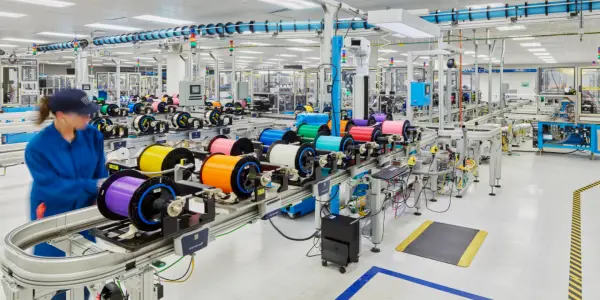
A leading U.S. manufacturer argues AI is generating new job opportunities, challenging fears of widespread job loss due to automation.
In-depth analysis
Job market overview
The current job market is witnessing a transformative phase driven by advancements in artificial intelligence (AI). While concerns about job displacement persist, many experts argue that AI is creating new roles and enhancing productivity within traditional sectors like manufacturing, reminiscent of past industrial revolutions that reshaped labor dynamics.
Key career trends
A notable trend is the reinstatement of skilled engineers to manage AI tools in production, highlighting a shift towards roles that require human oversight. This evolution emphasizes the importance of combining technology with human expertise in the workforce.
Advice for professionals
Professionals should focus on developing skills that complement AI technologies, such as critical thinking and creativity. Embracing lifelong learning and adaptability will be crucial in navigating the evolving job landscape shaped by automation and AI advancements.
Future opportunities
Future job opportunities are likely to emerge in areas that leverage AI for innovation and productivity. As industries adapt, roles that involve overseeing AI systems and integrating technology into workflows will become increasingly essential.
Did you know?
How this affects your career
As AI continues to reshape industries, professionals must adapt by acquiring skills that complement AI technologies. This means focusing on creativity, problem-solving, and emotional intelligence—qualities machines struggle to replicate. Embracing lifelong learning and being open to new roles will not only enhance job security but also position individuals as valuable assets in a rapidly evolving job market.
What successful people don't say
Successful individuals often omit the struggles behind their achievements. They don't share the countless hours of failure, the strategic pivots, or the moments of self-doubt that shaped their paths. Instead, they focus on the lessons learned and the resilience developed through adversity, reinforcing that success is rarely a straight line.
How they achieved success
Take Sarah Thompson, a young engineer at a manufacturing firm, who was initially skeptical of AI's role in her field. However, she saw an opportunity to upskill and became proficient in AI tools. By collaborating with software developers, she helped integrate these technologies into production processes, significantly improving efficiency. Sarah’s proactive approach and willingness to embrace change not only elevated her career but also positioned her as a leader in her organization, showing how adaptability can unlock new avenues of success in the modern workforce.
Expert Commentary

Employee Turns Dismissive Remarks into a...

Tech Industry Faces Dramatic Shift: From AI...

The Paradox of Employee Turnover at Elite Firms

September Jobs Report Set to Illuminate Economic...
Mark Cuban Advocates for New Graduates to...
Google's Career Dreamer: An Innovative Tool for...

Top Health Scandals of the Last Quarter-Century

Executives of Telehealth Company Found Guilty of...

Navigating 'Interview Ghosting': Essential...

The Rising Importance of Workplace Cleanliness in...

Sheffield Hallam University Faces Backlash Over...
September Jobs Report Expected Amid Slowing...

Apple Seeks Court Approval to Appeal Ruling in $1...

Michael Burry Closes Hedge Fund Amid Concerns...

Prusa 3D Printer Introduces Revolutionary...

Exploring the Essence of Christmas Markets: A...

US Labor Market Shows Contradictory Signals Amid...

The Challenges of Lottery-Based Affordable Housing

The Rise of AI-Generated Pets Among Influencers:...

Accelerate Your Career with CompTIA...

Surge in AI Data Center Investments Reshapes the...
Figma's CEO Advocates for Hiring Young Talent...

Affordable Smart Ring Transformed into Innovative...

Top 5 AI and Tech Courses to Acquire High-Demand...

Sandbar Launches Stream Ring: An AI-Powered Voice...

S&P 500 Sees Record Earnings Growth in Q3 2025,...

Mobile Technology Forecast for 2026: Anticipated...

The Transformative Role of AI in Modern Hiring...
Amazon Considers Laying Off 30,000 Employees Amid...

Enhancing Recruitment Strategies in the...

October Layoffs Mark the Worst Month for Job Cuts...

Innovative DIY Powerwall Surpasses Commercial...
Understanding the Job Market: Key Insights for...

Is Tutoring a Baby to Become an 'English...

Insights into the Leaked US Draft Proposal for...

Polar Loop: A New Contender in the Fitness...

Viewing 'Good Fortune' at Home: What You Need to...

Apple Set to Regain Title of Largest Smartphone...

The Eilik Robot: A Playful Addition to Your...

Silicon Valley Startups: A Culture of Ethical...