AI's Role in Management: A Double-Edged Sword for Leadership

The rise of AI in the workplace signifies a transformative shift, demanding new leadership strategies and careful integration to enhance productivity.
In-depth analysis
Job market overview
The job market is undergoing significant transformation due to the rise of artificial intelligence, which is becoming more accessible to a diverse workforce. This shift is reshaping operational practices across industries, emphasizing the need for employees to not only adopt AI tools but also to cultivate the skills necessary for effective application and leadership in this new environment.
Key career trends
A notable trend is the increasing democratization of AI tools, allowing employees without specialized technical backgrounds to participate in AI-driven initiatives. This accessibility is reshaping team dynamics and expectations in the workplace.
Advice for professionals
Professionals should focus on enhancing their leadership skills alongside their technical capabilities. Embracing AI as a collaborative tool rather than a replacement can amplify decision-making and foster stronger team dynamics, ensuring that human judgment remains central to effective management.
Future opportunities
As organizations integrate AI, opportunities will arise for professionals who can bridge the gap between technology and human interaction. Those who excel at leveraging AI to enhance productivity while maintaining strong team connections will be well-positioned for success in the evolving job landscape.
Did you know?
How this affects your career
The rise of AI in the workplace signals a shift in the skills that matter most. Professionals must now hone their ability to collaborate with AI tools and foster innovation within their teams. This transition requires a commitment to continuous learning and adaptability, positioning yourself not just as a user of technology, but as a strategic thinker who can leverage AI to drive meaningful outcomes.
What successful people don't say
Behind every success story, there’s often an unspoken truth: the journey involves failures and missteps. Successful leaders recognize that embracing AI is a learning curve, not a straightforward path. They understand the importance of humility, sharing their struggles with technology integration while emphasizing the collaborative nature of leveraging AI effectively in their organizations.
How they achieved success
Consider Maya Chen, a project manager at a mid-sized tech firm. When her company adopted AI tools, Maya saw the potential for both innovation and disruption. Instead of fearing the technology, she immersed herself in understanding its capabilities and limitations. By facilitating workshops that encouraged her team to experiment with AI, she fostered a culture of creativity and resilience. Her approach shifted the focus from anxiety over job displacement to excitement about new possibilities, leading to a 30% increase in project efficiency. Maya’s success stemmed not from merely using AI, but from empowering her team to harness it as a collaborative tool, demonstrating that the key to thriving in an AI-driven landscape lies in human connection and leadership.
Expert Commentary

Executives of Telehealth Company Found Guilty of...

Surge in Mortgage Repossessions Leaves Homeowners...

Exploring the Expanding Range of Find My...
High-Stakes Day Trading Gains Popularity Among...

Surge in AI Data Center Investments Reshapes the...

US Consumer Confidence Plummets to Lowest Point...

Top Black Friday Deals of 2025: Expert Picks and...

Elon Musk Joins the Conversation on Robotaxi...

Top Smartphone Deals to Consider Ahead of Cyber...

Apple TV's 'Pluribus' Embraces Innovative...

Michael Burry Closes Hedge Fund Amid Concerns...

Polar Loop: A New Contender in the Fitness...

Sam Altman and Jony Ive Collaborate on Innovative...

Insights into the Leaked US Draft Proposal for...

Tech Industry Faces Dramatic Shift: From AI...

Accelerate Your Career with CompTIA...

U.S. Jobless Benefit Applications Decline to...

Arri to Shut Down Two Facilities as Cinema...
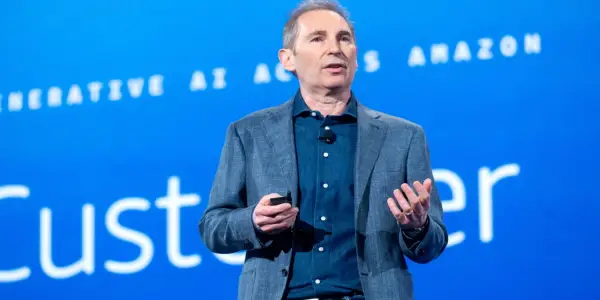
Amazon's CEO Clarifies Layoffs Not Linked to AI...

Apple Seeks Court Approval to Appeal Ruling in $1...

Examining the Stanford AI Hiring Study:...

UK Unemployment Rate Climbs to 5%, Marking...

Bagel Delivery Dispute Becomes Unlikely Corporate...

Anker Unveils Prime 25W MagSafe Charger: A...

Toyota's IMV Origin: A New Approach to Vehicle...

Dual Enrollment: Bridging the Gap Between High...
September Jobs Report Expected Amid Slowing...

Five Electric Vehicles Likely to Disappear Before...

Vivo X300 Pro: The Pinnacle of Smartphone...

Top 5 AI and Tech Courses to Acquire High-Demand...

Bitcoin Experiences Significant Drop Amid Fed...
Figma's CEO Advocates for Hiring Young Talent...

Amazon's Job Cuts Spark Debate Over AI's Impact...


Top Smartphone Picks for Black Friday 2025 After...

October Layoffs Mark the Worst Month for Job Cuts...

Rethinking Time Off: The Rise of Microretirement...

Enhancing Recruitment Strategies in the...

Rising Interest in Dark Web Employment Amidst...

UK Unemployment Rate Edges Up to 5.1%, Young...