Naomi Osaka Showcases Japanese Heritage with Elegant Kimono at Wimbledon
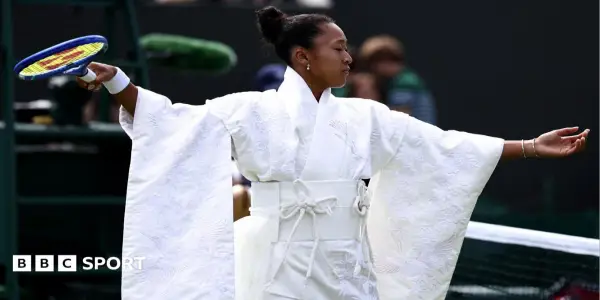
Naomi Osaka honors her Japanese roots by donning a striking white kimono at Wimbledon, blending tradition with the tournament's strict dress code.
In-depth analysis
Recent matches
Naomi Osaka's recent performance at Wimbledon was marked by her impressive victory over French player Elsa Jacquemot, where she showcased both skill and cultural expression. This match highlighted her ability to merge athletic excellence with personal identity, a theme that has become increasingly prominent in her career.
Player performance
Osaka demonstrated her formidable skills on the court during her opening match, effectively utilizing her powerful serve and strategic shot placement to secure a win against Jacquemot.
Team strategy
The approach taken by Osaka's team appears to focus on enhancing her mental resilience and cultural identity, allowing her to express herself freely while maintaining peak performance. This dual strategy aims to empower her both on and off the court.
Upcoming events
Following her Wimbledon match, Osaka is set to participate in several upcoming tournaments, where she will continue to blend her competitive spirit with her commitment to cultural representation.
Did you know?
Why this game matters
Naomi Osaka's choice to wear a full-length white kimono at Wimbledon transcends mere fashion; it serves as a powerful statement on cultural representation in sports. By intertwining her Japanese heritage with the tournament's traditional dress code, Osaka challenges the boundaries of individual expression within a strict environment. This moment not only honors her roots but also inspires athletes to embrace their identities, fostering a more inclusive narrative in competitive sports.
What you won't see on TV
Behind the scenes at Wimbledon, players are required to adhere to the all-white dress code even during practice sessions. This rule means that even in their downtime, athletes like Osaka must forgo colorful or personal attire, highlighting the strictness of the tournament’s traditions and the unique challenge it poses for athletes trying to express their individuality.
On the road to a dream
Marcus, 34, from Chicago, has followed Naomi Osaka's career closely since she first emerged on the tennis scene. Growing up in a multicultural neighborhood, he often felt the pressure to fit in, yet he admired Osaka's ability to embrace her Japanese and Haitian roots. Watching her triumph at Wimbledon in a kimono, Marcus felt a surge of pride; it reminded him of his own journey of self-acceptance. Inspired, he now volunteers at local youth programs, encouraging young athletes to celebrate their diversity, just as Osaka does on the world stage.
Expert Commentary

Three Key Free Agents the Phillies Should Target...

Jake Paul and Anthony Joshua Set for High-Stakes...
Elena Rybakina Makes History with WTA Finals...

NFL Trade Deadline Sees Jets Restructure for...

Anime Films Reach a Pivotal Moment in Theatrical...
Ben Shelton's ATP Finals Journey Ends with Three...

How to Stream the India vs New Zealand 2026 ODI...
Anticipation Grows for Raducanu and Osaka...

Nikola Jokic Makes NBA History with Back-to-Back...

Mets Eye Tarik Skubal as Tigers Consider Trade...

All Blacks Set for Grand Slam Challenge: Key...
Ohtani's Historic Home Runs Highlight Top 10...

Saracens Claim Top Spot in PWR as Aoife Wafer...
Roger Federer Set for Induction into...

How to Watch UCI World Tour 2026 Live Streams: A...

Samoa Joe Claims AEW World Championship at Full...
Olympic Champion Erin Jackson Raises Awareness...
Kate O'Connor Celebrates Remarkable 2025 Success...
Aryna Sabalenka and Nick Kyrgios Set for...

Jake Paul's Netflix Exhibition Faces Uncertainty...
Apple Valley Shocks East Ridge in Class 4A...

Jason Day Showcases Avoda Curved Face Irons at...

The New Superpower: Adaptability in the Age of AI
WTA Finals 2025 Prize Pool Hits $15.5 Million,...
UFC Fight Night Preview: Steve Garcia vs. David...

Conor Murray Critiques Controversial Red Card in...
Diamondbacks Designate Christian Montes De Oca...

Joel Klatt Advocates for Elevated Standards for...

San Diego Padres Part Ways with Wes Benjamin
Team USA's Aspirants for the 2026 Milano-Cortina...
Dodgers Sign Cole Irvin to Minor League Contract...

Former Blue Jays Pitcher Erik Swanson Announces...
Live Streaming Guide for the 2026 French Open...

UFC 322: Dominant Performances Highlight Event at...
Braves Take Early Steps in Offseason Strategy...

Elvis Smylie Triumphs Over Jon Rahm in LIV Golf...
Bellingham Claims Division 3 Volleyball Title...
Faye Webster Celebrates Her Passion for Games at...